ABSORPTION OF AHAs IN SKIN 191 application of an O/W Emulsion (Formulation A, without AHA) at pH 3.0. The O/W emulsion was applied to the surface of the skin (3 mg/cm2), and after 24 h the skin was washed, rinsed, and dried in a manner described previously. The skin was removed from the diffusion cell, and the pH of the skin surface was measured on a Corning pH meter model 320 (Corning Inc., Science Products Division, Corning, NY) using an MI-404 Flat Membrane pH Electrode with an MI-402 Micro-Reference Electrode (Microelec- trodes, Inc., Bedford, NH). The layers of the stratum corneum were removed by strip- ping 15 times with cellophane tape. After each tape strip, the pH of the skin surface was measured. STATISTICAL ANALYSIS Total absorption values represent the combined absorption values for receptor fluid and skin (stratum corneum, viable epidermis, and papillary dermis) and were compared by the Student's t-test or a one-way analysis of variance (ANOVA, SigmaStat TM Statistical Software, Jandel Scientific Software, San Rafael, CA). The permeability constant (Kp) determinations were compared statistically by performing a Student's t-test, and an ANOVA. The Student-Newman-Keuls test was used as the method for multiple pair- wise comparisons at a significance level of p 0.05 (SigmaStat TM Statistical Software). RESULTS The in vitro percutaneous absorption of glycolic acid was measured from an oil-in-water (O/W) emulsion (Formulation A) at a concentration of 5% at pH 3.0 and 7.0. Greater glycolic acid absorption was observed in all locations with the emulsion adjusted to pH 3.0. Total absorption ofglycolic acid in 24 h decreased from 27.2% at pH 3.0 to 3.5% with the pH 7.0 emulsion (Table II). Significant amounts ofglycolic acid were found in the receptor fluid at pH 3.0 (2.6%), but larger amounts were found in the skin layers (24.6%). Glycolic acid was not only located in the surface layer (the stratum corneum), but greater amounts were found in the deeper skin layers (the viable epidermis and dermis). In order to study the effects of surfactants on the percutaneous absorption of glycolic Table II Percent Applied Dose Absorbed of 5% AHA in Formulation A 5 % Glycolic acid 5 % Lactic acid 5% 2-OH-hexanoic acid Location pH 3 pH 7 pH 3 pH 7 pH 3 pH 7 Receptor fluid 2.6 _+ 0.7 • 0.8 _+ 0.3 3.6 + 1.2 b 0.4 _+ 0.1 32.9 -+ 2.6 a'b 1.0 _+ 0.2 Stratum corneum 5.8 _+ 2.8 1.2 _+ 0.4 6.3 -+ 1.4 3.2 _+ 0.8 3.4 _+ 0.4 2.8 _+ 0.3 Viable epidermis 6.6 _+ 2.5 0.8 _+ 0.3 6.6 _+ 0.9 3.2 _+ 0.8 2.8 _+ 1.4 3.7 -+ 1.3 Dermis 12.2 _+ 1.4 • 0.6 _+ 0.2 13.9 -+ 2.3 b 2.9 -+ 1.3 4.0 _+ 1.8 a'b 2.0 _+ 0.3 Total in skin 24.6 _+ 4.0 • 2.6 _+ 0.6 26.8 _+ 4.5 9.4 -+ 2.1 10.2 + 3.3 • 8.4 _+ 1.0 Total absorption 27.2 _+ 3.3 3.5 -+ 0.9 30.4 _+ 3.3 9.7 -+ 2.0 43.1 _+ 5.9 9.4 -+ 1.1 Values are the mean _+ SEM of two to five determinations in each of three subjects. Values obtained at pH 3.0 in each location with similar superscripts are significantly different from each other (ANOVA, p 0.05).

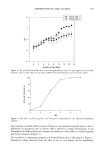
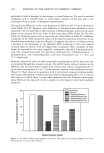
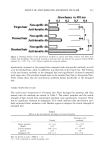
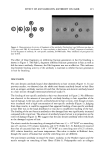
192 JOURNAL OF THE SOCIETY OF COSMETIC CHEMISTS acid, a second emulsion (Formulation B) was prepared with 1% ammonium laureth sulfate (ALS). ALS is an ionic surfactant contained in some AHA rinse-off formulations. Total absorption of glycolic acid was unchanged at either pH (Table III). However, the absorbed glycolic acid was distributed differently in the skin and receptor fluid at the end of the 24-h studies. A greater amount of the absorbed material was found in the receptor fluid with the use of Formulation B, with approximately 12% of the applied dose completely penetrating skin at pH 3.0. The effects of Formulations A and B on the barrier properties of hairless guinea pig skin were compared with the effects of two commercial AHA products. A ['3H]water per- meability constant was determined after 24-h exposure to each of the formulations (Figure 1). The average of Kp values for all formulations was higher than the control (no emulsion) value. However, a one-way analysis of variance showed that none of the formulations were significantly different from each other (p 0.05). Formulation A was utilized as the vehicle for the additional AHA absorption studies. Variability in GA absorption (Formulation B) through the skin from the five human donors (Figure 2) was observed. The skin from all donors was within our historically normal limits of [3H]water absorption (•0.35% of the applied dose) as assessed by the 20-min test prior to application of the GA formulations (7). Glycolic acid absorption through donor skin varied from 24% to 44% of the applied dose. A high correlation was observed between the water and glycolic acid absorption values (r 2 = 0.92) from each donor, indicating that the variability in glycolic acid absorption was associated with the normal variability in the barrier properties of human skin. The absorption of lactic acid and 2-hydroxyhexanoic acid was determined from an O/W emulsion at a concentration of 5% (Table II). The pH-related differences in total absorption observed for these compounds were substantial but were less than the dif- ference seen for GA. Total AHA absorption at pH 3.0 did not differ significantly among the three AHAs (ANOVA, p = 0.087). However, at pH 3.0, receptor fluid levels of 2-hydroxyhexanoic acid were significantly higher than those of the other 2 AHAs, and skin levels of 2-hydroxyhexanoic acid were significantly lower than the values for GA. The longer-chain AHAs were tested at 0.5% concentration because of solubility limi- tations and to simulate product usage (Table IV). 2-Hydroxyhexanoic acid absorption studies were repeated at this lower concentration for comparison of absorption with Table III Percent Applied Dose Absorbed of 5% Glycolic Acid in Formulation B Percent applied dose absorbed Location pH 3.0 pH 7.0 Receptor fluid 12.2 + 5.3 1.4 _+ 0.7 Stratum corneum 2.4 _+ 1.3 0.1 _+ 0.0 Viable epidermis 11.6 + 2.5 0.4 + 0.2 Dermis 8.6 _+ 2.0 0.4 + 0.1 Total in skin 22.6 + 3.2 0.9 + 0.0 Total absorption 34.8 _+ 3.9 2.3 _+ 0.8 Values are the mean _+ SEM of two to six determinations from five donors (pH 3.0) and three determinations from three donors (pH 7.0).
Purchased for the exclusive use of nofirst nolast (unknown)
From: SCC Media Library & Resource Center (library.scconline.org)