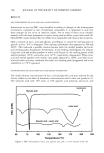
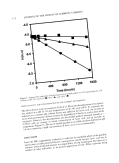
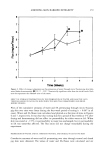
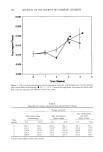
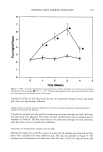
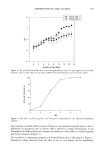
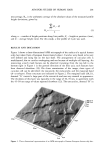
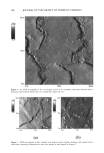
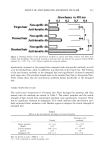
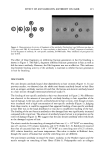
ABSORPTION OF AHAs IN SKIN 195 Human skin 1 Human skin 2 7 - 5 - 0 2 4 6 8 10 12 14 16 Number of Tape Strips Figure 3. The pH profile of human skin in flow-through diffusion cells 24 h after application of an O/W emulsion, pH 3.0. The values are the mean + SEM of three determinations in each of two subjects. lOO * 60 40 20 3 4 5 6 7 pH Figure 4. The effect of pH on glycolic acid ionization as determined by the Henderson-Hasselbach equation. skin response to similar AHA products (based on concentration and pH) may be due to differences in absorption due to vehicle effects. However, neither Formulation A nor Formulation B differed from two commercial products in their effects on hairless guinea pig barrier integrity (Figure 1). The variability in absorption properties of normal human skin is illustrated in Figure 2. Absorption values obtained from the skin of one or two donors can be misleading,

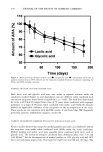
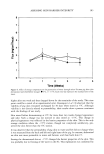
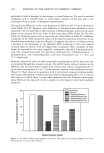
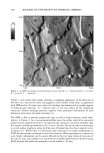
196 JOURNAL OF THE SOCIETY OF COSMETIC CHEMISTS particularly if skin is damaged in harvesting or is stored before use. The use of a standard compound such as tritiated water to check barrier integrity of the skin aids in the assessment of the accuracy of absorption measurements. No significant differences in the total absorption of AHAs at pH 3.0 were observed in either Tables II or IV. However, some differences in absorption were obtained in levels measured in the receptor fluid or skin locations. 2-Hydroxyhexanoic acid levels are much higher in the receptor fluid and lower in skin than other AHAs (Table II). The skin levels of 2-hydroxyoctanoic acid are lower than the other AHAs in Table IV. A different comparison of the AHA absorption values can be made by examining the percent of the absorbed dose remaining in the skin (Figure 5). It appears that there is a tendency toward a decrease in the percentage of the absorbed AHA remaining in skin and stratum comeurn (data not shown) with the longer-chain compounds. This is opposite to what might be expected for the more lipophilic compounds, especially 2-hydroxydecanoic acid. The octanol/water (pH 3.0) partition coefficients for 2-hydroxyhexanoic, 2- hydroxyoctanoic, and 2-hydroxydecanoic acids were determined to be 3.7, 30.6, and 71.1, respectively. However, these acids ionize to polar compounds at physiological pH as they enter and are absorbed through the stratum comeurn. The pH of human stratum comeurn in the diffusion cells was determined to range from initial surface values of approximately 5.3 up to values ranging from 6.5 to 7.3 at the stratum comeurn-viable epidermal interface (Figure 3). These values are in agreement with in vivo stratum comeurn stripping studies that found a pH gradient in human stratum comeurn ranging from pH 4.5 to 5.3 on the skin surface to a pH of about 7 at the viable epidermal layer (8). Therefore, these longer chain AHAs are not expected to form a reservoir in skin based on their lipid solubility properties. 100 r- 80 .m (1) 60 0 -Q 40 O • 20 [•1 Glycolic 5% kN%%%-• Lactic 5% • 2-hydroxyhexanoic 5% [•1 2 hydroxyhexanoic 0.5% ffTT1Trl 2-hydroxyoctanoic 0.5% • 2-hydroxydecanoic 0.5% Alpha Hydroxy Acids Figure 5. The effect of AHA chain lengths on skin levels. The values are the mean q- SEM of two to five determinations in each of three subjects.
Purchased for the exclusive use of nofirst nolast (unknown)
From: SCC Media Library & Resource Center (library.scconline.org)