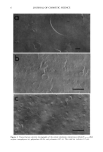
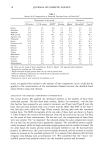
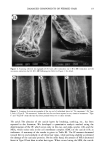
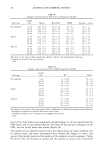
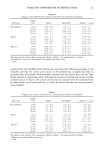
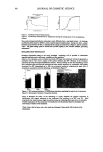
j. Cosmet. Sci., 49, 33-38 (January/February 1998) Pyranine, a fluorescent dye, detects subclinical injury to sodium lauryl sulfate A. PAGNONI, A.M. KLIGMAN, and T. STOUDEMAYER, S.K.I.N. Inc., 151 E. loth Avenue, Conshohocken, PA 19428 (A.P., A.M.K., T.S.), and Department of Dermatology, University of Pennsylvania, 415 Curie Blvd., Philadelphia PA 19104 (A.M.K. ). Accepted for publication February 16, 1998. Presented at the 58th SID Meeting, April 1997. Synopsis Anionic surfactants may damage the horny layer barrier in the absence of clinical signs of irritation. Increased permeability increases susceptibility to exogenous chemical insults. We describe herein a rapid method for detecting invisible disruption of the barrier by sodium lauryl sulfate (SLS). Low concentrations of SLS, insufficient to induce visible changes, were applied occlusively in Hill Top chambers to the volar forearms of normal women for 24 hours. One hour after removal of the chambers, pyranine, a water-soluble fluorescent dye, was applied with a cotton-tip applicator and allowed to dry. The dye was gently washed off 30 minutes later. The intensity of the fluorescence was visualized under Wood's light immediately and 24 hours later. Ultraviolet photos were obtained for photographic documentation. Measurements of transepidermal water loss were made at the same time. Concentrations of 0.025% and 0.1% SLS caused, in most of the subjects, no visible reactions. However, in comparison to a control water patch, both sites fiuoresced strongly under Wood's light, more so with 0.1% SLS. Transepidermal water loss also increased, proportionally to concentration, validating barrier disruption. 0.005% SLS was below the threshold of injury by this methodology. Pyranine fluorescence appears to be a useful technique for evaluating subclinical barrier damage from detergents. INTRODUCTION Irritant reactions are common and important in clinical and occupational dermatology. There has recently been a great interest in the mildness of skin care products, especially surfactants and soaps. In a competitive market place, manufacturers vie with each other to prove claims of superior mildness. Clinical methods for grading visible signs of irritation are giving way to bioengineering techniques, which provide more accurate, more discriminating, and more objective data in comparative studies. A noteworthy advantage is the ability to measure subclinical, nonvisible changes. Many sophisticated instruments are available for measuring various features of the irritation reaction, including transepidermal water loss (TEWL), scanning 33

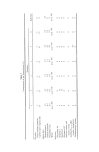
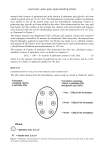
34 JOURNAL OF COSMETIC SCIENCE laser-doppler velocimetry, ultrasound imaging, and conductance (1-3). No chemical irritant has been more intensively and comprehensively studied than sodium lauryl sulfate (SLS), an anionic surfactant. A huge literature has been built up dealing with multifarious ways of characterizing the response of human skin to SLS. SLS is now the classic prototype of an irritant whose major impact is on the horny layer barrier. The most complete description and review of the numerous methods available to study SLS reactions, entitled "Guidelines on sodium lauryl sulfate exposure tests," has recently been published by the European Society of Contact Dermatitis (4). The consensus is that TEWL is the most sensitive procedure for detecting tissue damage by SLS. Invisible damage to the horny layer can be reliably, quickly, and easily estimated by the evapo- rimeter (2,5), which measures vapor tension at two fixed positions above the surface. International standards for proper use of the evaporimeter have also been published (6). Interest is growing in methods that will detect early, subclinical damage by anionic surfactants. Dansyl chloride is a fluorescent dye that stains the entire thickness of the horny layer. Disappearance of the dye under Wood's light is a measure of the turnover of the stratum corneum (7). More rapid extinction of fluorescence has been shown to correlate with subclinical injury to SLS (8). However, there are technical limitations to the technique, which is also time-consuming (9,10). Dermatologists, including us, frequently mark patch test sites with yellow fluorescent pens. The indicator dye in these pens is pyranine. We now present a method using pyranine dye to detect early, invisible damage to the horny layer barrier by SLS. MATERIALS AND METHODS The subjects were 11 healthy Caucasian women, ages 30 to 50. One hundred fifty microliters of the test solutions was pipetted into the cotton pad of 11-mm Hill Top chambers (Hill Top Research Inc., Cincinnati, OH). These were fixed to the volar forearm skin. On one forearm, chambers containing distilled water and 1%, 5%, and 10% SLS (Sigma Chemical Co.) were applied for one hour. On the opposite forearm, chambers containing distilled water and 0.005%, 0.025%, and 0.1% SLS and one empty chamber were applied for 24 hours. The sites were briefly washed with water after removal and left open. The sites were evaluated clinically one and 24 hours later and scored as follows: 0 = no reaction 1 = patchy mild erythema 2 = uniform mild erythema 3 = moderate ery- thema, slight infiltration, few vescicles 4 -- strong erythema, infiltration, vescicles 5 = strong erythema, infiltration, bullae with exudation. The source of pyranine (solvent green no. 7) was a yellow Hi-Liter © pen (Avery- Dennison, Diamond Bar, CA). At first, the dye was squeezed out of the pen into a jar. One hour after removing the chambers, each patched site was evenly covered with 0.15 ml of the dye. The dye was applied with a cotton-tipped applicator to each area of 6.5 cm 2 that included both patched and surrounding untreated skin. The solution was left to air dry for 30 minutes, and the site was briefly washed with Dove © soap and patted dry. The sites were visualized under Wood's light immediately and 24 hours later. Fluores- cence was scored as follows: 0 = no fluorescence or less than surrounding area 1 -- mild fluorescence comparable to surrounding area 2 = moderate fluorescence 3 -- strong
Purchased for the exclusive use of nofirst nolast (unknown)
From: SCC Media Library & Resource Center (library.scconline.org)