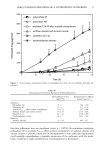
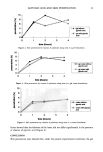
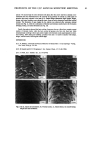
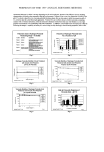
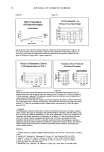
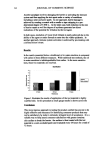
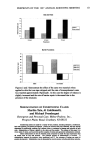
PREPRINTS OF THE 1997 ANNUAL SCIENTIFIC MEETING 65 o8 0.2 Strip and Patch 24 hours 48 hours 72 hours Time (hours) Barrier Functions ,,,. 40 ,m "' 20 • ,o •. o -lO -2o -3o Saline o/w emulsion Figures 2 and 3 demonstrate the effect of the same two materials when applied to skin that was tape stripped until the rate of transepidermal water loss reached approximately 18gtmsq/hr. In this case the degree of redness is slightly increased and the rate of barrier repair is decreased due to the presence of the emulsion. SUBSTANTIATION OF CONDITIONING CLAIMS Martha Tate, A! Gabbiane!!i, and Michael Prendergast Detergents and Personal Care, Rh•ne-Poulenc, Inc., Prospect Plains Road, Cranbury, NJ 08512 Conditioning claims are made for a variety of hair products, including shampoos, conditioners, hair color products, and penns and relaxers. Claims can concern many hair attributes, and may include statements of conditioning, combing feel, softness, shine, or resistance to damage and reduction of split ends. Substantiation of claims is specific to the claim and the product. The purpose of this paper is to review types of claims, and to provide specific examples of claims and appropriate substantiation methods. Claims substantiation is done by finished goods companies to satisfy the legal requirement that all claims must be true and accurate. The practical purpose of substantiation is two-fold: 1) substantiation supports the products, when questioned, and 2) the outcomes of testing can assist in product development. Substantiation may be demanded by several sources, including television networks,

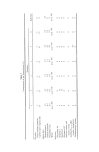
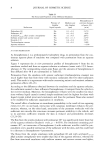
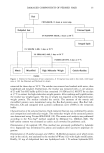
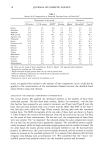
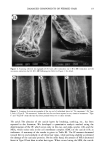
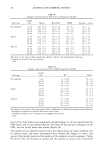
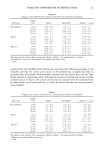
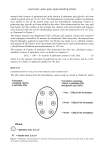
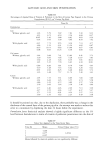
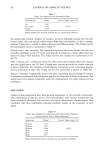
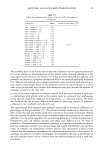
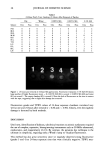
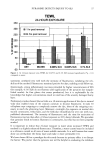
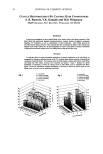
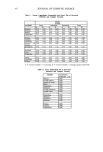
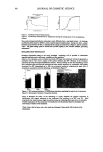
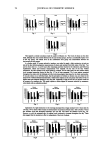
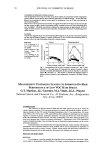
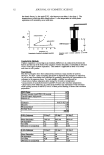
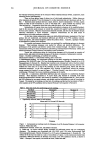
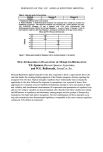
66 JOURNAL OF COSMETIC SCIENCE the National Advertising Division of the Council of Better Business Bureaus (NAD), competitors, State Attorneys General, and magazines. There are three general types of claims, two of which need substantiation. Puffcry claims are either statements of opiuion CI love this shampoo"), or other statements that can't be proven, such as "We feel....". Statements about products that have a basis, however, must be substantiated. Of these, express claims are what we will concentrate on, such as "hair feels so1¾', "gives excellent wet combing" and "does not build up". Comparative claims also come under this group, as in "best wet combing". Substantiation of express claims may include performance evaluations of the marketed product, made by the consumer goods company or outside labs, coupled with supplier's performance evaluations for their active materials. Objective measurements should be included, and these may be obtained through laboratory instruments or expert evaluators. Subjective measurements are the third means of substantiation, and include consumer evaluations. At their best, claims subs•mtiation studies are double-blind performance evaluations of the final product, they are randomized, and statistical differences are derived at the 95% confidence interval. Studies are specific, and custom-designed to address the product claims. Typically, a package of studies is assembled for a product and its attributes. For example, performance characteristics were evaluated for conditioning polymers in shampoo formulas. These prototype shampoos were studied for efficacy and statistical differences. The performance of the polymers and delivery systems were evaluated through the objective means of: instnunental combing, dye assays for deposition and build-up, Scanning Electron Microscopy (SEIVO, and clinical evaluations of expert evaluators, and subjective panel evaluations. Typical hair conditioning claims for conditioning shampoos will be discussed as examples of express claims, and studies of prototype shampoos will be given as examples of substantiation methods. Claim 1: Excellent conditioning, or excellent wet combing. Substantiation methods: 1) Instrumental combing, and 2) Salon test. 1) Instrumental combing An iusmunental combing test was done, comparing two shampoo formulas, containing 10% SLES-EO2, plus 0.3% Guar Hydroxypropyltrimouium Chloride, (Formula A) or 0.3% Polyqua•eruium-10 (Formula B). Bleached hair swatches were evaluated wet with a Dia-Stron tensile tester before and after the shampoo treatments. Eight swatches were included in each set, and they were combed five times each, for a total of 40 combings on each treatment group, before and after the randomized treatments. At the 95% confidence level, Formula A significantly reduced the combing energy compared to Formula B, as seen in Figure 1. Therefore Formula A can carry a claim of excellent conditioning, ffFormula B is a known conditioning shampoo in the market. 2) Salon test A randomized, double-blind half-head salon test compared two conditioning shampoo formulas. Both shampoos contained 12 % active SLES, plus Formula E contained 0.5% Guar Hydroxypropyltrimouium Chloride, and Formula G contained 0.5% Polyquaternium-10. Each formula had 120 evaluations by one expert evaluator, who blindly rated the half-heads on a scale of l(excellent) to 5 (poor). The results for wet combing, wet hair feel, diy combing, and diy hair feel are shown in Table 1, where statistics at the 95% confidence interval showed Formula E to be superior to Formula G. Table 1. Salon test results, for conditioning and wet combinl]. Attribute Shampoo E Shampoo G Wet Combini• 2.7* 3.5 Wet Hair Feel 2.7* 3.3 Dv d Combin• 2.0* 2.3 D• Hair Feel 2.0* 2.4 * Significantly different, better in each attribute. Means and 95.0 Percent LSD Intervals 140 110 A B Figure I. Instrumental wet combing results for Shampoos A and B, showing Shampoo A to be superior. Claim 2: Makes hair soft. Substantiation methods: 1)Salon test, and 2)Panel evaluation. 1) Salon test An expert evaluator blindly-evaluated 120 half-heads treated with two conditioning shampoos. The shampoos were formulated with 14% SLES, with 0.3% active Hydroxypropyl Guar Hydroxypropyltrimouium Chloride (Formula P) or 0.3% active Polyquatemium-11 (Formula Q). The softness of the diy hair was rated on a scale of l(excellent) to 5 (poor). In this randomized, double blind experiment, differences between the formulas were found at the 95% confidence interval, as shown in Table 2. Shampoo P was superior, and carries the claim, "Makes hair soR."
Purchased for the exclusive use of nofirst nolast (unknown)
From: SCC Media Library & Resource Center (library.scconline.org)