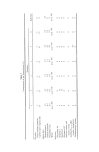
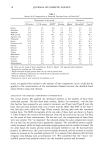
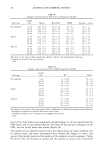
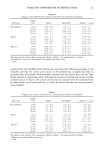
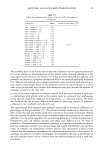
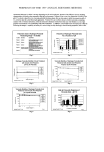
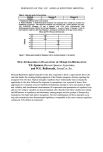
PREPRINTS OF THE 1997 ANNUAL SCIENTIFIC MEETING 63 0.20% Carbomer 25 deg C 40 deg C 50 deg C Water Separation no no no Oil Separation no no no Tan Delta' 0.31 0.38 0.52 Difference in Conductivity 0 0 0 TESTING SKIN CARE AND COSMETIC PRODUCTS AT HIGH RESOLUTION TO ESTABLISH COMFORT K. Marenus, D. Maes, N. Muizzuddin, *T. Stoudemeyer and *A. Kligman Esteb Lauder Research and Development, Melville, NY, 11746 *Skin Inc., Conshohocken, PA Introduction: In recent years the consumer has come to expect complete comfort from skin care and cosmetic products. Gone are the days when any degree of stinging or irritation are tolerated. In order to meet this challenge, testing far beyond traditional patch tests have been developed. Traditional patch testing, such as the cumulative irritancy test, was adequate in the past but now since the standard of comfort is higher and the products are better, more rigorous tests are required to uncover even the smallest potential for i•xitancy. This new generation of high resolution irritancy testing involves challenging the skin, either physically or chemically before or after a product use period. By either abrogating the barrier or pre-activating the skin's immune machinery, it is possible to evaluate the potential for irritancy or discomfort at a more sensitive level. Methods: Tests for in-itancy at higher resolution involve several different paradigms: In one instance, panelist are asked to use the product for a defined period. At the end of the use period, the skin is challenged, either physically or chemically to determine the integrity of the stratum comeurn barrier. The physical challenge involves using tape stripping to determine the resistance of the barrier with respect to transepidermal water loss. The chemical challenge involves application of an irritant and recording the neurosensory and erythemic responses. Validation of the methods was achieved by evaluating agents known to damage the barrier and create irritancy. Significant correlation was observed between panelist perception objectively measured endpoints.

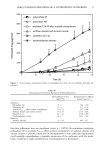
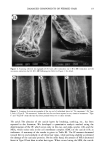
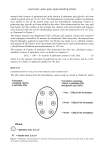
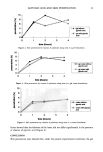
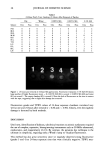
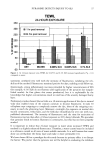
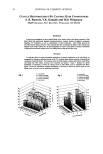
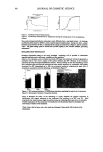
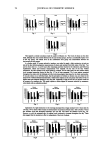
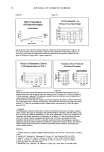
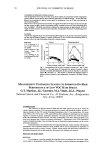
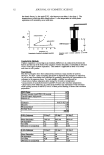
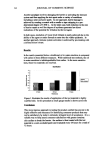
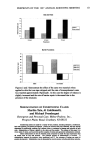
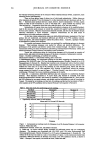
64 JOURNAL OF COSMETIC SCIENCE Another paradigm involves damaging the barrier or activating the immune system and then applying the test agent under a variety of conditions including a semi-occlusive patch. In one approach, barrier damage is achieved by creating a scratch with a needle or tape stripping to a pre- determined degree of T.EW.L.. In the latter case, both reduction in the rate of barrier repair as well the degree of erythema generated are direct indications of the potential for irritation by the test agent. In both cases, resolution of lower level irritants is easily achieved due to the ability of the agent or entire formula to enter into the viable epidermis. In another approach, immune system activation is achieved by pre-treafing with a defined minor irritant. Results: In the results presented below a traditional oil in water emulsion is compared with saline in three different measures. With traditional test methods, the oil in water emulsion is indistinguishable from saline. In the more sensitive tests, these two materials are resolved. Scadfication • Sal•ne O. i •o'w emu sion ß -•--•', - 0.2 24 Figure I illustrates the results of application of the test material to lightly searifled skin. In this procedure a small gauge needle is drawn across the Conclusion: This more rigorous approach to testing for product comfort has proven to be highly effective and necessary for identifying consumer products that may not be satisfactory by today's extremely stringent level of acceptance. It is a reliable way to help assure consumer satisfaction with greater certainty. skin surface to break the barrier. the surface is then treated with the test material in a semi-occluded patch and evaluated every 24 hours for a total of 72 hours.
Purchased for the exclusive use of nofirst nolast (unknown)
From: SCC Media Library & Resource Center (library.scconline.org)