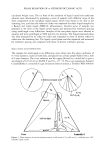
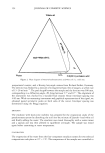
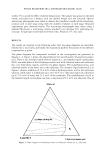
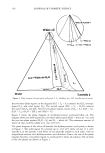
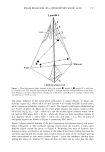
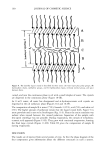
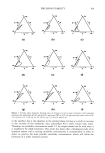
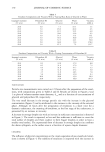
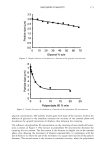
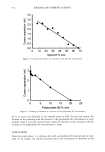
166 JOURNAL OF COSMETIC SCIENCE the emulsion droplets and maintain stability by creating a hydrated layer on the hy- drophobic particles in oil-in-water emulsions. The approach of particles with hydrated macromolecules adsorbed to their surface leads to repulsion because of a steric interaction of the adsorbed stabilizing chains. In a stable emulsion the emulsifier must cover completely the surface of the droplets of the dispersed phase. If the concentration of emulsifier is lower than the prerequisite to cover the total surface of the droplets, they coalesce to form bigger droplets until their total surface is completely covered by the emulsifier. There is a minimum emulsifier concentration, under which the emulsion is unstable, because the droplet size, formed by the coalescence, is very large. An increase in the emulsifier concentration offers the chance for the formulation of a stable emulsion with smaller droplets. However, after a certain point, the increase in emulsifier does not affect droplet size, and therefore the excess of emulsifier remains in the continuous phase of the emulsion. The increase in emulsifier sometimes leads to the opposite result, namely increases in the average droplet size of the internal phase of the emulsion (6). The addition of a viscous liquid, like glycerol, in the external phase of an oil-in-water emulsion, could improve the stability of the emulsion. As the concentration of the viscous liquid is increased, the viscosity of the external phase is increased and the movement of droplets is decreased, thus delaying the creaming and coalescence. The effect of methylcellulose, as an auxiliary emulsifier, to enhance the stability of mineral oil-in-water emulsions stabilized with nonionic emulsifiers was investigated (7). The results suggest that methylcellulose would associate with polyoxyethylene type nonionic emulsifiers. In the present work, oil-in-water emulsions were prepared with isopropyl myristate as internal phase, polysorbate 80 as emulsifier, and solutions of glycerol in water as external phase. The stability of emulsions was estimated from the average droplet size of the internal phase, assessed by a Coulter counter (8,9). The influence of the concentrations of emulsifier and glycerol on the stability of emulsions was examined. The optimum values of all those concentrations were determined in such a way, so as to prepare stable emulsions of isopropyl myristate in glycerol and water mixtures. EXPERIMENTAL MATERIALS Polysorbate 80 (polyoxyethylene 20 sorbitan monooleate, Tween© 80), isopropyl my- ristate (98% pure), and glycerol 99% were supplied by Sigma Chemical Co. (Saint Louis, MO) and used as received. In every case, water was distilled from an all-glass apparatus. DETERMINATION OF EMULSION AREAS The boundaries of the oil-in-water emulsion domains in isothermal ternary phase dia- grams were determined by progressive titration. A series of mixtures of glycerol and water, with different mass ratios, was chosen. At each value of the ratio, the solution of glycerol in water was progressively titrated in a mixture of polysorbate and isopropyl myristate characterized by a selected value of the isopropyl myristate to polysorbate mass ratio. The concentrations of the solution of glycerol in water, where an oil-in-water emulsion was formed, were derived from weight measurements. By repeating this experiment for

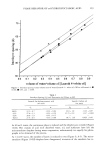
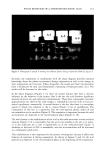
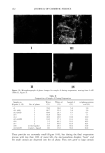
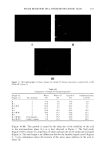
EMULSION STABILITY 167 other values of isopropyl myristate to polysorbate mass ratio, the boundaries of the oil-in-water emulsion domain corresponding to the chosen value of the glycerol:water mass ratio were determined. The dispersion was continuously stirred with a magnetic stirrer in a water-jacketed beaker at 40 ø + iøC. Samples prepared with compositions within the oil-in-water emulsion regions were stable for at least two days at 25 ø + iøC. PREPARATION OF SAMPLES FOR PARTICLE SIZE MEASUREMENTS Two series of oil-in-water emulsion samples were prepared in order to assay the influence of glycerol and polysorbate 80 concentration on emulsion stability. In the first series the mass ratio of glycerol to water varied from 1:9 to 9:1, while the concentrations of polysorbate 80 and isopropyl myristate were maintained at 5% and 20% by weight, respectively. In the second series the concentration of polysorbate 80 varied from 0.1% to 20%, while the concentration of isopropyl myristate was maintained at 20% by weight and the mass ratio of glycerol to water was maintained at 4:6. The emulsions were prepared by adding the required amount of the glycerol solutions of known concentration to mixtures containing weighed amounts of isopropyl myristate and polysorbate 80. The dispersions were continuously stirred, in a beaker at 40 ø + iøC, with a magnetic stirrer at 1300 rev/min for 15 minutes, and the emulsions formed were stored at 25 ø _+ iøC. RHEOLOGICAL STUDY The rheological behavior of emulsions was performed at 25 ø + 1 øC using a HAAKE VT 24 viscometer with a double-cap sensor system NV. The speed of rotation was increased from 0 to 22.6 rev/min over a period of one minute and subsequently decreased to 0 rev/min in the same time interval. Ubbelohde suspended-level viscometers were used to carry out measurements of lower values of the viscosity. The viscometer, with an emulsion flow time between 100 s and 1000 s, was placed in a water bath at a constant temperature of 25 ø + iøC, and the flow time of the emulsion was measured. The viscosity was calculated from the flow time and the density of the emulsion. Density measurements were carried out at 25 ø + 1 øC using a density bottle of 10 mi. PARTICLE SIZE MEASUREMENTS Measurements were performed at 25 ø + iøC using a Coulter counter (model ZM) with a tube of 70 tam. The instrument was calibrated using latex spheres with a singlet number median diameter of 5.99 ism. The sample container was turned upside down seven times, and one drop of the sample was dispersed in a 150-ml solution of 0.9% NaC1. The latter had been already filtered through Millipore filters HA (0.45 tam) and GS (0.22 ism). The number of strange particles in the electrolyte was determined with a blank assessment.
Purchased for the exclusive use of nofirst nolast (unknown)
From: SCC Media Library & Resource Center (library.scconline.org)