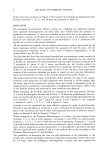
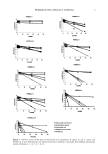
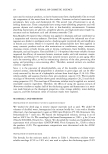
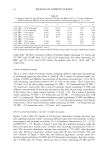
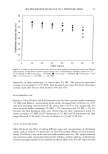
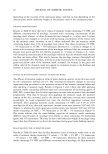
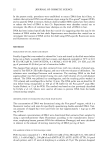
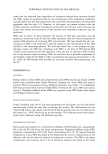
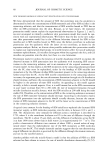
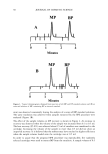
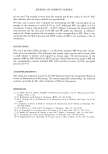
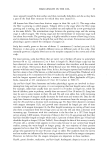
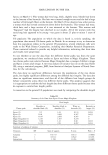
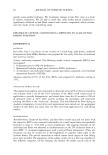
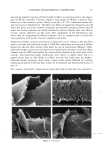
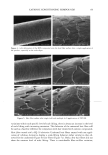
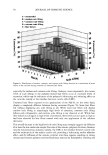
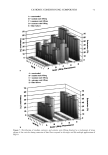
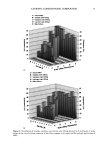
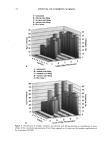
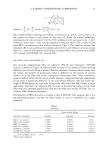
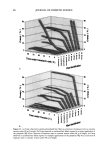
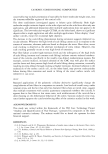
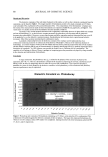
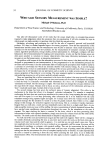
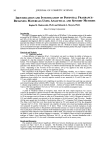
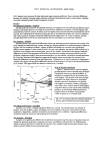
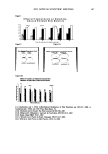
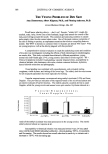
74 JOURNAL OF COSMETIC SCIENCE A = unextended B = random scale lifting C = common scale lifting D = extreme scale lifting E = fiber failure 60 : ' ' '":' • "'• '= •' 70 i! 50 40 71 , 30 ß 10-' -J. ... 10 0 '•'•i ' '" 0 -.•- . 1ø}e•7 E •air • • 1 A B C D Scale Lifting phenomenon A = unextended B = random scale lifting C = common some lifting D = extreme scMe lifting E= fi•r f•lure . 80• ' : t..•.' 70 - :: :• 80 60 . 50 : ' - 30 ' ' 40 m ' .. 20 ' 30 •0 . 20 0 Scale LiRing phenomenon 40 • ,,.., 30 o= 20 • Figure 9. Distribution of random, common, and extreme scale lifting observed as a mechanism of stress release of the cuticula during extension of hair fibers exposed to (a) single and (b) multiple applications of the monomeric CETAB.

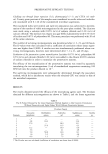
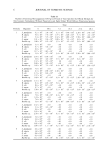
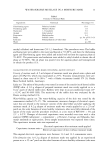
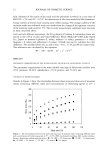
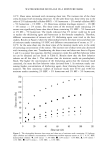
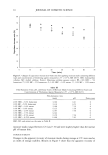
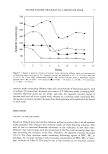
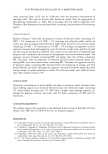
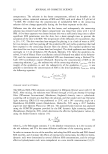
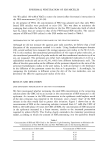
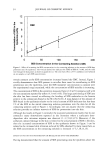
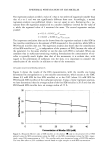
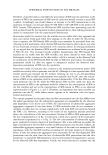
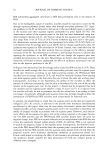
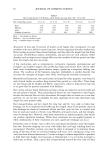
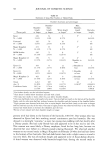
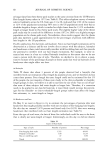
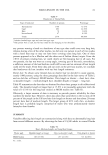
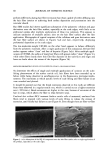
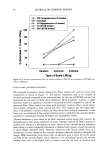
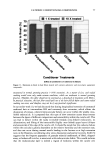
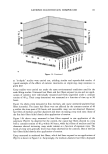
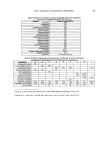
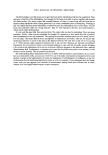
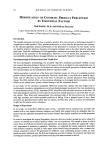
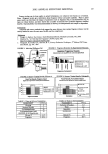
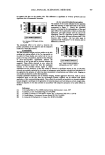
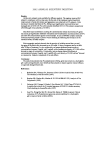
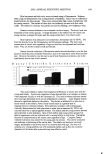
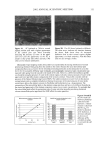
CATIONIC CONDITIONING COMPOUNDS 75 i -- fi2 Z • 1 where•=X•,•2 X2 and•=X• +X• The number of fibers showing scale lifting is denoted by X• and X2, and n• and n 2 are the number of fibers in each group (in this case 10). From the normal probability distribution, the critical value ofz for the 95% confidence level was found to be -1.645. Values of z lower than - 1.645 indicate significant treatment effects. The z values for the three MCCs investigated in this work are shown in Table I. The numbers indicate that treatment effects are significant for common and extreme scale lifting in all cases except PQ-10 (1 x treated). For random scale lifting, treatment effects were significant for HPG (10x treated) and CETAB (10x treated) only. POLYMERIC VERSUS MONOMERIC MCCs The cuticular reinforcement effect of polymeric (PQ-10) and monomeric (CETAB) cationics is shown in Figure 10, where percent decrease in the number of fibers showing different types of scale lifting is plotted. Because polymeric cationics adsorb mostly onto the surface, the number of applications makes a difference in the amount of cationic residue left on the fiber and in the consequent reinforcement effect. Since monomeric cationics diffuse rather quickly and in greater amounts, single and multiple applications do not show a significant difference in the scale-lifting behavior. The low-molecular- weight CETAB appears to resist scale lifting more effectively than PQ-10 after a single application. However, the polymeric PQ-10 seems to reinforce the surface cuticle more effectively after multiple applications than the low-molecular-weight CETAB. The cu- mulative effect becomes important. The behavior of HPG derivative is similar to that of CETAB. This suggests that it is a fast-absorbing polymer and that the fiber surface is close to saturation in a single treatment. Table I z Statistics Types of scale lifting Hair fibers treatment Random Common Extreme PQ-10 (1 x treated) 0.0000 0.0000 - 1.4907 PQ-10 (10x treated) -1.4907 -2.9277* -4.4721' HPG (1 x treated) - 1.4907 -2.2361' -2.9277* HPG (10x treated) - 1.8787' -2.5820* -2.9277* CETAB (1 x treated) - 1.4907 -2.5820* -3.2817' CETAB (10 x treated) - 1.8787* -2.5820* -3.6515* Zo.o5 (95% confidence level) = -1.645. * Statistically significant.
Purchased for the exclusive use of nofirst nolast (unknown)
From: SCC Media Library & Resource Center (library.scconline.org)