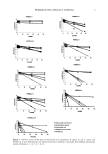
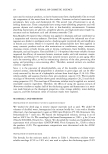
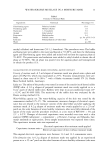
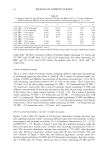
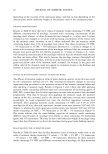
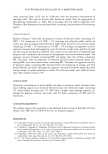
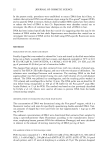
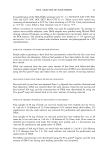
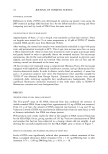
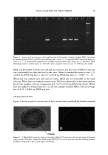
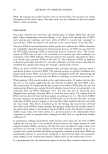
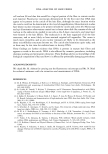
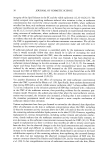
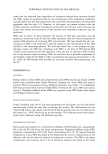
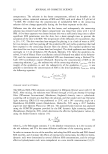
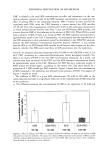
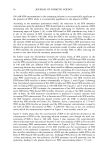
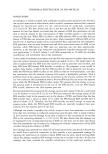
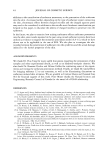
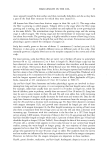
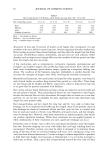
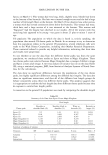
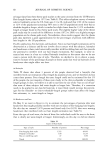
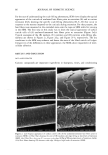
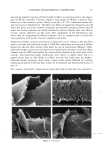
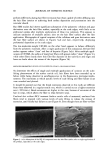
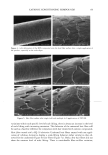
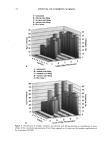
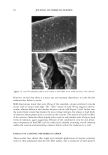
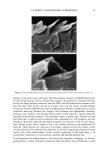
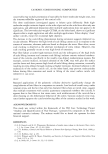
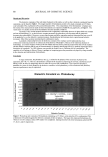
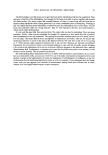
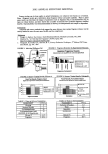
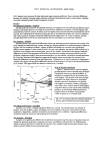
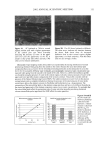
78 JOURNAL OF COSMETIC SCIENCE Figure 12. (a,b) This alternate path of stress release is most often severe radial cracking of the cuticula. However, we feel that there is a strain rate and moisture dependence in order for this endocuticular failure to occur. SEM observations reveal that scale lifting of the extended, cationic-reinforced cuticula occurs with an intact scale edge. The "clean" nature of scale lifting suggests intercu- ticular, adhesive failure at the interface between cuticle cells (Figure 13a,b). In this case, the intercellular cement has become the stress release medium, but always at high levels of extension when greater stress is exerted on the cuticula. This may be a beneficial effect of the cationics. Some hair fibers display either none or only random scale lifting at high levels of extension, again suggesting diffusion of the conditioners into the non-kerati- nous components of the CMC and the endocuticle, thereby increasing overall cohesion within the cuticula and preventing cohesive failure within the endocuticle as well. EFFECTS OF CATIONIC POLYMERS ON CREEP These studies have shown that single and multiple applications of cationic polymers result in their adsorption onto the hair fiber surface, due to attraction of their positive

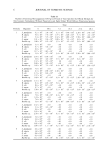
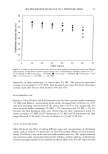
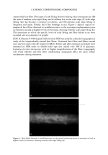
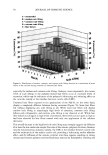
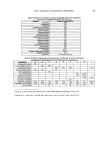
CATIONIC CONDITIONING COMPOUNDS 79 a'$o•o ? •.0 k bseiaeto! •. kV xlO.." :" 'i.•Y.J•.S: .. Figure 13. (a,b) Scale lifting in the cationic-treated cuticula occurs in the intact surface cuticle cell. charges to the anionic sites of keratin. Microfluorometric analysis and SEM observations of scale lifting during extension of hair fibers suggest the possibility of limited diffusion of even the larger polymer molecules into the CMC and the endocuticular domains of at least the outer layer of the cuticula or in some cases into the entire cuticular sheath. Interaction between the polymers and the nonkeratinous domains is expected to occur by coulombic attraction between the charges, and hydrogen and hydrophobic bonding, leading to non-covalent cross-linking. These studies clearly indicate a cationic-induced, improved scale-lifting resistance. This manifests itself in several ways: Cationic-treated hair fibers fail at higher levels of extension than untreated hair. The frequency of scale lifting has decreased, especially the higher (common and extreme) levels of scale lifting. Also, lifting of the intact surface cuticle cells without failure in the endocuticle is observed. These features are indicative of increased cohesion within the surface cuticle cell (specifically of the endocuticular domains), as well as of improved adhesion between cuticle cells. Such reinforcement of the cuticula, especially at the scale edge, is of considerable importance in maintaining a healthy and healthy-looking hair. To demonstrate this reinforcement of the cuticula by alternate techniques, we investi- gated whether cationic treatments would also affect hair fiber creep. Preliminary as well
Purchased for the exclusive use of nofirst nolast (unknown)
From: SCC Media Library & Resource Center (library.scconline.org)