2002 ANNUAL SCIENTIFIC MEETING 93 The third strategy is for the senses not to give the brain all the information that they have gathered. They only give a fraction of the information: just enough for the brain to be able to piece together and recreate the whole picture. The senses extract the essential features of what it is perceiving and the brain has to examine them and decide what is being perceived. It is a truly remarkable piece of computing. Working in this way shields the brain from 'information overload' because less information arrives at the brain. Yet, the brain can sometimes make the wrong decision then we will experience illusions and misperceptions., which can be easily demonstrated. It is not only the input side that can play tricks. The output side can also be misleading. There are many examples. Firsfly, when a person estimates the strength of a sensation or how much they like a product, their estimations are not very numerical. The spacing between their numbers tums out to be pretty uneven. It is not equal. This means that the basic assumptions of mathematics are broken. After all, we assume that the distance between '1' and '2' is the same as the distance between '101' and '102' or that '10' is twice as big as '5'. When humans make numerical estimates this is just not true. Humans are basically uncalibrated instruments. So we need a few tricks in our statistical analysis to cope with this. Secondly, merely changing a few words in the instructions for a test can switch on a different program in the brain and alter a persons discrimination skill. Furthermore, a consumer can swear that he prefers one product over another yet the products can be identical. This is normal brain function. But understanding these mechanisms allows us to make valid and sensitive measurements. If you know how your instrument works, you can use it well. You can even make solid numerical measurement for such abstract concepts as the sophistication of scents, the appearance of refreshingness of toothpastes or any sort of abstraction that the marketing department comes up with. In summary, if you understand how the human senses work you can upgrade your methods of measurement, making them more efficient and accurate, whether it be with highly trained experts or naYve consumers

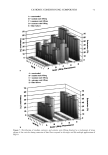
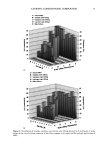
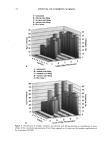
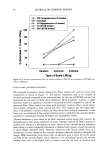
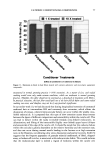
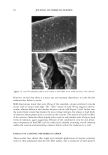
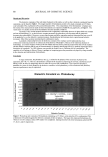
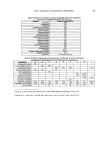
94 JOURNAL OF COSMETIC SCIENCE MODIFICATION OF COSMETIC PRODUCT PERCEPTION BY EMOTIONAL FACTORS Wolf Eisfeld •, Ph.D. and Wolfram Boucsein 2 •Cognis Deutschland GmbH & Co. KG, Research & Technology, 40589 Diisseldorf 2Institute of Physiological Psychology, University of Wuppertal Introduction The modem consumer will only buy a cosmetic product if he can perceive a performance benefit in comparison to other products. Thus, product performance is a key issue for the personal care industry. In the classical approach, product performance in the laboratory is evaluated via two tracks: on the one hand by objective physical, chemical or biological methods, and on the other hand by subjective panel tests. From the combination of both approaches, conclusions are drawn how the product will be perceived by the consumer in the marketplace. However, it is well known that unconscious, often uncontrollable emotional factors strongly influence our supposedly "objective" perception. Psychophysiological Measurements and Tactile Feel We have developed a methodology, the so-called "objective emotional assessment" (OEA), to take into account these psychological factors and to measure them in an objective and reproducible way. In the study presented in this paper, we focused our interest on the tactile perception of human hair, and how this perception can be modulated by different "product worlds". Tactile perception is indeed one of the three most important senses we rely on in evaluating cosmetic product effects, besides vision and olfaction. However, tactile feel is very difficult to quantify objec- tively, and we often have to use the word "like" to describe our sensory perception when touching things. The OEA method offers us the enormous advantage to investigate tactile sensations via their effects on our central nerve system, without having to ask the volunteers directly. In our study, we let volunteers manipulate differently treated hair strands with their fingers and si- multaneously recorded a comprehensive set of psychophysiological parameters like skin conductance (= electrodermal activity, EDA), heartbeat (EKG), blood flow and muscular movement in the face. All these physiological reactions are the result of unconscious mental processes in the brain that we can- not control. Thus, from such measurements, the emotional state of the test persons can be inferred with high accuracy and without possible problems of faking. From a temporal point of view, these processes are generated much earlier than our speech, and thus they offer us a direct and elementary insight into the psyche of our volunteers. Design of Experiment In our study, we tested three different types of hair - untreated brown european hair, secondly hair washed with a very simple reference shampoo, and finally hair washed with a test shampoo that con- rained a special ingredient (nanoparticular layered silicate) that slightly modified the tactile properties of hair. In order to investigate the mutual dependency between objective product properties and a subjective context, we introduced so-called "product worlds" into our experiment: We wanted to know in which way a story, an artificial environment and spontaneous associations can affect the supposedly "objec- tive" assessment of products by panelists. Therefore, we underlaid the tactile evaluation procedure with different scenarios, realized as video tapes which should bring the panelists into a certain situ- ational, associative context. We generated two different, quite contrasting product worlds, an emo- tional one and a technical one, the first one displaying a positive holiday environment, the latter one showing hair structure, product performance and physical measurements in the lab.
Purchased for the exclusive use of nofirst nolast (unknown)
From: SCC Media Library & Resource Center (library.scconline.org)