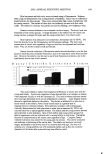
2002 ANNUAL SCIENTIFIC MEETING 95 After having watched such a video spot, the tactile evaluation of hair tresses by the respective volun- teer was carded out: He had to put his left hand through an opening in a shield he could not look through. The tactile evaluation of the hair strands behind the shield was then done in two phases, a simple "contact phase" and a more complex "touch phase" involving active manipulation of the hair. In both phases, the physiological activity was recorded continuously. Results Out of the cornucopia of material, which was recently published in all detail by us (Boucsein et al. 2002), the paper will present some highlights, e.g. the influence of the volunteers' experience inferred from skin conductivity parameters, the effect of the product world as deducted from face muscle electrical signals, and gender-specific differences in heartbeat. The most exciting conclusions could be drawn be drawn from a multivariate analysis of the data. For the untreated hair, we found a significantly better evaluation in the emotional world. The same holds for the silicate shampoo. Just the opposite situation was found for the reference shampoo: Here, the technical world was best, whereas an emotionalization turned out to be detrimental. This result is surprising, as one could have expected that all hair samples were favored in the emotional world, which may appear to most of us to be much "better" and more friendly than the technical one. Discussion Apparently, it is a clear result from this analysis that for different products completely different prod- uct worlds are suitable. The remaining crucial question has to ask for the underlying reason: Why is the technical product world better suited for the reference shampoo, but the emotional product world better suited for the silicate shampoo and untreated hair? Our approach of resolution is based on data from a sensory assessment evaluation, where we found that the untrcated hair and silicate-shampoo- treated hair appeared to be very similar and could only be differentiated by an expert panel. The refer- ence shampoo, however, showed prominent positive effects in overall sensory performance. It thus can be concluded that the more clear-cut the actual product performance is perceivable, the more con- vincing is their embedding in a technically oriented product world. The less truly perceivable differ- ences between products appear, the more necessary and effective is an emotional product world. Without doubt, for successful marketing of a product, it is thus of crucial importance to create the suitable product world. Not only objective effects are decisive, but to a large amount emotions and associations somehow related to the product. We nowadays face the situation that in most market places and product categories, the development has advanced to such an amount that products often have reached their technical limit and cannot be differentiated any more on the basis of merely objec- tive performance. To nevertheless allow a differentiation, such products thus have to be ,,emotional- ized" with the suitable underlying concept. Literature: W. Boucsein, F. Schaefer, M. Kefel, P. Busch, W. Eisfeld "Objective emotional assessment of tactile hair properties and their modulation by different product worlds", Int. J. Cosmet. Sci. 24(3), 135-150 (2002).

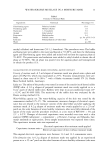
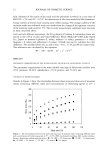
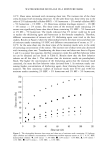
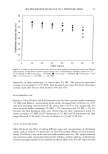
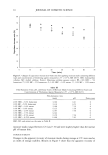
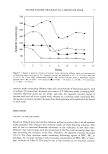
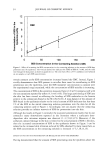
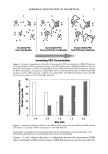
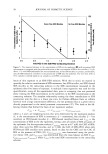
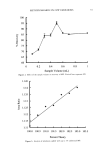
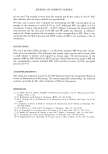
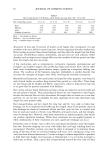
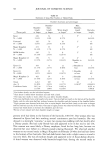
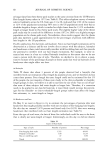
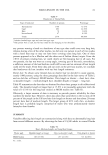
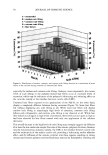
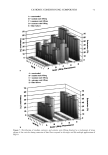
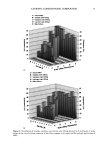
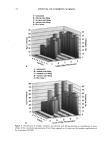
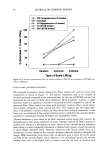
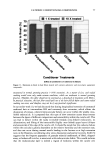
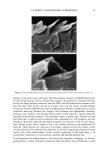
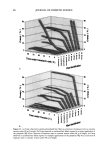
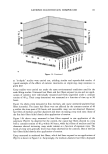
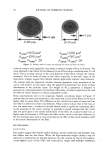
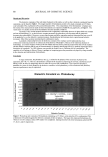
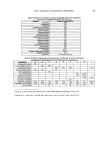
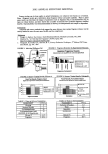
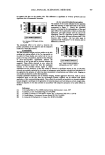
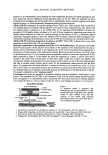
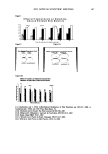
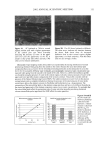
96 JOURNAL OF COSMETIC SCIENCE IDENTIFICATION AND INVESTIGATION OF POTENTIAL FRAGRANCE- RETAINING MATERIALS USING ANALYTICAL AND SENSORY METHODS Regina M. Malczewski, Ph.D. and Deborah L. Meyers, Ph.D. Dow Corning Corporation Introduction The total US fragrance market in 2001 reached sales of $5 billion (1) the prestige portion of the market accounted for $2.9 billion (2). Market research has shown that among fragrance users, 53% of the women and 50% of the men are dissatisfied with some aspect of fragrance performance. Those surveyed complained that fragrances fade too rapidly, distort over time, or cause allergic reactions (2). Therefore, materials that enhance retention of a given concentration of fragrance would improve perception as well as allow the use of lower levels to decrease allergenicity and cost. Methods to measure fragrance retention can be instrument-based (gas chromatography) or sensory-based (human panel) this paper compares both methods and discusses the results obtained with each. Materials and Methods A. Analytical method A Franz diffusion cell apparatus (Fig 1, Crown glass) was used to evaluate the ability of silicones to slow the release of fragrance from a test mixture of four fragrances. Each two-part glass cell was composed of a top that contained a chamber with charcoal (for trapping volatiles SKC) and a matched bottom. The test fragrance mixture was placed on a glass membrane (7.1 cm 2, Osmonics) that was sealed in place with a Teflon-coated O-ring that nested into both the top and bottom pieces. Each cell was water- jacketed at the bottom (35øC) air entering at a sidearm circulated through the chamber and trap at 145 cc/min. Depending on the viscosity of the test mixture, 250 pl was applied to the filter by positive displacement pipette (Gilson), or -250 pg was applied by spatula. The composition of the fragrance mixture, in order of decreasing volatility, was as follows: isoamyl acetate, eucalyptol, methyl benzoate, and geraniol (Aldrich, all 96% pure). A 1:1:1:1 combination of each fragrance was used as 5% of the test sample. The remainder of the mixture was silicone, which varied from dimethicone (non-volatile, low viscosity negative control) to new materials (A, B, and C) that were 12- 15% non-volatile content. Four hr after applying mixture and completing set assembly, the charcoal from each trap was retrieved and extracted using toluene (Aldrich, HPLC Grade). The extract was analyzed by GC (HP 6890, FID, DB- 1 column) using isododecane as an internal standard. Analysis of Variance (JMP SAS Institute, v 4.0) and Tukey's HSD test (significance level set at c•=0.05) were used to establish meaningful results. B. Sensory method A panel of volunteers trained to recognize, rank, match and name simple fragrances was used to examine the potential of various silicones to retain fragrances over time periods of up to 16 hr. Aloe Lily (AL) and Powder Fresh (PF), common fragrance types used in personal care, were mixed at levels from 0.5 to 1% in prototype water-in-silicone or water-in-oil formulations (Tables 1 and 2). Silicones of interest (12- 15% non-volatile content) were present in the test mixtures at levels between 2 and 5% active. Samples (0.05g) were spread into the bottoms of polystyrene dishes of 2" in diameter (Pall Gelman Laboratory). The dishes (with fitted lids) were then stacked and placed at 4øC until opened at RT for the designated "exposure time" (1-15 hr). After exposure was complete, the plates were closed and random-ordered sets were prepared for panelist evaluation (M hr later). Phase 1 of the assay involved evaluation of each formulation at all time points so the panelists could rank the intensity over time for each sample separately. The second phase involved the evaluation of all formulations against each other at each time point so that a comparison of the efficacies of the formulations could be made. The panelists were instructed to rank order the plates in each set from weakest fragrance to strongest. A Friedman's Rank test and a non-parametric analogue of Fisher's Least Significant Difference Test (3) , as well as the binomial distribution with a significance criterion of 0.9, were used to determine meaningful results in the sensory assay. Results and Discussion The analytical method showed significant differences between dimethicone and several experimental silicones (see Figs 3 and 4, for an example). The flexibility of this method is limited due to the time required to apply thick materials as a paste (and the resulting loss of volatiles and inaccuracy of results. Analytical testing was limited to four hours for screening purposes and practical reasons.
Purchased for the exclusive use of nofirst nolast (unknown)
From: SCC Media Library & Resource Center (library.scconline.org)