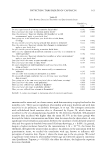
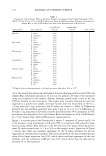
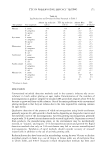
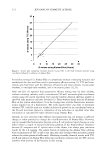
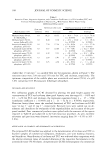
164 JOURNAL OF COSMETIC SCIENCE having a detection threshold above or equal to 1 x 10- 3 % (44% of the population) could be identified as having a low skin neurosensitivity, and women having a detection threshold below 1 x 10- 3 % (56% of the population) could be identified as having a high skin neurosensitivity. As illustrated in Table II, capsaicin detection thresholds are more strongly linked to self-declared skin reactivity to environment and to emotional stress than to cosmetics. Thus, the capsaicin detection threshold test tends to explore a larger aspect of self- declared sensitive skin than the lactic acid stinging test. To address this question in a more detailed way, further development of the capsaicin detection threshold test shall involve a comparison with the lactic acid stinging test in the same population. This test should be of particular interest for epidemiological studies designed to assess possible sexual and ethnic variations in skin neurosensitivity. A gender difference ob- served with this test could be an explanation of the well-documented discrepancy between women and men regarding self-assessed sensitive skin (2,4). It would also enable us to address the question of a possible higher skin neurosensitivity in women, as recently suggested by a study indicating that females show a trend towards being more sensitive to the lactic acid stinging test than males (2 5 ). It would also be inter- esting to explore the reality of the widespread idea that Asian (8) and especially Japanese women (26) would be more prone to subjective symptoms. Significant subjective sensory differences between Japanese and German women have recently been documented using the lactic acid stinging test. Japanese women complained about stronger stinging sen- sations. In the absence of any measurable differences concerning barrier function and skin reactivity to sodium lauryl sulphate, the authors theorized that this result may reflect a different cultural behavior rather than measurable characteristics in skin physiology (27). Anyway, this possible heightened neurosensitivity in Asian populations does not seem to rely on structural or biochemical particularities of the epidermal fiber network (28). On the contrary, a decrease in epidermal nerve density with age (29) can be evoked to explain the decreased neurosensitivity with age observed in our experiment. CONCLUSION This new test of skin neurosens1t1v1ty, which is simple, inexpensive, and painless, appears to be a promising prototype for the diagnosis of sensitive skin. Its sensitivity could also provide a basis for the assessment of modulators of skin neurosensitivity. The large distribution of the test population according to capsaicin detection thresholds illustrates the very important interindividual differences concerning the activity of cutaneous nerve endings, which are certainly one of the major physiological features explaining the phenomenon of sensitive skin. ACKNOWLEDGMENTS The authors thank Mrs Carole Guiramand and Mrs Veronique Chevalier for providing the test solutions and for their involvement in the preliminary studies concerning the formulation of capsaicin. We also thank Mrs Daniela Giacchetti for her constant support, Mr Jean-Louis Gueret for providing the customized packaging, and Mrs Odette Jam-

DETECTION THRESHOLDS OF CAPSAICIN 165 mayrac, Mr Bruno Bernard, and Mr Claude Bouillon for their helpful comments on the manuscript. REFERENCES (1) M. Christensen and A. M. Kligman, An improved procedure for conducting lactic acid stinging tests on facial skin,]. Soc. Cosmet. Chem., 47, 1-11 (1996). (2) C. M. Willis, S. Shaw, 0. de Lacharriere, M. Baverel, L. Reiche, R. Jourdain, P. Bastien, and J. D. Wilkinson, Sensitive skin: An epidemiological study, Br. j. Dermatol., 145, 258-263 (2001). (3) R. Jourdain, 0. de Lacharriere, P. Bastien, and H. I. Maibach, Ethnic variations in self-perceived sensitive skin: Epidemiological study, Contact Dermatitis, 46, 162-169 (2002). (4) A. W. Johnson and D. J. Page, Making sense of sensitive skin, Proceedings of the 18th IFSCC Congress, Yokohama, Japan, poster 78 (1995). (5) N. Ota, T. Horiguchi, N. Fujiwara, N. Kashibuchi, Y. Hirai, and F. Mori, Identification of skin sensitivity through corneocyte measurements, IFSCC Magazine, 4, 9-14 (2001). (6) A. C. De Groot, J. P. Nater, R. van der Lende, and B. Rijcken, Adverse effects of cosmetics and toiletries: A ·retrospective study in the general population, Int. J. Cosmet. Sci., 9, 255-259 (1988). (7) F. A. Simion, L. D. Rhein, B. M. Morrison, D. D. Scala, D. M. Salko, A. M. Kligman, and G. L. Grove, Self-perceived sensory responses to soap and synthetic detergent bars correlate with clinical signs of irritation,]. Am. Acad. Dermatol., 32, 205-211 (1995). (8) M. K. Robinson, Population differences in skin structure and physiology and the susceptibility to irritant and allergic contact dermatitis: Implications for safety testing and risk assessment, Contact Dermatitis, 41, 65-79 (1999). (9) J.P. Bowman, A. K. Floyd, A. Znaniecki, A. M. Kligman, T. Stoudemayer, and 0. H. Mills, The use of chemical probes to assess the facial reactivity of women, comparing their self-perception of sensitive skin,]. Cosmet. Sci., 51, 267-27 3 (2000). (10) S. Seidenari, M. Francomano, and L. Mantovani, Baseline biophysical parameters in subjects with sensitive skin, Contact Dermatitis, 38, 311-315 (1998). (11) H. Loffler, H. Dickel, 0. Kuss, T. Diepgen, and I. Effendy, Characteristics of self-estimated enhanced skin susceptibility, Acta. Dern,. Venereal., 81, 343-346 (2001). (12) B. Querleux, R. Jourdain, K. Dauchot, Y. Burnod, J. Bittoun, P. Bastien, and 0. de Lacharriere, Sensitive skin: Specific brain activation revealed by functional MRI (20th W odd Congress of Der- matology, Paris), Ann. Dermatol. Venereal., 129, 1S42 (2002). (13) B. G. Green and J. Bluth, Measuring the chemosensory irritability of human skin,]. Toxicol. Cut. Ocular Toxicol., 14, 23-48 (1995). (14) P. J. Frosch and A. M. Kligman, A method for appraising the stinging capacity of topically applied substances,]. Soc. Cosmet. Chem., 28, 197-209 (1977). (15) 0. de Lacharriere, L. Reiche, C. Montastier, M. Nicholson, C. Courbiere, C. Willis, J. D. Wilkinson, and J. Leclaire, Skin reaction to capsaicin: A new way for the understanding of sensitive skin (19th World Congress of Dermatology, Sydney, Australia), Australas. J. Dermatol., 38(S2), 3 (1997). (16) M. Fitzgerald, Capsaicin and sensory neurons: A review, Pain, 15, 109-130 (1983). (17) T. M. Jessel!, L. L. Iversen, and A. C. Cuello, Capsaicin-induced depletion of substance P from primary sensory neurons, Brain Res., 152, 183-188 (1978). (18) R. Jourdain, 0. de Lacharriere, C. Willis, P. Bastien, and J. Wilkinson, Links between sensitive skin, sensitivity to thermal stimuli, lactic acid stinging test and capsaicin discomfort test (20th World Congress of Dermatology, Paris), Ann. Dermatol. Venereal., 129, 1S594 (2002). (19) Y. Wu, X. Wang, Y. Zhou, Y. Tan, D. Chen, Y. Chen, and M. Ye, Correlation between stinging, TEWL and capacitance, Skin Res. Technol., 9, 90-93 (2003). (20) G. Yosipovitch and H. I. Maibach, Thermal sensory analyzer, boon to the study of C and Ao fibers, Curr. Prob!. Derm., 26, 84-89 (1998). (21) M. Saumonneau, D. Black, I. Bade, S. Meges, P. MacLeod, P. Bordat, and Y. Gall, Cutaneous thermal reactivity and sensitive skin: A pilot study (20th World Congress of Dermatology, Paris), Ann. Dermatol. Venereal., 129, 1S601 (2002). (22) M. K. Robinson and M. A. Perkins, Evaluation of a quantitative clinical method for assessment of sensory skin irritation, Contact Dermatitis, 45, 205-213 (2001).
Purchased for the exclusive use of nofirst nolast (unknown)
From: SCC Media Library & Resource Center (library.scconline.org)