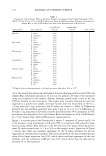
166 JOURNAL OF COSMETIC SCIENCE (23) B. G. Green and L. J. Flammer, Capsaicin as a cutaneous stimulus: Sensitivity and sensory qualities on hairy skin, Chemical Senses, 13, 367-384 (1988). (24) B. G. Green, Regional and individual differences in cutaneous sensitivity to chemical irritants: Cap- saicin and menthol,]. Toxicol. Cut. Ocular Toxicol., 15, 277-295 (1996). (25) M. Marriott, E. Whittle, and D. A. Basketter, Facial variations in sensory responses, Contact Dermatitis, 49, 227-231 (2003). (26) T. J. Stephens and C. Oresajo, Ethnic sensitive skin: A review, Cosmet. Toiletr., 109, 75-80 (1994). (27) J. Aramaki, S. Kawana, I. Effendy, R. Happle, and H. Loffler, Differences of skin irritation between Japanese and European women, Br.]. Derrnatol., 146, 1052-1056 (2002). (28) D. M. Reilly, D. Ferdinando, C. Johnston, C. Shaw, K. D. Buchanan, and M. R. Green, The epidermal nerve fibre network: Characterization of nerve fibres in human skin by confocal microscopy and assessment of racial variations, Br.]. Dermatol., 137, 163-170 (1997). (29) I. Besne, C. Descombes, and L. Breton, Effect of age and anatomical site on density of sensory innervation in human epidermis, Arch. Dermatol., 138, 1445-1450 (2002).

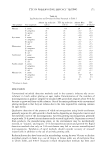
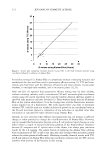
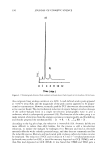
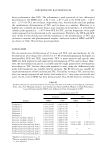
J. Cosmet. Sci., 56, 167-174 (May/June 2005) Use of triphenyltetrazolium chloride in preservative efficacy testing D.S. ORTH and K. S. ECK, Neutrogena Corporation, 5760 West 96th Street, Los Angeles, CA 90045. Accepted for publication March 1, 2005. Synopsis Preservative efficacy testing without counting colonies was done by determining growth in dilutions of inoculated product following enrichment in Letheen broth with 0.001 % triphenyltetrazolium chloride (TTC) in 96-well microtiter plates. Bacterial growth was indicated by the development of a red/pink color in the enrichment broth. The method was used to determine log reductions of bacteria at specified times after inoculation, and D-values were calculated using the reciprocal of the highest dilution showing growth (pink color) as the log CFU/ml bacteria at each time point. The method using TTC was validated by demonstrating that D-values for Staphylococcus aureus, Pseudomonas aeruginosa, Burkholderia cepacia, and Esche- richia coli in 44 aqueous cosmetic and OTC-drug products were virtually identical to those obtained when using Alamar Blue® in the miniaturized system (1). Plotting D-values obtained using TTC as a function of D-values obtained using Alamar Blue gave a line with a slope of 0.98, which shows excellent agreement of results obtained by the two methods. This miniaturized assay system has been used for more than three years for preservative efficacy testing of several hundred cosmetic and OTC-drug product samples in our laboratory. It is recommended for laboratories that conduct large numbers of preservative efficacy tests. INTRODUCTION Preservative efficacy testing or "challenge testing" is performed on aqueous cosmetic and drug products to determine the minimum effective concentration of antimicrobial pre- servatives required for adequate preservation. Products are satisfactorily preserved if they meet appropriate acceptance criteria (2,3). Methods of preservative efficacy testing in- clude compendia! methods, such as the United States Pharmacopoeia (USP) and the European Pharmacopoeia (EP) methods trade association methods, such as the Cos- metic, Toiletry & Fragrance Association (CTFA) method and rapid procedures such as the linear regression method (4-7). All of these methods have a number of similarities, including test organisms used, recovery systems, and the method of performing aerobic plate counts (APCs). Although these test methods are similar, they have differences in growth temperatures, procedures for preparing inocula, times at which APCs are determined, use of rechallenge testing, and acceptance criteria. These differences may produce variations in test results and affect 167
Purchased for the exclusive use of nofirst nolast (unknown)
From: SCC Media Library & Resource Center (library.scconline.org)