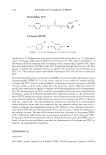
168 JOURNAL OF COSMETIC SCIENCE whether a product passes or fails the challenge test and whether it has microbiological problems in production and when being used by consumers. The decimal reduction time (D-value) is the time required for killing 90% of the population of test organisms (a 1-log reduction) and is determined by calculating the negative reciprocal of the slope of the survival curve. D-values are used in all areas of microbiology (i.e., antibiotic testing, food microbiology, sterilization by heat/ irradiation, etc.) and have been used to "standardize" or relate the different initial rates of killing allowed by the above-mentioned challenge test methods (8). The slowest initial rates of killing currently allowed for bacteria used in preservative efficacy testing (i.e., the largest D-values) are ::Sl68, ::S56, 24, ::S4, and ::S28 h for the USP, CTFA, and EP methods (based on 2-log reduction at two days [topical products}), and for pathogens (linear regression method) and non-pathogens (linear regression method), respectively. It is apparent that the USP and CTFA methods allow a slower rate of killing than the EP and linear regression methods. Orth et al. (3) reported that the maximum allowable D-values for gram-negative bacteria were around 30 h because these bacteria persisted or grew if they were not killed with initial D-values of 30 h. Orth and Eck (1) reported preservative efficacy testing could be done without counting colonies by use of a miniaturized enrichment system using 96-well microtiter plates followed by streaking onto agar or measuring fluorescence of Alamar Blue® added following enrichment. These workers found that the Alamar Blue color change that revealed microbial metabolism/ growth tended to drift and become difficult to interpret when the dye system was added to the enrichment broth for the 48-h enrichment. This problem was circumvented by addition of the Alamar Blue following enrichment and incubation for 2 h prior to making fluorescence measurements. It was considered de- sirable to have a stable, inexpensive redox dye for use in the miniaturized system. The goal of this work was to determine whether 2,4,5-triphenyltetrazolium chloride (TTC) could be used as a reliable indicator of growth in the enrichment broth in wells in the 96-well microtiter plates as indicated by similar log reductions with Alamar Blue at specified times after inoculation or calculated D-values. MATERIALS AND METHODS TEST PRODUCTS The 44 aqueous cosmetic and OTC drugs tested included shampoos, conditioners, face washes, eye creams, antidandruff shampoos with salicylic acid or coal tar, acne treatment products containing benzoyl peroxide or salicylic acid, sunless tanning products with dihydroxy acetone, mascaras, foundations, and sunscreens. TEST ORGANISMS The microorganisms used for testing included test bacteria used in routine preservative efficacy testing, including Staphylococcus aureus ATCC 65 38, Pseudornonas aeruginosa ATCC 9027, Burkholderia (Pseudornonas) cepacia ATCC 13945, and Escherichia coli ATCC 8739. The bacteria were transferred no more than five times. The test organisms were grown 24--48 h at 35°C on trypticase soy agar with 0.03% lecithin and 0.5% polysor-

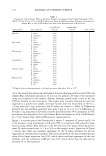
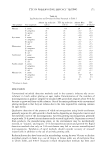
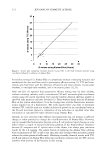
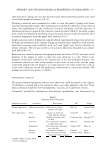
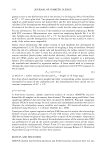
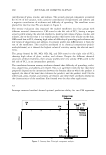
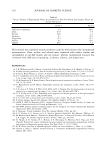
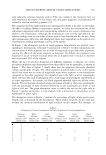
TTC IN PRESERVATIVE EFFICACY TESTING 169 bate ("Tween") 80 (TSAL T) prior to preparation of pure culture saline suspensions containing an estimated 109 CFU / ml. PRESERVATIVE EFFICACY TESTING WITH TTC Separate 50-g test samples were inoculated with 0.1 ml of a saline suspension of each test organism and were mixed. Tenfold serial dilutions were prepared using a multichannel pipetter to add 20 µl to 180 µl of Letheen broth with 1.5% polysorbate 80 (LB) and 0.001 % TTC in successive rows of a 96-well microtiter plate, and the microtiter plate was incubated for 48 h at 30°C. Microbial growth in the enrichment samples was indicated by a change in color from colorless to pink/red. Testing was routinely per- formed at 24 and 168 h (seven days). Where growth for any organism was detected at 24 h and not at 168 h, D-values were calculated using time 0 APCs and 24 h data. If growth was detected at 168 h for a specific test organism, D-values were calculated using time 0, 24, and 168 h data. The reciprocal of the highest dilution showing growth was used to determine the log number of organisms present at each time point, and D-values were calculated as described elsewhere (1). PRESERVATIVE EFFICACY TESTING WITH ALAMAR BLUE The procedure was the same for the inoculation of separate 50-g test samples with 0.1 ml of a suspension of each test organism, mixing and preparing tenfold serial dilutions using a multichannel pipetter to add 20 µl to 180 µl of LB in successive rows of a 96-well microtiter plate. After incubation of the microtiter plates for 48 h at 30°C, 20 µl of Alamar Blue® (Sensititre/ Alamar Trek Diagnostics) was added to each well of the microtiter plate, the plates were incubated for 2 h at 3 5 ° C, and the presence of viable cells was determined by fluorescence measurements with a Cytofluor II Multi-Well Fluorescence Plate Reader (PerSeptive Biosystems Framingham, MA) using excitation at 5 30 nm and emission at 590 nm. Microbial growth in the enrichment samples was indicated by at least a twofold increase in fluorescence intensity over the fluorescence observed in control wells (uninoculated wells with 180 µl LB and 20 µl of Alamar Blue, but no test organisms). The reciprocal of the highest dilution showing growth was used to determine the log number of organisms present at each time point, and D-values were calculated. STATISTICAL TREATMENT OF DATA D-values obtained with TTC were plotted as a function ofD-values obtained on the same samples using Alamar Blue in the miniaturized system. Linear regressions and correla- tion coefficients were determined using Microsoft Excel. Where a test organism was not recovered at a 24 h and the D-value was determined to be "less than" a discrete value (i.e., 4.0 h, 3.3 h, etc.), the "less than" sign was dropped before entering the data points in the scatter plot. RESULTS Table I contains results for the log CFU/ml of S. aureus, P. aeruginosa, B. cepacia, and E.
Purchased for the exclusive use of nofirst nolast (unknown)
From: SCC Media Library & Resource Center (library.scconline.org)