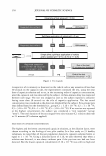
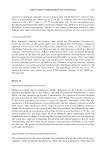
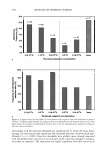
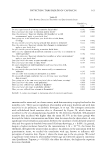
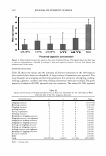
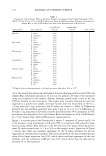
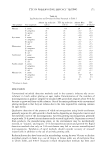
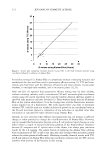
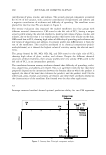
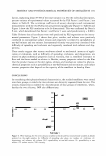
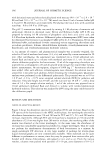
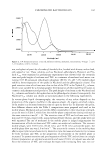
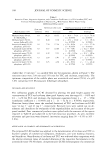
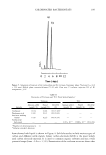
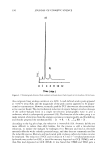
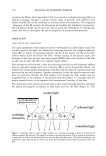
172 JOURNAL OF COSMETIC SCIENCE 35 30 ::::, 25 0 e.. (.) 20 � · 15 ::::, 1a 10 5 0 5 10 15 20 25 30 35 D-values using Alamar Blue (Hours) Figure 1. Scatter plot comparing D-values obtained using TTC in LB with D-values obtained using enrichment followed by addition of Alamar Blue. for sterility testing (11). Alamar Blue is a proprietary mixture containing resazurin and methylene blue dyes and been used in preservative efficacy testing (1). TTC and tetra- zolium salts have been used for detection of bacteria and yeast colonies in pour-plate methods, in multiple-tube methods, and in microtiter plates (12, 13 ). Orth and Eck (1) reported that preservative efficacy testing may be done reliably, without counting colonies, with a miniaturized 96-well microtiter-plate enrichment system using the initial microbial level and the highest dilution showing growth at specified time points to calculate D-values (1). These workers found that use of Alamar Blue in this system added about 2 h to the testing time, and the fluorescence measure- ments required use of a fluorometer. The work reported here was done to determine whether TTC could be used as a reliable indicator of growth in the enrichment broth in the 96-well microtiter plates by comparison of log reductions at specified times after inoculation or calculated D-values obtained using Alamar Blue. Initially, we were concerned that different microorganisms may not produce a sufficient change in redox potential to change the color/fluorescence of Alamar Blue. However, testing revealed that fermentative bacteria such as E. coli produced rapid changes in color (often within a couple of minutes following addition of the Alamar Blue). Oxidative bacteria (P. aeruginosa and B. cepacia) were a little slower, but always gave consistent results by the 2-h reading. The salient feature of replacing the Alamar Blue addition with incorporation of TTC in LB is that the pink color develops when microbial growth reduces the redox potential sufficiently. Obtaining virtually identical results with TTC in LB and addition of Alamar Blue following enrichment indicates that the TTC did not interfere with recovery of the bacteria in this testing.

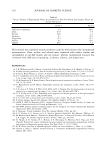
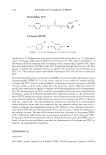
TTC IN PRESERVATIVE EFFICACY TESTING 173 The use of TTC in LB provided a more efficient and less costly means of detecting microbial growth than Alamar Blue fluorescence because microbial growth and con- comitant reduction in the redox potential of the culture media resulted in a change from colorless TTC (tetrazolium salt) to red/pink (reduced formazan product) that could be easily detected by visual examination of the microtiter plate wells following incubation. It is noteworthy that the miniaturized system with TTC in LB uses visual inspection of the 96-well plates for color change and does not require expensive instrumentation (spectrophotometers, fluorometers, etc.). The use of LB with TTC for preservative efficacy testing increased laboratory efficiency by decreasing the time required for preparation of media, plating on agar and counting colonies, and sterilizing materials prior to disposal. The system also used fewer materials than conventional plating methods consequently, it was environmentally friendly be- cause it generated less laboratory waste. This was noted in our earlier work using Alamar Blue in the miniaturized system (1). We have used TTC in the miniaturized assay system for over three years and have performed hundreds of preservative efficacy tests with it. We have found it to be reliable for detecting bacterial growth following enrichment. Finding virtually identical results with LB enrichment followed by addition of Alamar Blue and with LB containing TTC demonstrates that TTC did not interfere with the recovery of microorganisms used in these studies. Jin et al. (12) reported a dye reduction assay using tetrazolium salts for C. albicans. Although TTC could be used for preservative efficacy testing of yeasts in the miniaturized assay system, we elected to use conventional plating procedures for pre- servative efficacy testing with C. albicans and Aspergillus niger in our laboratory. There is increasing interest in the use of miniaturized, automated procedures in micro- biological testing (13), and it is believed that preservative efficacy testing using TTC in LB in 96-well microtiter plates would lend itself to automation. This miniaturized method is recommended for laboratories conducting large numbers of preservative ef- ficacy tests on aqueous cosmetic and drug products. REFERENCES (1) D. S. Orth and K. S. Delgadillo Eck, Preservative efficacy testing of aqueous cosmetics and drugs without counting colonies, Cosmet. Toiletr., 116(4), 41-50 (2001). (2) D.S. Orth and D. C. Steinberg, The safety factor in preservative efficacy testing, Cosmet. Toiletr., 118(4), 51-58 (2003). (3) D.S. Orth, K. S. Delgadillo, and C. Dumatol, Maximum allowable D-values for gram negative bacteria: Determining killing rates required in aqueous products, Cosmet. Toiletr., 113(9), 53-59 (1998). (4) United States Pharmacopoeia! Convention, "Microbiological Tests, Antimicrobial Preservatives- Effectiveness," in United States Pharmacopoeia XXV (United States Pharmacopoeia! Convention, Rock- ford, MD, 2002), pp. 1809-1811. (5) European Pharmacopoeia Commission, "Efficacy of Antimicrobial Preservation," in European Pharma- copoeia, 3rd ed. (Council of Europe, Strasbourg, 1996), pp. 286-287. (6) Preservation Subcommittee of the CTFA Microbiological Committee, A guideline for the determina- tion of adequacy of preservation of cosmetics and toiletry formulations, TGA Cosrnet. ]., 2, 20-23 (1970). (7) D.S. Orth, Linear regression method for rapid determination of cosmetic preservative efficacy,]. Soc. Cosrnet. Chern., 30, 321-332 (1979). (8) D.S. Orth, Standardizing preservative efficacy test data, Co57net. Toiletr., 106(3), 45-48, 51 (1991). (9) D.S. Orth, Putting the Phoenix phenomenon into perspective, Cosmet. Toiletr., 114(4), 61-66 (1999).
Purchased for the exclusive use of nofirst nolast (unknown)
From: SCC Media Library & Resource Center (library.scconline.org)