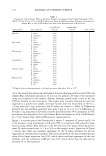
17 4 JOURNAL OF COSMETIC SCIENCE (10) Difeo Laboratories, Difeo Manual of Dehydrated Culture Media and Reagents for Microbiological and Clinical Laboratory Procedures, 9th ed. (Difeo Laboratories, Inc., Detroit, Michigan, 1953), pp. 192-199. (11) M. T. Ohara and T. Saito, Application of triphenyltetrazolium chloride in microbial limit test in pharmaceuticals and cosmetics: Multiple-tube method for yeasts detection, Boll. Chim. Farmaceutico, 136(1), 17-21 (1997). (12) Y. Jin, H.K. Yip, Y. H. Samaranayake, J. Y. Yau, and L. P. Samaranayake, Biofilm-forming ability of Candida albicans is unlikely to contribute to high levels of oral yeast carriage in cases of human immunodeficiency virus infection,]. Clin. Microbial., 41, 2961-2967 (2003). (13) K. C. Chapin and M. C. Musgnug, Validation of the automated reading and incubation system with Sensititre plates for antimicrobial susceptibility testing,]. Clin. Microbial., 41, 1951-1956 (2003).

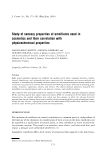
J. Cosmet. Sci., 56, 175-182 (May/June 2005) Study of sensory properties of emollients used in cosmetics and their correlation with physicochemical properties MARIA EMMA PARENTE, ADRIANA GAMBARO, and GERARDO SOLANA, Cdtedra de Quimica Cosmetica (M.E.P., G.S.) and Secci6n Evaluaci6n Sensorial, Cdtedra de Ciencia y Tecnologia de Alimentos (A.G.), Facultad de Quimica, Universidad de la Republica, Montevideo, Uruguay. Accepted for publication February 28, 2005. Synopsis Eight liquid emollients (mineral oil, sunflower oil, squalane, decyl oleate, isopropyl myristate, octyldo- decanol, dimethicone, and cyclomethicone) were characterized by instrumental and sensory methods and evaluated to determine the relationship between sensory and instrumental measures. Sensory analysis was carried out by a panel of 14 assessors, who evaluated the following attributes: difficulty of spreading, gloss, residue, stickiness, slipperiness, softness, and oiliness. The physicochemical properties measured were spreadability (at one-half minute and at one minute), viscosity, and superficial tension. Data collected were statistically analyzed by analysis of variance (ANOVA), principal component analysis (PCA), and linear partial least squares regression analysis (PLS). In consideration of their physicochemical characteristics, the studied emollients were sorted into three groups, in which the silicones distinctly separate from the rest. Sensory characteristics enabled the discrimination of four groups of emollients where, besides the two silicones, isopropyl myristate was also differentiated. PLS revealed that emollient sensory attributes could be well predicted by instrumental measurements. INTRODUCTION The inclusion of emollients in cosmetic emulsions is a common practice, independent of the final use of the emulsion. In consideration of their action on the skin, emollients can be regarded as a replacement of natural lipids, as they contribute to water retention by the stratum corneum. They result in a smoother, more elastic, and lubricated skin, and impart a pleasant and comfortable skinfeel (1-3). Lipophyllic emollients offer a wide variety of sensations when applied to the skin (waxy, Address all correspondence to Marfa Emma Parente. 175
Purchased for the exclusive use of nofirst nolast (unknown)
From: SCC Media Library & Resource Center (library.scconline.org)