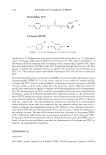
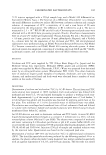
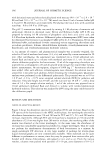
176 JOURNAL OF COSMETIC SCIENCE greasy, oily, dry, astringent, sticky, velvety, etc.) and may have great incidence on the sensory characteristics of the cosmetic emulsions in which they are included ( 4-6). Emollients also have major incidence on the physicochemical properties, such as con- sistency and spreadability, of the emulsions in which they are included. These charac- teristics are very important to achieve adequate efficacy and user acceptance of the products. In general, there are few bibliographical references about sensory evaluation of cosmetics and, particularly, of emollients. In 1971 Goldember and De la Rosa (4) found that it was possible to quantify the skinfeel of emollient cosmetics incorporated in a standard base by using a skinfeel index (SFI) (ratio of the initial slip of a product (scale of 1 to 5) to its total end feel (scale of 4 to 20). Perceived skinfeel attributes of creams and lotions (appearance, rub-in, absorption, appearance of skin, immediate and delayed afterfeel) have been evaluated by Aust et al. (7) using a trained descriptive panel. In 1991, Civille and Dus (8) used the skinfeel spectrum descriptive analysis (skinfeel SDA) method to characterize skin care products. They used strict protocols for manipu- lation and precisely defined terms to describe the qualitative properties and their relative intensities in each product. The evaluation process was divided into four categories: pick-up (firmness, stickiness, cohesiveness, peaking) rub-out (wetness, spreadability, thickness, absorbency) residual feel and appearance, immediate and after 20 minutes (glossy, sticky, slippery, oily, waxy, greasy). The aims of the present work were to: (a) characterize, from a sensory point of view, eight liquid emollients frequently used in cosmetic emulsions and (b) study the correlation between the sensory characteristics of the emollients and their physicochemical proper- ties. MATERIALS AND METHODS SAMPLES The following emollients were used: mineral oil (MO), sunflower oil (SO), squalane (SQ), decyl oleate (DO), isopropyl myristate (1PM), octyldodecanol (OD), dimethicone (DM), and cyclomethicone (CM). The selected emollients have different chemical structures, including silicones (linear and cyclical), hydrocarbons (saturated and unsaturated), esters, branched-chain fatty alcohols, and natural oils. Sunflower oil, a common oil in Uruguay, is a substance of cosmetic interest due to its high content of unsaturated fatty acids (9,10). SENSORY ANALYSIS Selection of attributes and training of judges. Initially the emollients were presented to a group of 14 sensory judges experienced in the evaluation of food, who lacked experience in cosmetic products. They were asked to describe the sensations experienced when emollients were spread on their skin and the sensations they perceived when they touched and observed the emollient film formed over the skin immediately after appli- cation. The descriptors to be employed in the evaluation of emollients were selected by

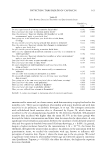
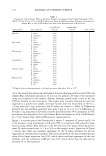
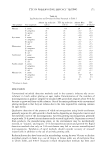
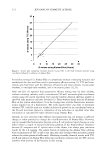
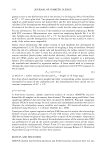
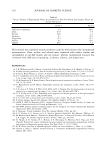
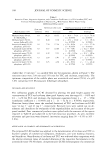
SENSORY AND PHYSICOCHEMICAL PROPERTIES OF EMOLLIENTS 177 open discussion, taking into account the previously mentioned terms and the ones cited in the bibliographical references (8,11). Working conditions were noqnalized in order to train the panel of judges and obtain valid and reproducible results. This normalization included the definition of the selected terms, the establishment of the conditions of sensory evaluation, and the selection of references (anchors) to quantify the intensity of each attribute (Table I). Secondly, judges were trained to evaluate the attributes using structured 10-point scales of intensity, until consistent judgments from the panel were achieved (8,11). Sample evaluation method. A balanced complete-block experimental design was carried out for duplicate evaluation of the samples during six sessions (three samples in each session). Structured ten-point scales anchored with "nil" and "high" were used to describe at- tribute intensity. The test was carried out in a sensory laboratory designed in accordance with ISO 8589 (12). Before the test started a mixture of isopropyl alcohol and water (45/55) was used on the forearms of the judges in order to clean the zone, allowing it to dry. Three 4-cm- diameter circles were outlined on the internal side of the non-dominant forearm. The coordinator placed one drop of the sample in the center of one circle, and the judge rotated the sample with one finger in a circular manner 120 times within the circle, at a rate of two times per second and employing a metronome to control the rhythm. The evaluated attributes are shown in Table I. INSTRUMENTAL ANALYSIS The physicochemical properties selected were those that could be related to the capacity of emollients to spread and to the sensations they cause when applied to the skin. These physicochemical properties were spreadabili ty, viscosity, and superficial tension. Instrumental spreadability determination. Instrumental spreadability was determined by Table I Emollient Profile Descriptors Evaluation instance Attributes Description During application Difficulty spreading Difficulty in moving product over skin After application Gloss Amount or degree of light reflected off skin Residue Amount of product left Stickiness Slipperiness Softness Oiliness * Stafford Miller Ireland, LTD. ** Lab. Andr6maco. on skin Force required to separate a finger from skin Ease of moving two fingers over the skin Skin surface uniformity Type of residue (non-wet liquid that leaves residue) "Nil" "High" Baby oil Lanolin USP Corega®* Baby oil Untreated skin Hipoglos®** Baby oil Lanolin USP Lanolin USP Baby oil Corega® Glass Untreated skin Baby oil
Purchased for the exclusive use of nofirst nolast (unknown)
From: SCC Media Library & Resource Center (library.scconline.org)