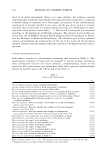
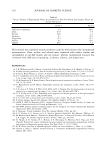
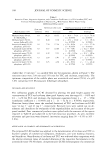
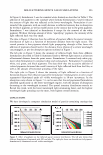
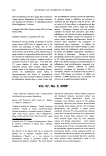
182 JOURNAL OF COSMETIC SCIENCE Table II Percent Variance of Experimental Values Accounted for by First Two Partial Least Squares Factors for Sensory Descriptors Factor 1 Factor 2 Difficulty of spreading 5.6 88.6 Gloss 81.8 5.9 Residue 90.8 1.4 Stickiness 0.1 95.6 Slipperiness 12.3 78.1 Softness 0.1 62.6 Oiliness 84.0 0.2 PLS revealed that emollient sensory attributes could be well predicted by instrumental measurements. Gloss, residue, and oiliness were correlated with surface tension and spreadability at one-half minute and one minute, whereas instrumental viscosity was correlated with difficulty of spreading, stickiness, softness, and slipperiness. REFERENCES (1) J. B. Wilkinson and R. J. Moore. Cosmetologfa de Harry (Ed. Dfaz Santos S. A., Madrid, 1990), pp. 73. (2) B. Salka, Choosing emollients: Four factors will help you decide, Cosmet. Toiletr., 112, 101-112 (1997). (3) Cosmetic Bench Reference, Cosmetics & Toiletries (Allured Publishing Corporation, 1998). (4) R. L. Goldember and C. De la Rosa, Correlation of skin feel of emollients to their chemical structure, J. Soc. Cosmet. Chern., 22, 635-654 (1971). (5) H. M. Brand and E. E. Brand-Garnys, Practical application of quantitative emolliency, Cosrnet. Toiletr., 107, 93-99 (1992). (6) V. Kamershwarl and N. Mistry, Propriedade sensoriais dos emolientes, Cosrnet. Toiletr., 13, 52-57 (2001). (7) L.B. Aust, L. P. Oddo, J. E. Wild, 0. H. Mills, and]. S. Deupree, The descriptive analysis of skin care products by a trained panel of judges, J. Soc. Cosrnet. Chern. 38, 443-449 (1987). (8) G. V. Civille and A. A. Dus, Evaluating tactile properties of skincare products: A descriptive analysis technique, Cosrnet. Toiletr., 106, 83-88 (1991). (9) C. E. Clum, Oils as moisturizers and emollients, Cosrnet. Toiletr., 93, 43-44 (1978). (10) E. Primo, Qufrnica Agricola Ill: Alirnentos. (Ed. Alambra, Madrid, 1979), pp. 161. (11) ASTM E 1490-92 (Reproved 1997), Standard Practice for Descriptive Skin/eel Analysis of Creams and Lotions (American Society for Testing and Materials, 1997). (12) ISO 8589, Sensory analysis: General guidance for the design of test rooms (International Standards Organization (ISO), Switzerland, 1988). (13) S. Glasstone, Tratado de Qufrnica Ffsica (Ed. Aguilar, Madrid, 1964), pp. 443. (14) E. D. Schukin, A. V. Pertsov, and L. A. Amelina, Qufmica Coloidal (Ed. Mir, Moscow, 1988), pp. 47. (15) M. Martens and H. Martens. "Partial Least Squares Regression," in Statistical Procedures in Food Research, J. R-. Piggot, Ed. (Elsevier Applied Science, London, 1986), pp. 293-359. (16) G. Hough, A. N. Califaro, N. C. Bertola, A. E. Bevilacqua, E. Martinez, M. J. Vega, and N. E. Zaritzky, Partial least squares correlations between sensory and instrumental measurements of flavor and texture for Reggianito grating cheese, Food Qua!. Prefer., 7, 47-53 (1996). (17) D. W. Osten. Selection of optimal regression models via cross-validation,]. Chem., 2, 39 (1988). (18) Genstat 5, Release 3 Reference Manual (Genstat 5 Committee, Rothamstead Experimental Station, Oxford, UK, 1993 ).

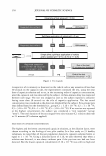
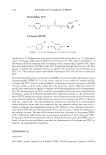
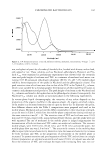
J. Cosmet. Sci., 56, 183-192 (May/June 2005) Simultaneous determination of chlorinated bacteriostats in cosmetic and pharmaceutical products LAI-HAO WANG, MEY TSO, and CHUN-YU CHIN, Department of Applied Chemistry, Chia Nan University of Pharmacy and Science, Tainan, Taiwan, 71743, R.O.C. Accepted for publication April 4, 2005. Synopsis A high-performance liquid chromatography method has been developed for simultaneous determination of triclosan (2,4,4' -trichloro-2' -hydroxydiphenyl ether) and triclocarban (3,4,4' -trichlorocarbanilide) in cos- metic and pharmaceutical products. The two compounds could be separated on a Nucleosil C 18 column and eluted with acetonitrile and water (70:30, v/v) as the mobile phase and detected with a differential refractive index detector. The retention times of triclosan and triclocarban were 5.81 and 2.99 min, respectively. The results obtained were in good agreement with those obtained by a differential pulse voltammetric method. INTRODUCTION Triclosan (Irgasan DP 300 2,4,4' -trichloro-2 '-hydroxydiphenyl ether) exhibits broad- spectrum antimicrobial activity and inhibits growth of microbial populations respon- sible for sweat degradation and malodor generation. The majority of deodorants (aero- sols, sticks, roll-ons, creams, and soaps) currently marketed incorporate triclosan as an active ingredient (1). There have been a number of recent reports of the antiplaque efficacy of toothpastes (2-4) and mouth rinses (5-7) containing 0.2% (w/w) triclosan. Triclocarban (TCC, 3,4,4'-trichlorocarbanilide) is a bacteriostat, widely used in deodor- ant bar soaps (8-10). Currently medicated "deodorant" soap and healthcare personal hand-wash products available to consumers contain TCC and/or triclosan (11, 12) (see Figure 1). It was reported that triclosan was detected in commercial textile products with a higher frequency than other agents and was easily chlorinated by sodium hypochlorite, a domestic bleaching agent, to give 2' ,3,4,4' -tetrachloro-2-hydroxydiphenyl ether, 2' ,4,4' ,5-tetrachloro-2-hydroxydiphenyl, and 2' ,3,4,4,5-pentachloro 2-hydroxydiphe- nyl ether (13 ). Furthermore, the triclosan and the three chlorinated derivatives were readily converted into various polychlorinated dibenzo-p-dioxins by heating and UV Address all correspondence to Lai-Hao Wang. 183
Purchased for the exclusive use of nofirst nolast (unknown)
From: SCC Media Library & Resource Center (library.scconline.org)