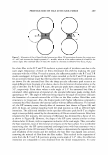
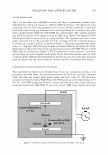
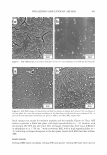
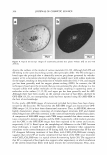
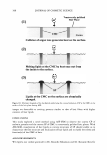
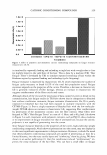
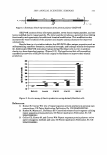
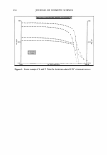
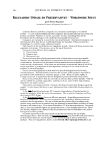
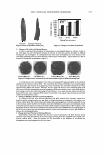
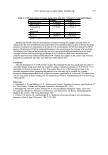
VISUALIZING HAIR LIPIDS BY ASE-SEM 307 bation with fatty acids or wax esters elicits the reappearance of SP, although triolein does not have that effect, which may result from its inability to penetrate into the hair fiber due to its large molecular size. In the mechanism involved in the convex formation of CP, there is a simple etching mechanism as reported previously in several cases (10-19): convex CP are formed due to the great difference between the slower etching of melanin granules and the faster etching of the surrounding proteins. This mechanism is also corroborated by our ob servations that no treatments (such as incubation with solvent, chemical fixation, and thin sectioning) affected the appearance of CP in the hair plane by ASE. As for the mechanism involved in the convex formation of SP, it is of considerable interest to characterize how hair lipids can generate convex structures during ASE. Our findings that the convex SP disappeared after chemical fixation with osmium tetroxide and in 90-nm-thick ultra-thin sections cannot be explained in terms of a simple etching mechanism. Our observation using chemical fixation of hair fibers revealed that fixation with osmium tetroxide, but not with glutaraldehyde, markedly diminished the convex structures of SP. Since osmium tetroxide fixes both proteins and lipids while glutaral dehyde fixes only proteins, it is likely that the existence of mobile lipids is essential for the convex formation of SP during ASE. Another observation using thin sectioning of hair fibers demonstrated that there is no convex formation of SP in ASE-SEM images using 90-nm-thick ultra-thin sections. This result suggests that hair structures with a minimal thickness are essentially required for the convex formation of SP during ASE. In addition, our results using optical microscopy revealed that ASE elicits a remarkable change from a transparent colorless plane to a black opaque one, implying that heat is generated in the hair plane during ASE. We also showed that SP formation is not affected by post-incubation with ethanol, whereas it is completely abolished following pre-incubation with ethanol, which indicates an alteration of the chemical status of hair lipids during ASE. Based upon the above findings, the mechanism(s) involved in the convex formation of SP at the CMC during ASE might be as depicted in Figure 10: (a) joule heat is generated on the surface by violent collisions of argon ions, (b) melting hair lipids at the CMC ooze out from the inside of the hair plane to the surface, and (c) lipids that have oozed out from the CMC are chemically changed by the additional collision energy of argon ions, leading to the final convex formation of SP. The chemical change in hair lipids might be associated with complex reactions such as the polymerization of lipids or the covalent binding of lipids with proteins during ASE. Although the convex SP do not seem to be distinct etching structures, it is plausible that the convexity of SP in ASE-SEM images can be used as a good indicator to visualize the fine structure and localization of hair lipids. In OPE-SEM observations for internal structures of a hair fiber (14, 15), Swift (14) stated that the "cell membrane is etched at far greater rates due to the lowest sulfur content" according to the principle of OPE, which results in the concave structures of the CMC in the surrounding proteins. Al though the location of the CMC in a hair fiber is detectable by OPE-SEM, it is not sufficient to directly visualize the fine structure of hair lipids. This is because the concave structure of the CMC is responsible for the lower content of sulfur within the proteins, but is not relevant to the hair lipids. On the other hand, although conventional TEM also allows the observation of microstructures, including the �-layers and 8-layer of the CMC in a hair fiber, the structures of the �-layers are not directly responsible for the hair lipids. In our experience, even if the hair lipids are lost, the �-layers of the CMC in TEM

308 (1) JOURNAL OF COSMETIC SCIENCE Transversely polished Hair Plane Collision of argon ions generates heat on the surface. (2) Melting lipids at the CMC by heat ooze out from the inside to the surface. (3) Lipids at the CMC on the surface are chemically changed. Figure 10. Schematic diagram of the mechanism underlying the convex formation of SP at the CMC on the surface of the hair plane during ASE. images are detectable as staining patterns similar to that of hair fibers with higher contents of hair lipids. CONCLUSIONS This study explored a novel method using ASE-SEM to observe the convex CP of melanin granules and the convex SP of CMC in transversely polished hair planes. With ASE-SEM, visualization of hair lipids as convex structures of SP should enable us to characterize the fine structure and localization of hair lipids and to clarify the role(s) and function(s) of the CMC of hair. ACKNOWLEDGMENTS We express our cordial gratitude to Dr. Kouichi Nakamura and Dr. Katsumi Kita for
Purchased for the exclusive use of nofirst nolast (unknown)
From: SCC Media Library & Resource Center (library.scconline.org)