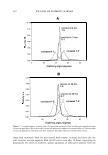
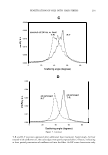
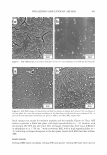
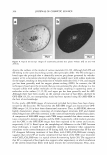
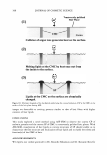
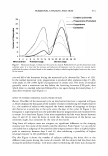
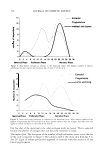
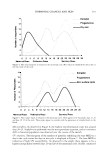
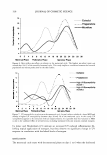
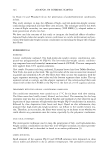
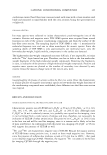
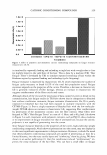
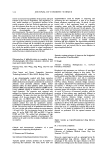
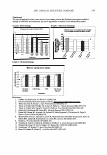
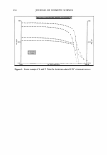
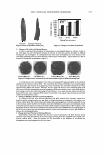
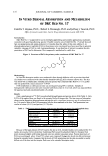
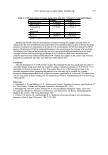
318 JOURNAL OF COSMETIC SCIENCE j § 14 - - - - - - - Estradiol 12 I - - - - - Progesterone 10 ---Microflora 8 6 4 2 0 2 4 6 8 10 12 14 16 18 20 22 24 26 28 30 Menstrual Ftlase A'olif erative Ftlase Secretory R1ase Figure 6. Skin surface microflora in relation to the menstrual cycle. The highest microbial count was around days 16-22 of the monthly hormonal cycle. This study implies a correlation between the bacterial population and sebum production on the skin surface. 14 2 ____________ _.,,, I I · · · · · · · Eetradiol - • - - - Projeaterone -High UV Susceptibility month 1 High UV Suaceptlbllity month2 0 2 4 6 8 10 12 14 16 18 20 22 24 28 28 30 Manatrual Ruma Rolerativa Fhue Secramry R181a Figure 7. UV susceptibility in relation to the menstrual cycle. Several subjects exhibited a lower MED and thereby a higher UV susceptibility between days 20 and 28 of the menstrual cycle. In this study UV susceptibility appears to be concurrent with an impaired barrier. It is possible that this variation in MED is due to the combined effect of several factors, including hormonal levels and stratum corneum integrity. by Jemec and Heidenheim (23) indicate an increased UV-induced inflammation fol lowing topical application of estrogen, but they observe no significant change in UV response in correlation with the blood levels of estrogen. DISCUSSION The menstrual cycle starts with the menstrual phase on days 1 to 6 when the thickened

HORMONAL CHANGES AND SKIN 319 lining of the uterus (endometrium) is shed, causing menstrual bleeding. Days 7 to 14 are the follicular or proliferative phase, and days 15 to 28 are the luteal or secretory phase when the egg is released (ovulation). In the normal menstrual cycle, progesterone is produced during ovulation. Generally, during days 1-6 of the cycle there is less than 100 ng/dl of progesterone in the blood. During days 7-14 the level rises to 20-150 ng/dl, and on days 15-28 there is a peak of 250-2,800 ng/dl of progesterone in the blood (22). A similar trend was observed in this study, as observed in Figure 1. It is clear that the subjects used in these studies were within the normal range of monthly hormonal fluctuation. During early follicular development, circulating estradiol levels are relatively low. About one week before ovulation, levels begin to increase, at first slowly, then rapidly. The levels generally reach a maximum one day before the luteinizing hormone (LH) peak. After this peak and before ovulation, there is a marked and precipitous fall. During the luteal phase, estradiol rises to a maximum 5-7 days after ovulation and returns to baseline shortly before menstruation (22). In these studies, the skin barrier was the weakest between days 22 and 26. A weak barrier is defined as having fewer layers and/or weaker cohesivity of the layers of the stratum corneum. Skin thickness and echodensity has been reported to change during the spontaneous menstrual cycle (4). Studies conducted by Eisenbeiss et al. (4) report a statistically significant increase in the skin thickness from phase A (2-4 days) to phase B (12-14 days), but not from phase B to phase C (21-23 days). In studies conducted by Harvell et al. (5 ), TEWL was higher on the day of minimal estrogen/progesterone secretion as compared to the day of maximal estrogen secretion on both back (p = 0.03 7) and forearm (p = 0.021) sites, suggesting that the skin barrier function is less complete on the days just prior to the onset of the menses as compared to the days just prior to ovulation. Significant differences in baseline blood flow also existed for the day of maximal estrogen secretion as compared to the day of maximal progesterone secretion, with higher baseline blood flow recorded on the day of maximal progesterone secretion on both the back (p = 0.021) and forearm (p = 0.009) sites (2). Since all subjects in this study were not "stingers," there was only a slight trend toward elevated neuronal response between days 2 and 12 of the cycle. Neuronal responses, like pain symptoms of many disorders, are reported to vary with menstrual stage. Studies conducted by Giamberardino et al. (7) indicate that menstrual phase dysmenorrhea status can have interacting effects on pain thresholds. Skin response to a challenge with sodium lauryl sulfate has been found to be significantly stronger at day 1 than at days 9 through 11 in the menstrual cycle (8). The influence of the menstrual cycle on skin-prick test reactions to histamine, morphine, and allergen indicate a significant increase in weal-and-flare size to histamine, morphine, and parietaria on days 12 to 16 of the cycle, corresponding to ovulation and peak estrogen levels (24). In this study, sting response appeared to correspond more to skin dryness, since skin was also driest between day 1 and day 6 of the cycle. Estrogens have an important function in many components of human skin, including the epidermis, dermis, vasculature, hair follicle, and the sebaceous, eccrine, and apocrine glands (25). Estrogens have significant roles in skin aging, pigmentation, hair growth, sebum production, and skin cancer (25). Estrogen improves the physical properties of skin by improving water retention and the quality of vascularization. In addition,
Purchased for the exclusive use of nofirst nolast (unknown)
From: SCC Media Library & Resource Center (library.scconline.org)