J. Cosmet. Sci.J 56, 323-330 (September/October 2005) Penetration of cationic conditioning compounds into hair fibers: A TOF-SIMS approach S. B. RUETSCH and Y. K. KAMATH, TRI/Princeton, Princeton, NJ 08542. Accepted for publication June 8, 200 5. Synopsis Cationic conditioning compounds protect against hair damage caused by cosmetic chemical treatments and grooming practices. They also enhance the retention of moisture. However, the question as to whether they do this superficially by residing on the hair surface or by penetrating into the fiber remains unanswered. In this work, an attempt has been made to show the penetration of a low-molecular-weight cationic condi tioning compound into the hair cortex using the time-of-flight secondary ion mass spectrometry (TOP SIMS) method, applied in earlier research to show the penetration of oils into hair. An example of the practical benefit of such penetration into the cortex in greatly improving the fatigue resistance of hair has been discussed. INTRODUCTION Cationic conditioning compounds are often used to improve the cosmetic properties of hair, such as manageability, combability, and reduction of static charging, known as "flyaway." Most of the desirable effects are brought about by the small amounts of conditioner residues left on or in the hair fiber. Earlier studies have shown that these cationic conditioner residues reinforce the cuticle sheath of hair and reduce scale lifting, which occurs as a response of the surface cuticle cell when tensile stress is imposed on the hair fiber during grooming, especially when encountering a snag, or pulling and stretching the hair (1). Other properties of the hair assembly coveted by consumers and producers of hair care products are abrasion and fatigue resistance and retention of moisture. These attributes of conditioning compounds are often enhanced by the penetration of these compounds into the hair fiber. Although conventional concepts of diffusion doubt the penetration of high-molecular-weight polymer cationics (above a molecular weight of -1000) be yond the cuticular sheath, claims have been made to the contrary. We, therefore, pursued a study involving penetration of two cationic conditioning compounds, differing in chemistry and molecular weight, using a reliable method of identifying their residues within the hair fiber, especially at low concentration. Faucher and Goddard (2), using a radiotracer technique, showed the penetration of cationic cellulose-based polymers into the hair fiber. Similar studies were conducted 323

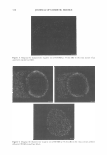
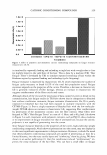
324 JOURNAL OF COSMETIC SCIENCE by Chow (3) and Woodard (4) on the penetration of polyethylenimine conditioners in hair. This study attempts to map the diffusion of high- and low-molecular-weight cationic conditioning compounds into hair-fiber cross sections. The technique used for this work is time-of-flight secondary ion mass spectrometry (TOF SIMS) (5 ), adapted earlier to show penetration of oils into hair. We have used the outcome of this study to interpret the beneficial effects of surface deposited high-molecular-weight cationic conditioner on cuticle reinforcement and pen etrated low-molecular-weight cationic conditioner on extending the fatigue life of single hair-fibers. EXPERIMENT AL MATERIALS Cationic conditioning compounds. The high-molecular-weight cationic conditioning com pound was polyquaternium-10 (PQ-10). The low-molecular-weight cationic condition ing compound was cetyl trimethyl ammonium bromide (CETAB). The neat compounds were applied from 0.5% aqueous solutions. Hair samples. Fourteen-inch-long unaltered, European brown hair from DeMeo Brothers, New York, was used in this work. The top five inches of the root sections were mounted in parallel and identified as #1-20. The fibers were then cut into two segments, with the upper segments measuring two inches and the bottom segments three inches. The top segments served as controls, and the adjacent segments of the corresponding fibers were treated with either the CETAB or the PQ-10 in the form of a 0.5% aqueous solution. TREATMENTS WITH THE CATIONIC CONDITIONING COMPOUNDS The conditioner treatments were carried out at 3 7 ° C for six hours with slow stirring. The fibers were then briefly rinsed, blotted, and air-dried. The reasoning for the long treatment time was that in earlier work of Faucher and Goddard (2), they observed rapid deposition of large amounts of high-molecular-weight PQ-10 conditioner (in minutes), followed by slow deposition (over hours and days). Based on this information, they proposed that high-molecular-weight polymers can diffuse in the swollen keratin ma trix. Therefore, in our studies, the fibers were treated up to six hours to see whether we could observe any penetration into the cortex, especially by the polymeric conditioner. ANALYTICAL TECHNIQUE The investigative technique used to map the penetration of low- and high-molecular weight cationic conditioners into hair was time-of-flight secondary ion mass spectrom etry (TOF SIMS) and is described in detail in an earlier publication (5 ). SAMPLE MOUNTING Small amounts of the aqueous PQ-10 and CETAB solutions were deposited on clean silicon wafers and allowed to dry at ambient temperature. The untreated (control) and
Purchased for the exclusive use of nofirst nolast (unknown)
From: SCC Media Library & Resource Center (library.scconline.org)