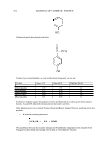
340 JOURNAL OF COSMETIC SCIENCE KEY PROPERTIES OF HAIR FIXATIVES NECESSARY TO MAKE AND EDUCATED CHOICE Vittoria Signori, Ph.D. BASF Corporation, Ledgewood, NJ In order to formulate an cffecti,·e hair st)·Iing product it is very important to understand the properties of the ingredients used in the formulation, in particular of the fixative ingredients, that, for the most part arc polymers. The following is an outline of some of the properties that should be considered in the choice of the fixative polymer. Basic technical ph,·sical chemical properties of poh·mers: l) Chemical nature, ionic, non-ionic, cationic, anionic arnphotcric. 2) % solids, or acti\-es. Note that for pre-neutralized polymers the weight of the neutralizer is usually included in the \'alue for% solids. 3) Acid rnlue and suggested neutralization level: relevant only to acid containing monomers (e.g.: acrylic copolymers). The following are the neutralization equations provided by different polymer suppliers, slightJy different forms to calculate the amount of ncutraliicr needed in the formulation: N = (X y z :\) / IOON = quantity of neutralizing agent (g) x = quantity of polymer raw material (Kg) y = acid \'alue for the polymer ( mg / g) z = degree of neutralization (no units, 0 z 100) A= factor for each specific neutralizer (no units). A is the ratio between the molecular weight of the neutralizer and the molecular weight of potassium hydroxide (KOH = 56.l) X =(.-\DC D)/E 1000 X = neutralizing agent (g) .\ = acidity of the polymer (millimolcs) B - g of polymer us.:d in the formulation (g) C = molecular weight of neutralizing agent (g/mole) IJ = % of neutralization required hy the polymer (no units, 0 D 1110) E = •• concentration of the neutralization agent used (no units. 0 E 100) (W x Ax 1" 1 Ex sytooo = g ofntulraJizer required W = Weight of polymer in grams (g) A = Acidity of polymer in (meq/g) N = Percentage of desired neutralization (no units, 0 :"/ I 00) E = Equivalent weight ofneulralizer (meq/g) S = Solids content ofpol�mer (no units, 0 S 100) NOTE: The level of neutralization of the polymer will ha\'e an influence on \'arious properties of the polymer, among which water solubility, and ability to be removed from the hair (wash out), .:ompatihility with the formulation medium, particularly in the case of aerosol sprays. In standard hair spray formulations the acidity of the polymer and it's le\':I of neutralization ddermine the pH of the formulations. ➔) Cationic charge, tJ1is property id of importance for cationic polymers, depending on the chemistl')' of the polymer there are preferred methods to report the results, for instance, when the cationic charge is being measured by titration, the result will be reported as equiYalent or milliequi\'alents of titration agent per gram of polymer (or raw material), when the cationic charge is being measured by chemical analysis it may be reported by% nitrogen 5) Certificate of Analysis, it is an excellent idea to always check the Co A of each new raw material that one is thinking of using, this will also alert you to many other information, like, expiration date, level of residual monomers, etc. Succific ,,hnical chemical properties of poh·mers: I) Glass transition temperature (Tg): is the temperature (different for each polymer) below which the polymer becomes hard and brittle, like glass. This property is linked to the effect that temperature and humidity may Jm·e on the style retention ability of the polymer (or the formulation). In a finished formula or in simply a diluted solution of the polymer, curl retention is a very commonly tested property, this test involves styling the hair, usually in curls, exposing it to controlled humidity and temperature, and monitoring the hold, with time, of the initial size and shape of the curL The results are often expressed in tenns of% curl retention and it is a function of the polymer in combination with all the other ingredients of the formulation,

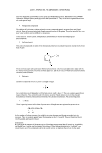
2005 ANNUAL SCIENTIFIC SEMINAR 341 2) Average molecular weight (Mw), always keep in mind that polymers are never just one exact molecular weight, there is always a distribution. Exl)erimentally measured molecular weight of polymers are dependent on the measurement technique used, and take different names/symbols. In addition, often, for traditional reasons. the molecular weight of polymers is reponed in terms of K \'alue. The higher the K value the larger is the a,·erage size of the molecules of the polymer. Some definitions related to different molecular weight: Mn = number average molecular weight measured by methods that count the number of molecules in the system Mw = weight average molecular weight, measured by methods in which the size of the molecule determines the magnitude of the response. Mv = viscosity molecular weight, measured by intrinsic viscosity Polydispersity = Mw/Mn also referred to heterogenaity index. 3) Solubility of the polymer: in water, ethanol or other sol\'ents. ➔) Stiffness ability of the polymer, this deterrnin�s the t)l)C of styling action that the polymer will be able to perform. For hair sprays and gels it is usually hold, stiffness or 'crunch', for mousses it can be but usually it takes the form of style, \'Olume and control. There are plenty of ,·ariations on basic laboratories test methods for a first assessment of this property. 5) For aerosol spray formulations it is important to know the level of propellant compatibility. Things to watch out for: 1) Possible impurities of by-products that could be of specific relevance to specific markets, e.g.: Porposition 65 ingredients, CMR (carcinogenic. mutagcnic, toxic to reproduction) substances etc. 2) Volatile Organic Compounds (VOC) content. The maximum limit for the content of VOC in different formulations is set by each State separately, or by EPA on a National level. The most affected categories are the ones of aerosols, sprays or mousses, and most recently hair gels. Ethanol and propel I ants are among the ingredients that are greatly affected by this regulation note that often ethanol is the solvent for a raw material although the INCi name does not list it. 3) Origin of the raw materials used to produce the polymer: vegetable, synthetic or animal deri,·cd. ➔) PreserYative used in the polymer. 5) Shelf life of the product, age of the sample being used for your development work ! 6) Various certifications and commonJy used acronyms: GMO-free (Genetically Modified Organism). Kosher, NF (National Forrnulary), USP (United States Pharmacopoeia), cGMP (current Good Manufacturing Procedures).
Purchased for the exclusive use of nofirst nolast (unknown)
From: SCC Media Library & Resource Center (library.scconline.org)