346 JOURNAL OF COSMETIC SCIENCE EVALUATION OF FIXATIVES Joseph A. Dallal International Specialty Products, 1361 Alps Road, Wayne, NJ 07470 The previous papers in this section discussed classical and new products, why and how to make them, how to choose and how to use key ingredients, as well as details on what were some of the challenges. Titls last portion will cover how to characterize the final product both as a product and as to its function on the hair. Product Attributes (in the jar) Styling and Fixative products can be characterized by their appearance, application method, container from which they are dispensed, as well as how they perform on the hair in the wet stage and all the stages throughout and after the drying process, like detangling, ease of combing, smoothness, tackiness, stiffness, flexibility, rehydration, response to humidity or dryness, durability, clarity, shine, and removability. Ifwe start by looking from the consumer's viewpoint, we would look at how the product appears in the package and being dispensed from the package. For a product in a clear package, the first measurement would be the color and opacity or clarity. Whether clear or opaque, next might be the texture or flow of the product as the package is tilted at an angle ( or inverted) and possibly poured out or sprayed. At this point the product is also smelled and possibly felt. For aerosols, the first measurements might be the weight of the can, the actual texture and dimensions of the can, the feel or sound as the can is shaken, and then the style of spray followed by the smell and feel on hand, wet through dry. Some of these characteristics may be the foundation for specifications to ensure the product meets the profile and maintains consistency from batch to batch. Quite often, we measure the texture of a product by viscosity. During product development, 2 or 3 shear rates may be employed to take a 'picture' of the response of the product to different situations. For example, to evaluate a product just sitting on the shelf, being poured, or suspending something dense or light, low shear may be used, perhaps 0.5 - 12 rpm. For those products needing to be spread or sprayed, higher shear is used, 30 - 100 rpm. Choosing the wrong shear rate can provide false information. For example, using an inappropriately high shear rate (100 rpm) on a product that shear thins at medium or high shear rate can make a product appear to be thin with low centipoise (cps) readings. However, upon a visual or tactile investigation, the product could be very thick when at rest. The flip side is true when evaluating a product that needs to be thin during application of high shear, like a styling gel in a tube to be spread through the hair, a thickened spray gel, a pump spray, or canned aerosol spray. They need to be evaluated at higher rpm to help predict or quantify how they will respond to the high shear. Of course, testing the final applicator in the lab is critical to choosing the delivery orifice etc. prior to setting specs. Controlling the temperature and choosing the spindle or T-bar and container size can be just as important as setting the rpm for measuring the attribute on which you are focusing. If you consider lotions (water based styling polymer solutions with no thickeners), glazes or serums (water based systems with low levels of thickeners or just soft textures), thick gels (shear thinning clear or opaque), pump and aerosol concentrates, the Brookfield viscometer is still the standard, although others instruments are employed. When reporting the cps, it is often helpful to include the Factor along with the Spindle, speed/rpm, temperature, and timing so it is possible to determine if the cps differences are significant. When it comes to the pastes, muds, glues, sticks, water-waxes, and pomades, evaluations have to move to a Penetrometer type measurement or other bending or smashing methods. For clear systems, both NTU (Nephelometric Turbidity Unit) and %T (percent transmission) are quite often used to quantify the degree of clarity. Low NTU (low haziness) and high %Tare required for clear systems. For colored systems, visual comparisons to color chips or vials of colored solutions are often employed. However, absorption or reflection spectrophotometry (sometimes using the La b system) is used for products as well as packaging. Regardless of color or clarity, odor, before and after the fragrance is added, is important to note, as well as during stability tests. Products we make don't get used the same day they are produced, so microbial or preservative challenges must be evaluated as well as stability at RT, 4°C, Freezerrhaw, and elevated temperatures (accelerated aging) to ensure that the consumer can use the product and achieve the performance expected. What needs to be

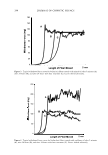
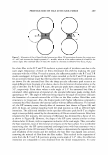
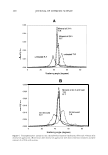
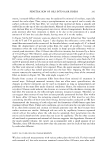
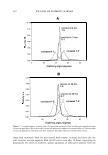
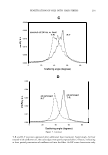
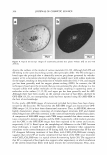
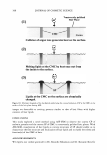
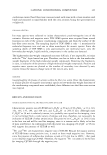
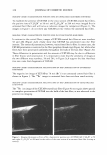
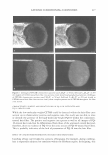
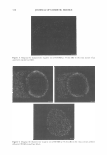
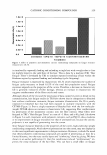
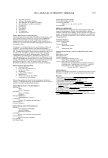
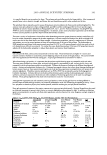
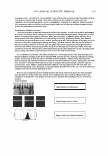
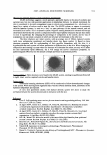
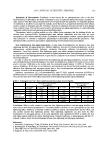
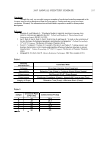
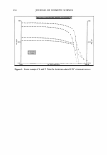
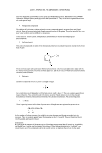
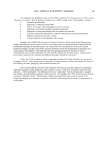
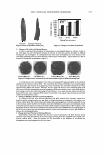
2005 ANNUAL SCIENTIFIC SEMINAR 347 measured over a 1-3 months (or 1-2 yrs) timeframe? Any attribute that is critical to make this product perform according to the profile may be tested. Quite often, stability tests are confined to viscosity, pH, odor, appearance, but could add sprayability, texture or spreadability, suspended air or particles, dispersion particle size. microscopic analysis, particle size of spray droplets, and a host of other key attributes designed into the product for performance or conswner utility. Performance Attributes (on hair) Now that the product is made and characterized while in the container, it needs to be tested for performance as it leaves the container and is used on hair. Sprays have some particular requirements, like pressure (at 2 I0C) particle size analysis upon spraying (Malvern), grams per second (g/s) or grams per pump -delivery rate of being sprayed (how much product leaves the can and may hit the hair), propellant tolerance, cone diameter (what pattern the sprayed product covers), wetness, beading on the hair, and forcefulness of the spray as well as corrosion in the can or clogging upon spraying and drying. All these attributes affect the way the product is delivered as well as functions on the hair. Gels and sprays alike can be evaluated for clarity upon dry-down, stickiness and stiffness during drying and after drying at low and high relative humidity (%RH), shine, and smoothness of the film. Mousses have similar requirements plus the foam appearance, texture, spreading. foam density (g/mL) and stability in glass bottles as well as finaJ cans with various linings. Very important to consumers is the affect on human hair. Hair Characteristics (HC), High Humidity Curl Retention (HHCR), bending studies at low and high %RH, tack and dry time, smoothness (Diastron Combing). tangles, and shine are all tests that relate to consumer and style demands. Actual curling, flattening, blow drying, brushing. and combing treatments are tested on controlled human hair swatches, mannequins, take home tests, and salon ½ head and whole head tests in order to compare and measure multiple consumer required characteristics: shine. stiffness, durability/flexibility (OHSA), curl snap, flaking on the hair and comb, curl memory/manageability, static, feel going on, drying and dried, then after 8 hrs, 24hrs, etc. Can it be reactivated, reapplied. and removed without damaging the hair? TI1ese are just a sampling of typicaJ methods and tests that can be employed to determine if the prototypes meet the objectives of the profile, pass stability, have completed scale up, or confirm differences from the competition or benchmark. Your projects will have its own selection of key attributes that you will want to measure. Visual Examples: I· j .. /1 Jti :! '--�...:......_-. -- � �---�.1-··, ,__�'--'---• High Humidity Curl Retention Digital Image Analysis: Shine Spray Particle Size: Malvern Analysis
Purchased for the exclusive use of nofirst nolast (unknown)
From: SCC Media Library & Resource Center (library.scconline.org)