350 JOURNAL OF COSMETIC SCIENCE LAMELLAR DELIVERY SYSTEM FOR TARGETED DELIVERY INTO THE SKIN Nava Dayan, Ph.D. Lipa Chemicals, Inc., Paterson, NJ 07504 The diversity of applications in cosmetics creates the need to target different compounds into sub-tissues of the skin. While, for example, moisturizers need to be retained in the upper layer of the skin, anti-aging active compounds need to reach the epidermis-dermis junction. An appropriate delivery system will enable better targeting of a compound to its site of action in the skin, while reducing the concentration needed to achieve an effect, and thereby elevating its safety. We present a novel microscopic lamellar delivery system (MLDS) that can be tailored to target active compounds to sub-tissues in the skin. This patent pending technology blends specific lipophilic compounds that when combined with water in certain ratios create unique microscopic structures. The composition and processing determines the physical properties of the delivery systems created. Transmission electron microscopy resulted in the observation of three major structures. It is hypothesized that each of those structures will interact differently with the skin, and allow penetration to the different layers. Skin permeation studies will be conducted to substantiate the hypotheses. The importance of targeted delivery Mammalian skin is an excellent barrier for the penetration of compounds. Its upper layer, the stratum comeum, has a special organization where the dead comeocytes are cemented by intercellular lipid lamellae that are covalently linked to the cell membrane (1). The intercellular lipid lamellae are composed of cholesterol, cholesterol derivatives, free fatty acids and ceramides, with the latest being the main constituent (around 50%). Those lamellae are derived from granules, which secrete their content to the intercellular spaces of the upper layer. They include lipids, hydrolytic enzymes and several other proteins (2). The skin is a multi-layered organ, in which every layer displays diverse composition and properties, and is responsible for different functions. Therefore, when treating the skin, it is crucial to assure that the active ingredient in the applied formulation will reach its target. While sunscreen formulations, for example, should be designed to protect the upper layer of the skin, formulations that include skin-lightening actives should reach the living epidermis. Tailoring an appropriate delivery system can not only enable targeting the active compound to its site of action, but also control its time of residence and release, hence, improve its bioavailability and broaden the therapeutic index for safety. Lamellar delivery systems - short overview Studies have demonstrated that the stratum comeum lipid organiz.ation can be imitated with model lipid mixtures based on isolated stratum comeum lipids (3). Other systems that were composed of different combinations of cholesterol, fatty acids and ceramides were used as models to test for skin permeation of compounds (4). Close shaped lamellar systems that are being used as delivery systems for the skin are vesicular systems. Throughout the past two decades scientists have designed a variety of vesicular systems that are meant to embody the active compound in its compartments and carry it (5,6). It was found that while classic multi-lamellar phospholipid made Iiposomes tend to create a reservoir of the entrapped compound in the upper layer of the skin, special flexible vesicles were demonstrating penetration to deeper layers and even allow for transdermal delivery (7). The common concept behind the design of these systems is to compose an intact relatively stable system that will transmit the active to or through the skin while reversibly changing the stratum comeum barrier properties, and preferably protecting the active compound.

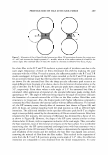
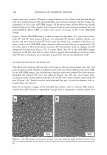
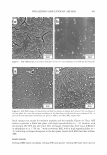
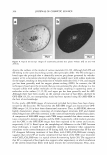
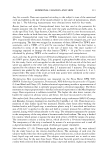
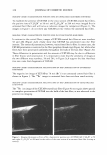
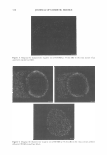
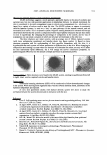
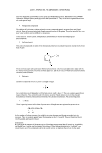
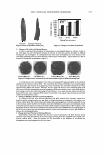
2005 ANNUAL SCIENTIFIC SEMINAR Microscopic lamellar delivery system- hypothesis and rationale MLDS technology suggests a novel approach, applicable mainly in the area of cosmetic and personal care, but also with potential applications in trandermal delivery. As already mentioned, the skin is considered to be multi-compartment organ in which every compartment (i.e., sub-tissue) is a target for a variety of actives used to treat the skin. The MLDS system, as oppose to previously describe lamellar systems, is used as a "key" to open pathways in the stratum comem, and not necessarily as a carrier. This is a dynamic system. Negative staining transmission electron microscopy observation showed that the system is composed of three major lamellar structures that are most likely to exist in equilibrium. By changing the percentage of components in the system, and its way of preparation, one can create a situation in which one structure will dominate on the other two. The three structures are: intact vesicles, with an average size of 100nm, ruptured vesicles (with loose unilammelar membrane) and lamellar sheets (see figure number I). Based on these structures properties and the understanding of their possible interactions with the skin, it is hypothesized that each system wilJ allow penetration to different sites in the skin. When changing its composition and creating a system where one structure will dominate the others, not only will it affect the skin intercellular lipids differently, but it will change the active's dissolution properties, its partitioning and diffusivity into the stratum comeum and hence its penetration profile. Figure number I: Three structures were found in the MLDS system, existing in equilibrium (from left to right): intact vesicles, ruptured vesicles and lamellar sheets Future studies Differential scanning calorimetry (DSC) will be conducted to follow thermodynamic changes in the system. While moving from organized intact vesicles towards lamellar sheets, alterations in the transition temperature are expected. In vitro skin penetration studies with marked delivery system will allow to study the correlation between the system structure and its interaction with the skin. References I. Cevc G. Self regulating smart carriers/or non-invasive and targeted drug delivery. Cell. Mo/. Biol. Lett. 7, 224-225, (2002). 2. de Jagerl M.W., Gooris G.S., Dolbnya J.P., Ponec M., Bouwstra J.A. Modeling the stratum corneum lipid organization with synthetic lipid mixtures: the importance of synthetic ceramide composition. Biochim. Biophys. Acta 1664, 132-140, (2004). 3. de Jager2 M.W., Gooris G.S., Dolbnya J.P., Bras W., Ponec M., Bouwstra J.A. Novel lipid mixtures based on synthetic ceramides reproduce the unique stratum corneum lipid organization. J. Lipid Res. 45, 923-932, (2004). 4. Hill J.R., Wertz P.W. Molecular models of the intercellular lipid lamellaefrom epidermal stratum corneum. Biochim. Biophys. Acta 1616, 121-126, (2003). 5. Bouwstra J.A., Honeywell-Nguyen P.L. Skin structure and mode of action of vesicles. Adv. Drug De/iv. Rev. 54, 41-55, (2002). 6. Yarosh D.B. Liposomes in investigative dermatology. Photodermatol. Photoimmunol. Photomed. 17, 203-212, (2001). 351 7. Dayan N., Touitou E. Carriers/or skin delivery o/Triethexyphenidyl HCI: Ethosomes vs. liposomes. Biomaterials. 21:18, 1879-1885, (2000).
Purchased for the exclusive use of nofirst nolast (unknown)
From: SCC Media Library & Resource Center (library.scconline.org)