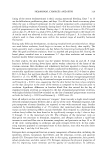
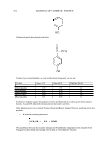
352 JOURNAL OF COSMETIC SCIENCE SILK-ELASTIN PROTEIN POLYMER: A MULTIFUNCTIONAL ACTIVE INGREDIENT FOR SKIN (ARE Manoj Kumar, Ph.D. Genencor International, Inc., 925 Page Mill Road, Palo Alto, CA 94304 Abstract Biotechnology based products for personal care applications are appearing in the market place. These products fall into several categories: (i) peptides or small proteins, (ii) unique proteins and (iii) catalytic proteins (enzymes). Genetic and protein engineering enables us to engineer and produce protein polymers with multiple domains that can be selected for their unique properties and assemble them together to impart desired functions. This podium presentation will illustrate a new concept of hybrid proteins designed to deliver multifunctional activity in personal care formulations. We will describe studies (in vivo and in vitro models) of a novel silk-elastin protein biopolymer as a new functional active ingredient for skin care that has properties of both silk and elastin. This unique protein not only delivers soluble silk and elastin, but also many functional attributes, which are useful in skin care applications. Introduction Advances in genomic research offer a unique opportunity to design proteins with specific, targeted properties, that are important for providing specific benefits and that can then be produced consistenetly via fermentation. Additionally, multiple peptide motifs can be engineered to provide protein-based multifunctional biomaterials. Interest in repeat sequence protein-based polymers (RSPPs) has grown because this new class of biomaterials simulates naturally occurring ones, and can be modified for desired function for applications in personal care. Protein engineering offers the ability to screen for desired properties utilizing the tremendous potential diversity of amino acid combinations and fermentation allows for large-scale manufacturing. Using recombinant methods, one can precisely control and incorporate the molecular weight, size, stereochemistry, and functional distribution of active domains in the biopolymer to create self-assembling composite functional biopolymers for personal care applications. Using the twenty natural amino acids, one can create RSPPs designed for a specific function( s ). Subsequent chemical/biological modifications of amino acid side chains with a variety of functional groups further offers a means for incorporating specificity and variety in function. Multifunctional bioengineered personal care peptide ingredients can be created that will serve as a new paradigm for a protein-based personal care delivery platform. RSPPs produced though molecular biological design and fermentation, targeted to incorporate the needed characteristics for personal care applications, have been investigated (1 ). Representative examples of natural small peptide-based RSPPs and their block copolymers (repeated amino acid sequences,), include elastin, silk fibroin (GAGAGS), byssus (GPGGG), flagelliform silk (GPGGx), dragline silk, collagen, and keratin. The relative stability of these families of structural proteins in combination with their biocompatibility, and unique mechanical properties, provide the foundation on which one may exploit naturally derived RSPPs for wide-ranging personal care applications. RSPPs are similar to a chemically polymerized block of copolymers but do not have any heterogeneity. They are unique, defined, monodispersed, and have molecular weights that generally range between 30 kD and 250 kD. For example, in a RSPP named SELP4 7K (silk elastin like protein Unit block structure: Figure 1), individual units are composed of silk fibroin (S = GAGAGS), and elastin (E = GVGVP), and a lysine modified elastin peptide, K(GKGVP).

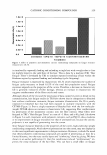
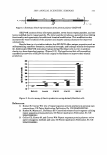
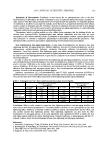
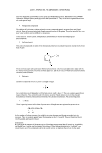
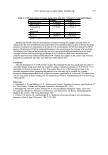
2005 ANNUAL SCIENTIFIC SEMINAR S 2 s 2 1 - 1 3 Figure 1: Schematic block representation of the protein polymer SELP47K 353 SELP4 7K consists of four silk repeat peptides, seven elastin repeat peptides, and one lysine modified elastin repeat peptide. The latter peptide introduces a potential cross-linking functionality and opportunity for additional chemical modification. This modification also increases the water solubility of the polymer and imparts cationic character for improved substantivity. Results from in vitro studies indicate that SELP4 7K offers unique properties such as self-assembling nanofiber formation, mechanical strength, and hydrogel matrix development [2]. Additionally SELP4 7K stimulates human dermal :fibroblast cells in-vitro to produce elastin in a dose dependent manner. (Figure 2) [3]. We hypothesize that self-assembling nano:fibrillar networks of SELP4 7K relay a signal to fibroblasts to improve their elastin production. 480 JSO 1111 J■ 250 i! ., 150 1111 ,. m !I' 50 _,. 0 -50 Media only Untreated 0.1'1,SELP 0.5% SELP 1.0'I, SELP Figure 2: In-vitro assay of elastin production using dermal fibroblast cells References: 1) Kumar M, Cuevas WA: Use of repeat sequence protein polymers in personal care compositions, US Patent Application Publication No. US 2004/0180027Al. 2) Kumar M, Mazeaud I, Christiano SP: Controlled release of active agents utilizing repeat sequence protein polymers, US Patent Application Publication No. US 2004/0228913Al 3) Collier CD, Kumar M, and Cuevas WA: Repeat sequence protein polymer, active agent conjugates, methods and uses, US Patent Application Publication No. US 2004/0234609Al.
Purchased for the exclusive use of nofirst nolast (unknown)
From: SCC Media Library & Resource Center (library.scconline.org)