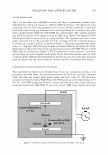
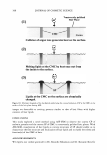
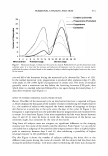
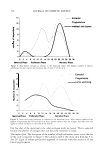
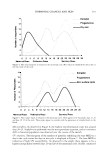
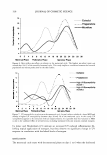
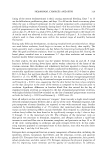
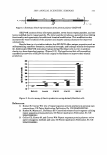
354 JOURNAL OF COSMETIC SCIENCE SKIN LIGHTENING AND ANTI-AGING INGREDIENTS How ARE THEY INTERLINKED? Ratan K. Chaudhuri, Ph.D., Germain Puccetti and Zoia Lascu EMD Chemicals, Inc., Hawthorne, NY 10532 (An Affiliate of Merck KGaA, Darmstadt, Germany) The pigmentation of the skin, due to synthesis and dispersion of melanin in the epidennis, is of great cosmetic and societal significance. It is also the key physiological defense against sun-induced damage, such as sunburn, photoaging and photocarcinogenesis. This presentation focuses on polyphenolics of natural origin having both skin lightening and anti-aging effects and their mechanistic interlink which provides these two desired skin benefits. Photoaging & Melanogenesis: The unifying pathogenic agents responsible for photo-damage are UV generated Reactive Oxygen Species (ROS) that deplete and damage the enzymatic and non-enzymatic antioxidant defense systems of the skin, and the release of matrix metalloproteases (MMPs) such as MMP- 1 and MMP-3, that damage the extracellular matrix proteins1 • The drastic long-term effects of UV on the skin include photoaging, characterized histologically by solar elastosis due to degradation of collagen and the accumulation of abnormal elastin in the dermis, and skin cancers. ROS, especially, superoxide anion has been shown to activate tyrosinase thereby increasing pigmentation. Quenching of superoxide anion can also lighten skin2. Melanin forms through a series of oxidative reactions involving tyrosine in' the presence of tyrosinase. It has been shown that cells, such as, eosinophiles, neutrofiles and mast cells are capable of synthesizing melanin without the presence of tyrosinase. Okun et al were also able to show a correlation between peroxidase-H2O2 activity and its ability to oxidize tyrosine or DOPA to melanin3 • There is no doubt that DOPA can be a good oxidizable substrate for peroxidases and it has recently been reconfirmed that the peroxidase-H2O2 system alone is capable of converting DOPA and dopamine to melanin. The ability of the peroxidase-H2O2 system to promote the oxidative polymerization of 5, 6-dihydroxyindole and 5, 6-dihydroxyindole-2-carboxylic acid to melanin pigments has also been demonstrated. Recently, the role of NO and Fe2+/I-{zO2-induced melanogenesis have been demonstrated4 . The later reaction is known as Fenton reaction, which is responsible for generating ROS and thus causing photo-damage to skin. Cause and consequences of UV-Induced skin damage and their interlinking to melanogenesis can be schematically represented in Figure 1. Release of Free Iron & Copper DNA Strand breakage Mutations Protein UV Light Reactive Oxygen Species Skin Damage Lipids SH oxidation L Peroxidation Deactivation of enzymes Increase in Melanogenesis Release of Matrix Metalloprotease Carbohydrate L Depolymerization of hyaluronic acid Figure l: Cause & Consequences of UV-Induced Skin Damage and their Interlinking to Melanogenesis

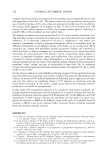
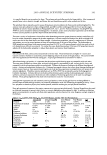
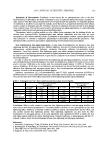
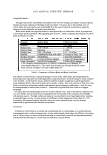
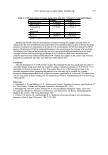
2005 ANNUAL SCIENTIFIC SEMINAR 355 Eumelanin & Pheomelanin: Eumelanin is best known for its photoprotective role in the skin. Photoprotection is afforded by the ability of melanin to serve as a physical barrier that scatters incident UV light, and as a filter that reduces the penetration of UV light through the epidermis. An important property of eumelanin is its ability to scavenge free radicals, and to function as a superoxide dismutase that reduces reactive oxygen to hydrogen peroxide. Therefore, decrease in eumelanin increases the risk of skin damage from oxidative stress, This can be counter acted by selecting an anti-aging ingredient(s) or a skin lightening ingredient with built-in broad-spectrum antioxidant functionality. Pheomelanin, which is yellow-reddish in color, differs from eumelanin that the building blocks are derived from cysteinyl-DOP A. Epidemiological data indicate individuals with fair skin are more susceptible to skin cancers than their darker counterparts as pheomelanin exhibits a greater phototoxicity than eumelanin. In contrast to eumelanin, pheomelanin is photolabile and potentially phototoxic. This detrimental effect can also be prevented by supplementing with broad-spectrum antioxidant(s). Skin Lightening & Anti-Aging Ingredients: A wide range of polyphenolics are known to have skin lightening and also anti-aging properties. Melanin inhibitory activities of natural polyphenolics, such as anthaquinones, arylbenzofurans, chalcones, coumarins, flavonoids, stilbenes, low-molecular weight tannins,etc., have been reported. Skin lightening agents can inhibit melanin biosynthesis by blocking various points of the pathways and are thus useful in lightening human skin. Skin lightening agents can also be used to treat local hyperpigmentation or spots that are caused by local increase in melanin synthesis or uneven distribution. In order to show the interlink between the skin lightening and anti-aging ingredients, we have chosen two standardized plant extracts belonging to two types of polyphenolics, namely, flavonoids of G/ycyrrhiza glabra (Licorice, Glabridin as the active) and low molecular-weight tannins (1,000) of Phyllanthus emb/ica (Emblica). Work done in our laboratory and elsewhere has shown that both products are very effective skin lightening and anti-aging agents due to their broad-spectrum antioxidant and chelating activities. Licorice is also an excellent tyrosinase inhibitor. Inhibitory concentration (IC50) of peroxidase/H202 and Fe2+/H202 induced conversion of DOPA to DOPAchrome for Licorice and Emblica and their antioxidant activity profiles are summarized in Table 1. Clinical trials have shown their effectiveness both as skin lightening and anti-aging ingredients. Table 1: Comparative In-Vitro Skin Lightening and Antioxidant Activity Profile Skin Lightening Efficiency Antioxidant Activity IC�¾ (µg/ml) IC so¾ (µg/ml) Peroxidase / Tyrosinase / Tyrosinase / Fe"+IH202 Singlet oxygen Superoxide L-DOPA L-DOPA tyrosine anion radical Emblica 500 140 70 690 60 12 Licorice 430 10 IO 455 20 43 Koiic acid 220 35 10 150 Pro-oxidant Pro-oxidant Hydroquinone 610 230 JO Melanin i 107 400 Ascorbic acid 88 63 30 105 Pro-oxidant 27 MAP No activity No activity No activity Melanin i 500 No activity Conclusion: What is really needed to create true skin lightening products with anti-aging benefits is to select one or more natural polyphenolics. Tyrosinase inhibitory activity is not a prerequisite to have skin lightening effect. Inhibition of alternate oxidative pathways, namely, peroxidase/H202 and Fe2+/H202 can also provide desired skin lightening activity. Skin lightening ingredients can also work by other mechanisms. For anti-aging activity, we do need ingredients with a quencher for ROS, a chelator for iron and copper and an inhibitor for matrix metalloprotease. Oxidative pathways in melanogenesis and the UV induced oxidative stress are the interlinkage between skin lightening and anti-aging ingredients. References l. Valverde P, P Maiining, C Todd, CJ McNeil, & AJ Thody, Exp Dermatol, 40: 1312-1316, 1999. 2. Berneburg M, H Plettenberg, & J Krutmann, Photodermatol Photoimun Photomed, 16: 239-244, 2000. 3. Okun MR, Physio/ Chem Phys Med NMR, 28:91-100, 1996. 4. Nappi AJ, E Vass, J Biol Chem, 276:11214-11222, 2001.
Purchased for the exclusive use of nofirst nolast (unknown)
From: SCC Media Library & Resource Center (library.scconline.org)