2006 ANNUAL SCIENTIFIC MEETING
SAXS AND DSC STUDY OF MULTILAYER LAMELLAR
VESICLES (MLV) IN HAIR DYE BASES
Timothy Gao 1 ,Ph.D., Miyoun Jeong 1 ,Ph.D. and Ryuji Akatsuka2
1 Croda, Inc., 300-A Columbus Circle, Edison, NJ 08837
83
2 Croda Japan KK, Kobun Kosan Bw'lding SF, Chiyoda-ku, Tokyo, 101-0003, Japan
INTRODUCTION
Multilayer Lamella Vesicles (ML V), as a ry good delivery system for acti,'C ingredients, has been
widely used in health care as well as in personal care products. ML V impro es dispersion of difficult-lo
solubili7.e ·compounds such as drugs and SW1screcn oils� enhances adhesion on the skin surface and
sustained release of active ingredients. Phosphate esters ha,•e long been used in hair and skin care
formulations including hair relaxers. hair penns. sunscreens. and color bases as excellent emulsifiers and
viscosity thickening agents. In prelrious studies (I). we reported that ML V structure formed in sunscreen
formulas with a phosphate ester emulsifier played an important role enhancing the deposition of sunscreen
oil on the skin surface, and therefore, impr0\ing the SPF water-wash resistance. fl was also found that
addition of phosphate esters into hair dye base formulas enhanced formation of multilayer lamellar ..-esiclcs
(ML V) and impro 'M their coloring pcrfonnance. The molecular sttuctwe of added phosphate ester
showed significant effects on the formation of ML V phases and rheological properties (2-3).
In this paper. we report OLD' recent studies on phase sttuctures of liquid crystals and phase transition
temperatures of hair dye bases containing different phosphate esters by using Sma11 Angle X-ray Scattering
(SAXS) and Differential Scanning Calorimetry (DSC).
EXPERIMENTAL
• Mataials: Three oxidative hair dye (auburn) bases (HCE, CS-20. and Ceteth-20) containing different
phosphate ester/ non-ionic emulsifiers were prep:ired by Croda Japan. CS-20 base was made from Ceteth-
20 Phosphate (and) Dicetyl Phosphate HCE base made from Oleth-5 Phosphale (and) Dioleyl phosphate:
Ceteth-20 made fr m non-ionic emulsifire of Ceteth-20.
• l11stn1m1mu: SAXS: NanoSTAR U from Bruk r AXS Inc ..Madison. WI
DSC: TA QJOO from TA Instruments. New Castle, DE
• Expuimental Se1-11p
1. SAXS: Sealed Tube X-ray source Cu-I. 40kV/35mA. focal spot= 0.4 mm X 8 mm: Bruker AXS HT-
STAR position sensitive area detector SAXS for Windows NT computer software. Color base samples
were measured in a sample holder for gel like samples at ambient temperature (20°C). Kapton was used as
uindow materiaJ.
2. DSC: About IO mg of color base sample was placed in a sealed pan and the heating rate was 2 degrees
centigrade per minute
RESULTS AND DISCUSSION
1. Emulsion Structure of Color Ba.
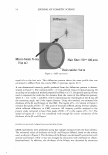
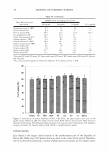
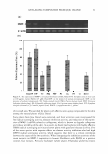
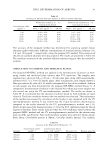
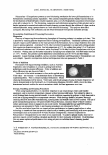
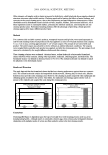
Figure 1 shows digital images of three color base samples und r a micros pe with crossed polari7.crs.
1-a Cctdb-20 color bue 1-b CS-20 color bue 1- BCE �olor baK
Figure 1 Micrograph of different color bases (X400)
SAXS AND DSC STUDY OF MULTILAYER LAMELLAR
VESICLES (MLV) IN HAIR DYE BASES
Timothy Gao 1 ,Ph.D., Miyoun Jeong 1 ,Ph.D. and Ryuji Akatsuka2
1 Croda, Inc., 300-A Columbus Circle, Edison, NJ 08837
83
2 Croda Japan KK, Kobun Kosan Bw'lding SF, Chiyoda-ku, Tokyo, 101-0003, Japan
INTRODUCTION
Multilayer Lamella Vesicles (ML V), as a ry good delivery system for acti,'C ingredients, has been
widely used in health care as well as in personal care products. ML V impro es dispersion of difficult-lo
solubili7.e ·compounds such as drugs and SW1screcn oils� enhances adhesion on the skin surface and
sustained release of active ingredients. Phosphate esters ha,•e long been used in hair and skin care
formulations including hair relaxers. hair penns. sunscreens. and color bases as excellent emulsifiers and
viscosity thickening agents. In prelrious studies (I). we reported that ML V structure formed in sunscreen
formulas with a phosphate ester emulsifier played an important role enhancing the deposition of sunscreen
oil on the skin surface, and therefore, impr0\ing the SPF water-wash resistance. fl was also found that
addition of phosphate esters into hair dye base formulas enhanced formation of multilayer lamellar ..-esiclcs
(ML V) and impro 'M their coloring pcrfonnance. The molecular sttuctwe of added phosphate ester
showed significant effects on the formation of ML V phases and rheological properties (2-3).
In this paper. we report OLD' recent studies on phase sttuctures of liquid crystals and phase transition
temperatures of hair dye bases containing different phosphate esters by using Sma11 Angle X-ray Scattering
(SAXS) and Differential Scanning Calorimetry (DSC).
EXPERIMENTAL
• Mataials: Three oxidative hair dye (auburn) bases (HCE, CS-20. and Ceteth-20) containing different
phosphate ester/ non-ionic emulsifiers were prep:ired by Croda Japan. CS-20 base was made from Ceteth-
20 Phosphate (and) Dicetyl Phosphate HCE base made from Oleth-5 Phosphale (and) Dioleyl phosphate:
Ceteth-20 made fr m non-ionic emulsifire of Ceteth-20.
• l11stn1m1mu: SAXS: NanoSTAR U from Bruk r AXS Inc ..Madison. WI
DSC: TA QJOO from TA Instruments. New Castle, DE
• Expuimental Se1-11p
1. SAXS: Sealed Tube X-ray source Cu-I. 40kV/35mA. focal spot= 0.4 mm X 8 mm: Bruker AXS HT-
STAR position sensitive area detector SAXS for Windows NT computer software. Color base samples
were measured in a sample holder for gel like samples at ambient temperature (20°C). Kapton was used as
uindow materiaJ.
2. DSC: About IO mg of color base sample was placed in a sealed pan and the heating rate was 2 degrees
centigrade per minute
RESULTS AND DISCUSSION
1. Emulsion Structure of Color Ba.
Figure 1 shows digital images of three color base samples und r a micros pe with crossed polari7.crs.
1-a Cctdb-20 color bue 1-b CS-20 color bue 1- BCE �olor baK
Figure 1 Micrograph of different color bases (X400)