2006 ANNUAL SCIENTIFIC MEETING 87
example, CET AB, by virtue of its small size, is known to penetrate into the cortex of hair. Because of its
amphoteric nature, CAPB could have a bipolar interaction with the damaged hair. The non-ionic Triton-X
100 will also have only acid-base type of interactions with the hair matrix.
Results and Discussion -Combability
Combing force curves were generated throughout the history of the tresses -Wldarnaged, bleach/perm
damaged and damaged/treated. TI1e damage level, as mentioned before, was controlled by changing the
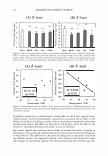
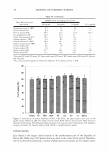
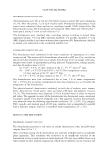
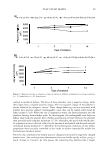
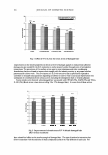
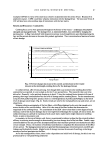
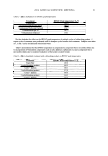
perming time. In Fig. 3 are plotted both the percent increase in mid-length forces upon bleach/penning the
hair and the percent decrease in the same after product application. This is monitored as a function of extent
of hair damage.
IQ ····················••"••················••""''""••·······•···································--·············--·--··--······--·
...
70
.....,.,._,lftc:,_• in Ccmbiftgi Farms al• Perrring
i�-----------L-....,...a:'------'r-----"-----'
i &,-••······•···-····•-·-··---·-·- !� ---------c--------------
.�-------+------------------,
£�------------------------
6�+----------------------
.,_
10 +-----------------------'
,o
Perming lime (mini
15 20
Fig. 3 Percent changes (increase in the control and decrease in the treated
tresses) in the mid-length combing forces for the damaged tresses
It is observed that, after 20 min perming, even though there is an increase in the combing force of the
untreated set as expected, it is not as high as for U1e 15 min permed tress. TI1e reason for this is yet to be
arrived at. Generally, in the penning domain up to about 15 min, the combing forces increase with time of
perming, showing a correlation between the level of damage and the combing forces. For the treated tresses,
using this well performing OTC product, U1ere is a small dependence of product performance on the initial
level of damage (small slope -Fig. 3). Similar trends are seen for the end-peak forces too and, hence, are not
shown here.
Scanning electron micrography of the hair fibers witl1 different damage levels were also carried out to
assess the state of the cuticle surface. After all it is U1e state of the fiber surface that determines the
magnitude of the combing forces. TI1e examination of the SEM's shows that there is some degree of scale
thinning at all levels of perm damage, that at very high levels of damage (for example, 20 min or more), the
surface U1inning, as a prelude to exposing a fresh cuticle layer, might lead to slight reduction in combing
forces, as seen in U1e present work.
In summary, in tl1e area of claims work, there is experimental evidence to show that the extent of product
efficacy in restoring tensile strength is determined by previous damage level of the hair fiber. Further, many
common additives tl1at are part of the shampoo/conditioner hair treatment protocol have themselves an effect
on hair strength. Hence, the isolation of individual contributions is important for demonstration of the effect
of new actives. The damage protocol seems to generate functional groups with which actives can form salt
linkages and hydrophobic bonds. Higher levels of damage increase tl1e amolllt of swelling, so that larger
amoW1ts of actives penetrate into the fiber.
As for hair manageability claims, U1ere is also a dependence on initial level of damage, but this is not very
pronounced for a well performing conditioner.
example, CET AB, by virtue of its small size, is known to penetrate into the cortex of hair. Because of its
amphoteric nature, CAPB could have a bipolar interaction with the damaged hair. The non-ionic Triton-X
100 will also have only acid-base type of interactions with the hair matrix.
Results and Discussion -Combability
Combing force curves were generated throughout the history of the tresses -Wldarnaged, bleach/perm
damaged and damaged/treated. TI1e damage level, as mentioned before, was controlled by changing the
perming time. In Fig. 3 are plotted both the percent increase in mid-length forces upon bleach/penning the
hair and the percent decrease in the same after product application. This is monitored as a function of extent
of hair damage.
IQ ····················••"••················••""''""••·······•···································--·············--·--··--······--·
...
70
.....,.,._,lftc:,_• in Ccmbiftgi Farms al• Perrring
i�-----------L-....,...a:'------'r-----"-----'
i &,-••······•···-····•-·-··---·-·- !� ---------c--------------
.�-------+------------------,
£�------------------------
6�+----------------------
.,_
10 +-----------------------'
,o
Perming lime (mini
15 20
Fig. 3 Percent changes (increase in the control and decrease in the treated
tresses) in the mid-length combing forces for the damaged tresses
It is observed that, after 20 min perming, even though there is an increase in the combing force of the
untreated set as expected, it is not as high as for U1e 15 min permed tress. TI1e reason for this is yet to be
arrived at. Generally, in the penning domain up to about 15 min, the combing forces increase with time of
perming, showing a correlation between the level of damage and the combing forces. For the treated tresses,
using this well performing OTC product, U1ere is a small dependence of product performance on the initial
level of damage (small slope -Fig. 3). Similar trends are seen for the end-peak forces too and, hence, are not
shown here.
Scanning electron micrography of the hair fibers witl1 different damage levels were also carried out to
assess the state of the cuticle surface. After all it is U1e state of the fiber surface that determines the
magnitude of the combing forces. TI1e examination of the SEM's shows that there is some degree of scale
thinning at all levels of perm damage, that at very high levels of damage (for example, 20 min or more), the
surface U1inning, as a prelude to exposing a fresh cuticle layer, might lead to slight reduction in combing
forces, as seen in U1e present work.
In summary, in tl1e area of claims work, there is experimental evidence to show that the extent of product
efficacy in restoring tensile strength is determined by previous damage level of the hair fiber. Further, many
common additives tl1at are part of the shampoo/conditioner hair treatment protocol have themselves an effect
on hair strength. Hence, the isolation of individual contributions is important for demonstration of the effect
of new actives. The damage protocol seems to generate functional groups with which actives can form salt
linkages and hydrophobic bonds. Higher levels of damage increase tl1e amolllt of swelling, so that larger
amoW1ts of actives penetrate into the fiber.
As for hair manageability claims, U1ere is also a dependence on initial level of damage, but this is not very
pronounced for a well performing conditioner.