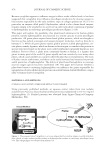
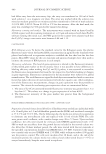
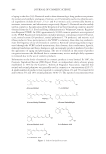
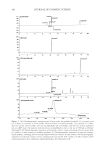
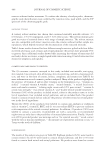
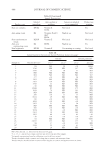
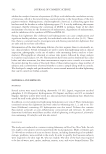
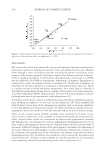
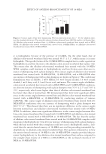
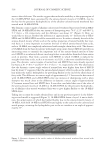
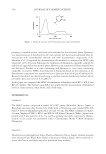
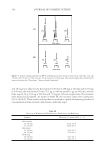
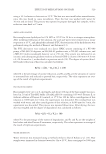
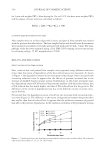
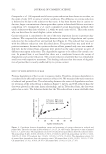
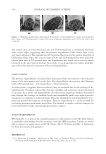
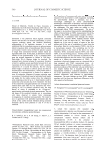
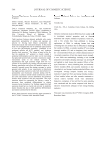
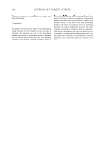
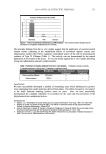
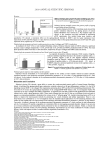
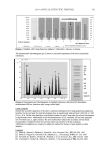
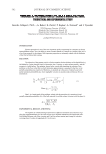
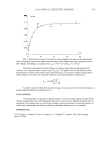
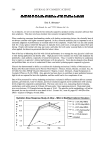
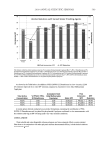
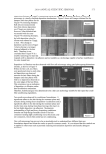
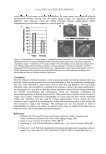
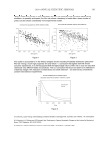
JOURNAL OF COSMETIC SCIENCE 494 Figure 3. (A) UV spectra for peaks in Figure 2A (standard retinoids 13-cis-retionic acid (13-cis-RA), 9-cis- retinoic acid (9-cis-RA), all-trans-retinoic acid (all-trans-RA), 13-cis-retinol (13-cis-RL), all-trans-retinol (all- trans-RL), all-trans-retinaldehyde (all-trans-RAL), and all-trans-retinyl palmitate (all-trans-RP) in the order of their elution). (B) UV spectrum for Figure 2B (extracted cosmetic cream containing all-trans-retinol with no evidence of other isomers or oxidation products). (C) UV spectrum for Figure 2C (extracted cosmetic liquid makeup containing all-trans-retinyl palmitate with no evidence of others isomers). (D) UV spectrum for peaks eluting in chromatographic analysis of an extract of a cosmetic lotion containing all-trans-retinol (see Figure 2D).

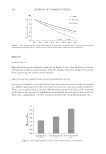
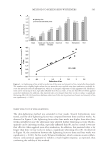
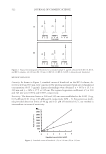
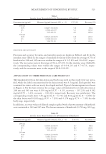
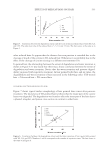
DETERMINATION OF RETINOIDS IN COSMETICS 495 Also, the standard solutions for all-trans-retinoic acid, all-trans-retinol, and all-trans- retinyl palmitate exposed to air and light at room temperature remained stable during the extraction time. However, to determine long-term cosmetic product stability, the 29 cosmetic products were stored under normal conditions (at room temperature in their original packaging) and re-analyzed after three to six months for all-trans retinol and all-trans retinyl palmi- tate. By comparing the results of previous analysis for each product with the subsequent result, it was possible to determine the extent to which the samples had become isomer- ized and/or oxidized or self-decayed over time. Most products showed some decomposi- tion to a varying degree. In addition, to determine the stability of standard retinoid solutions at 0.1 mg/ml, the stability of each standard was evaluated in terms of the effect of heat, light, and air with time. In the dark protected from air at 2°C, the standards generally lasted for about three months without signifi cant decomposition in the dark protected from air at room tem- perature, the standards lasted for approximately one month in the dark not protected from air at room temperature, the standards lasted for approximately one week exposed to light but protected from air, the standards lasted for several days and exposed to light and air, the standards decomposed within one day. The specifi c decomposition path of oxidation or isomerization and fi nal products differed depending on the retinoid and the specifi c conditions. However, in general, retinoic acid was most sensitive to light. Retinol was sensitive to air and light. Retinyl palmitate was most sensitive to heat. METHOD PERFORMANCE Twenty microliters of each standard solution was injected directly into the HPLC chro- matograph to determine the linearity of response. Calibration curves were constructed from a plot of peak area vs concentration for each retinoid. The calibration curves ob- tained were found to be linear, from 0.0003 mg/ml to 0.3 mg/ml. Regression correlation coeffi cients were greater than 0.995. The limit of detection (LOD), defi ned as three times the baseline noise (21), was different for each retinoid and ranged from 0.34 μg/g to 1.08 μg/g (average, 0.6 μg/g). Specifi c LODs for each retinoid analyzed were as fol- lows: 13-cis-retinoic acid (1.08 μg/g) all-trans-retinoic acid (0.63 μg/g) 13-cis-retinol (0.34 μg/g) all-trans-retinol (0.54 μg/g) all-trans-retinaldehyde (0.45 μg/g) and all- trans-retinyl palmitate (0.62 μg/g). The limit of quantifi cation (LOQ), defi ned as ten times the baseline noise (21), averaged 2.0 μg/g. Samples with retinoid concentrations exceeding the highest standards were appropriately diluted to allow use of calibration curves for quantitation. INTERFERENCE Sample extracts were not further purifi ed after the Celite extraction, to minimize degra- dation of the samples. At the detection wavelength of 330 nm, unidentifi ed peaks elut- ing at retention times near the retinoid analytes were rare. Extracts treated using a C18 cartridge or fi ltration through a 0.45-μm fi lter disk gave the same analytical results as
Purchased for the exclusive use of nofirst nolast (unknown)
From: SCC Media Library & Resource Center (library.scconline.org)