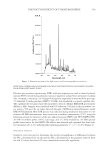
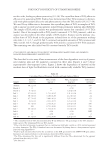
J. Cosmet. Sci., 62, 535–547 (November/December 2011) 535 Photocytotoxicity in human dermal fi broblasts elicited by permanent makeup inks containing titanium dioxide WAYNE G. WAMER and JUN-JIE YIN, Food and Drug Administration, Center for Food Safety and Applied Nutrition, College Park, MD 20740. Accepted for publication August 31, 2011. Synopsis Titanium dioxide (TiO2) is a pigment widely used in decorative tattoo and permanent makeup inks. How- ever, little is known about the risks associated with its presence in these products. We have developed an in vitro assay to identify inks containing TiO2 that are cytotoxic and/or photocytotoxic. The presence of TiO2 in ten permanent makeup inks was established by X-ray fl uorescence. Using X-ray diffraction, we found that seven inks contained predominately TiO2 (anatase), the more photocatalytically active crystalline form of TiO2. The remaining inks contained predominately TiO2 (rutile). To identify cytotoxic and/or photocytotoxic inks, human dermal fi broblasts were incubated for 18 h in media containing inks or pigments isolated from inks. Fibroblasts were then irradiated with 10 J/cm2 UVA radiation combined with 45 J/cm2 visible light for determining photocytotoxicity, or kept in the dark for determining cytotoxicity. Toxicity was assessed as in- hibition of colony formation. No inks were cytotoxic. However eight inks, and the pigments isolated from these inks, were photocytotoxic. Using ESR, we found that most pigments from photocytotoxic inks gener- ated hydroxyl radicals when photoexcited with UV radiation. Therefore, the possibility of photocytotoxicity should be considered when evaluating the safety of permanent makeup inks containing TiO2. INTRODUCTION Tattoos have been used as a means for expressing cultural and personal identity for millennia. A more recent development is intradermal implantation of pigments as an alternative to facial makeup. The popularity of cosmetic tattooing or permanent makeup has steadily increased since its widespread introduction in the mid 1980s (1). The U.S. Food and Drug Administra- tion (FDA) considers inks used for tattoos and permanent makeup to be cosmetics (2). The pigments used in these inks are considered to be color additives, and, therefore, are subject to premarket approval for this specifi c use (3). To date, no pigments have been approved by the Food and Drug Administration for use in tattoos or permanent makeup. Until recently, there have been limited reports of adverse reactions to inks. The European Commission has recog- nized the need to address potential risks associated with inks used for decorative tattoos and permanent makeup (4,5). In Europe, these products are not considered cosmetics but are regu- lated as consumer products under the restrictions of the General Product Safety Directive (5). Address all correspondence to Wayne G. Wamer at wayne.wamer@fda.hhs.gov.
Purchased for the exclusive use of nofirst nolast (unknown)
From: SCC Media Library & Resource Center (library.scconline.org)