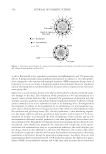
JOURNAL OF COSMETIC SCIENCE 566 complex (3). This consists of a protein layer (4,5), termed δ-layer (∼18 nm), which is sur- rounded by two lipid layers (each layer being 3-μm thick) known as β-layers (6). Lipids from human hair consist mainly of cholesterol esters, free fatty acids, cholesterol, ceramides, and cholesterol sulfate. The loss of lipids along the fi ber (7), may be attributed to repeated shampooing, grooming, and UV exposure. In some individuals, chlorine, hair dyes, and hair bleaches may also contribute to the loss of lipids. The loss of these lipids could impair the integrity of the cuticle. This loss of cuticle integrity would increase the susceptibility of the protein and lipid lamellae to degradation, leading to a decrease in the tensile properties of the hair (7). A number of studies suggest that hair lipids can contrib- ute to physicochemical phenomena such as diffusion, cell cohesion, and mechanical strength, despite occurring in a considerably lower proportion than proteins (2,8–10). Wool is another keratinous tissue, whose internal lipids have been extracted and analyzed in different works (11,12). These lipids are rich in cholesterol, free fatty acids, cholesterol sulfate, and ceramides, and they resemble those found in membranes of other keratinous tissues such as human hair or stratum corneum. The application of liposomes made up of internal wool lipids (IWL) on skin has been studied because of the similarity of composi- tion of IWL and SCL (stratum corneum lipids of human skin) and because of their capac- ity to form stable bilayer structures. The benefi cial effect of liposomes with ceramides extracted from wool fi ber on intact skin in aging populations or in individuals with dry skin has been reported (13,14). Accordingly, internal wool lipids could be regarded as a new natural extract suitable for topical application and incorporation into pharmaceutical or cosmetic formulations for skin care (15). The similarity in chemical and morphological structures of wool and hair fi bers prompted us to study the effect of applying IWL on human hair. Natural properties of hair fi ber were restored to a certain degree, especially when IWL structured as liposomes were ap- plied (16). Consequently a new cosmetic application of these lipids on hair and nail repair was envisaged (17). The study seeks to evaluate the effect of IWL liposome application on untreated hair fi - bers and on hair fi bers subjected to chemical treatment. The effect of this lipid supple- mentation on the moisture regulation and mechanical strength of hair fi ber was determined. The lipid absorption was evaluated in order to measure the recovery of these lipids in the treated fi bers. Lipid modifi cations were related to the chemical and me- chanical properties of hair fi ber. MATERIAL AND METHODS CHEMICALS The chemicals used in this study were acetone (Merck, Darmstadt, Germany), formic acid 85% (Probus S.A., Badalona, Barcelona), citric acid monohydrate (Merck, Darmstadt, Germany), chloroform (Merck, Darmstadt, Germany), diethyl ether (Merck, Darmstadt, Germany), hydrogen peroxide 30% (Merck, Schuchardt, Germany), meth- anol (Merck, Darmstadt, Germany), N-hexane (Merck, Darmstadt, Germany), sodium hydroxide (Carlo Erba Reagenti, Rodano), and thioglycolic acid (Merck, Darmstadt, Germany).

DAMAGED HAIR AND CERAMIDE-RICH LIPOSOMES 567 HAIR CHEMICAL TREATMENTS The hair sample used in this work was a virgin natural brown hair and was supplied by De Meo Brothers (New York). The hair was chemically damaged by different cosmetic treatments such as perming, bleaching, and relaxing: Permed hair. Hair (0.5 g) was placed in a perming solution (8% thioglycollate, pH 8) for three hours on a rocking table. It was then rinsed with water and placed in a neu- tralizing solution (2.5% H2O2, pH 3) for 30 minutes. It was then rinsed again and dried in air. Bleached hair. Hair (0.5 g) was placed in a bleaching solution (9% H2O2, pH 8.3, 1% am- monium persulfate) for three hours on a rocking table. It was then rinsed with water and dried in air. Relaxed hair. Hair (0.5 g) was placed in a 2.5% NaOH solution for 30 minutes on a rocking table and then rinsed with water for fi ve minutes. Next, it was placed in a 9.5% citric acid solution for fi ve minutes and then rinsed with water for ten minutes. IWL APPLICATION Internal wool lipids obtained from Spanish Merino wool fi bers were submitted to metha- nol extraction at 56°C as described in reference 11. The amount of lipids extracted was not very high (1.4% on wool fi ber), but this may be suffi cient for cosmetic utilization due to the high amount of wool processed for textile purposes. Aliquots were dissolved in chlo- roform/methanol 2:1 (v/v) and evaporated to dryness under a stream of dry nitrogen to form a thin fi lm on the fl ask. The fi lm was hydrated with 0.9% NaCl solution to give a fi nal lipid concentration of 10 mg/ml. Liposomes were formed by sonication of the sus- pension in a sonicator, Labsonic 1510 (B. Braun, Melsungen, Germany), at 100W for about 15 minutes. The temperature was maintained at 60°C by a thermostatic bath, Ul- traterm 6000383 (Selecta SA, Barcelona, Spain). These IWL liposomes (1%) were applied to untreated and chemically treated hair as fol- lows: 1-g samples of hair were soaked in a volume of 10 ml of 1% IWL liposomes for ten minutes at 40°C. Then the hair fi bers were washed with distilled water and dried. This procedure was repeated ten times. LIPID EXTRACTION Lipids of untreated and chemically treated hair samples that were subjected to IWL lipo- some application and those that were not subjected were extracted. The extraction was made at room temperature for two hours with mixtures of chloroform-methanol (2:1, 1:1, and 1:2, v/v). These extractions were repeated for one hour with the same mixtures and with methanol overnight. The different extracts were then combined, concentrated, and dissolved in chloroform-methanol (2:1) prior to analysis. To evaluate the total amount of lipids extracted, 1 ml of each of the extracts was evaporated to dryness in a P2O5 desicca- tor and weighed to a constant weight.
Purchased for the exclusive use of nofirst nolast (unknown)
From: SCC Media Library & Resource Center (library.scconline.org)