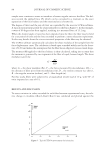
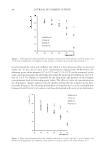
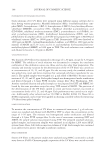
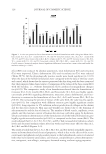
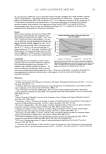
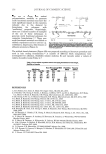
JOURNAL OF COSMETIC SCIENCE 90 Hair showed more fi ber–fi ber variability than the polymeric fi bers, with an average modulus measured using the manual and automated techniques of 1.39±0.22 GPa and 1.58±0.20 GPa, respectively. The difference can be explained by the higher tensile force applied to the fi ber (10 g versus 6.5 g) during the automated method leading to tension- torsion coupling (31) in the smaller-diameter hair fi bers, though further studies would be required to confi rm this. The average difference between runs (Figure 8) was larger for the manual technique than for the automated technique, with average absolute differ- ences of 3.30% and 2.19%, respectively. These differences were statistically signifi cant (p=0.03). The results obtained indicate that while the torsional pendulum method and direct con- tact method provide consistent, reproducible measurement of the shear modulus, the direct contact method appears to offer improved repeatability, with run-to-run variabil- ity reduced by 28% when measuring nylon fi bers and by 34% when measuring hair fi bers. In spite of experiments being run under controlled conditions, hair fi bers were found to display a fi ber-to-fi ber variability much larger than that of nylon, with a standard devia- tion in the torsional modulus of 0.224 GPa (16%) and 0.199 GPa (12%) for manual and automated techniques in hair, compared to 0.0172 GPa (4%) and 0.0255 GPa (6%) for nylon. This is understandable as nylon was chosen as a model fi ber with a high degree of homogeneity, while hair fi ber is a natural substrate. The approximate amount of operator time taken to measure samples was also recorded. It was found that it took on average of 120 minutes of operator time to measure 40 fi bers using the pendulum method, while it took 20 minutes of operator time to measure the same fi bers using the automated method, including the additional time required to add the extra torsion clip required for the direct-contact method. The automated nature of the FTT950 allowed placement of the instrument in a humidity chamber to control conditions. This avoided the need for experiments to be made using a glove box, or with climate control for the whole room, something that would be required with the manual system. Figure 8. Plot of average run-run variability for each of the sample sets calculated on a fi ber-by-fi ber basis. Error bars show 95% confi dence limits.

NEW METHOD FOR MEASUREMENT OF FIBER TORSION 91 CONCLUSION The aim of this study was to assess the advantages of a new automated method for the measurement of the shear modulus of hair fi bers relative to a manual pendulum-based method. It has been observed that the methods show similar measured values for the shear modulus of nylon and hair fi bers. Reduced variability between runs has been shown for the automated method for both fi ber types. It has also been determined that the operator time required for the automated method is reduced by a factor of 6 relative to the conventional manual method. The automated FTT950 method therefore provides signifi cant advantage over the pendulum method, showing improved run-to-run reproducibility in addition to increased sample throughput and experimental fl exibility. ACKNOWLEDGMENTS The authors thank M. Leray for measurements made contributing to the data set. REFERENCES (1) C. R. Robbins, Chemical and Physical Behavior of Human Hair, 2nd Ed. (Springer-Verlag, New York, 1988), p. 226. (2) R. Robbins and R. Crawford Cuticle damage and the tensile properties of human hair, J. Soc. Cosmet. Chem, 42, 59 (1991). (3) H. D. Weigmann, Analysis and quantifi cation of hair damage, Progress Report No. 2, TRI Princeton, Princeton, NJ (1991). (4) W. J. Simpson, A comparison of methods of measurement of Young’s modulus for keratin fi bers, J. Textile Inst., 51T, 675 (1965). (5) P. Huck and C. Baddiel, The mechanical properties of virgin and treated human hair fi bers: A study by means of the oscillating beam method, J. Soc. Cosmet. Chem., 22, 401–410 (1971). (6) G. H. Henderson, et al., Fractography of human hair, J. Soc. Cosmet. Chem., 29, 449–467 (1978). (7) J. Menkart, Caucasian hair, Negro hair, and wool: Similarities and differences, J. Soc. Cosmet. Chem., 17, 769–787 (1966). (8) M. M. Breuer, The binding of small molecules to hair—l: The hydration of hair and the effect of water on the mechanical properties of hair, J. Soc. Cosmet. Chem., 23, 447–470 (1972). (9) P. Zuidema, L. E. Govaert, F. P. T. Baaijens, P. A. J. Ackermans, and S. Asvadi, The infl uence of humidity on the viscoelastic behaviour of human hair, Biorheology, 40, 413–439 (2003). (10) F. Baltenneck, A. Franbourg, F. Leroy, M. Mandon, and C. Vayssie, A new approach to the bending properties of hair fi bers, J. Cosmet. Sci., 52, 355–368 (2001). (11) F. I. Bell, R. Skinner, I. M. Tucker, Y. Leray, T. E. Lyons, K. Devine, P. Pudney, and T. Oikawa, Biophysical and mechanical response of keratinous fi bers to changes in temperature and humidity, J. Cosmet. Sci., 55(Suppl.), S19–S24 (2004). (12) D. Persaud and Y. Kamath, Torsional method for evaluating hair damage and performance of hair care ingredients, J. Cosmet. Sci., 55(Suppl.), S65–S77 (2004). (13) S. B. Reutsch and H-D. Weigmann, Mechanism of tensile stress release in the keratin fi ber cuticle, J. Soc. Cosmet. Chem., 4, 13–26 (1996). (14) R. Beyak, C. F. Meyer, and G. S. Kass, Elasticity and tensile properties of human hair. I. Single fi ber test method, J. Soc. Cosmet. Chem., 20, 615–626 (1969). (15) H. Bogaty. Torsional properties of hair in relation to permanent waving and setting, J. Soc. Cosmet. Chem., 18, 575–589 (1967). (16) A. Elliot, The α-β transformation in stretched hair, Textile Res. J., 22, 783 (1952).
Purchased for the exclusive use of nofirst nolast (unknown)
From: SCC Media Library & Resource Center (library.scconline.org)