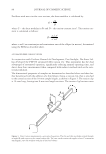
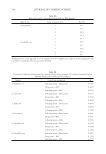
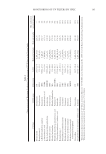
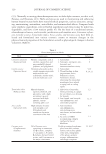
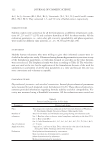
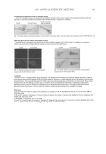
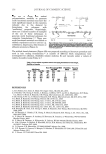
JOURNAL OF COSMETIC SCIENCE 94 Correlation coeffi cients between data sets consisting of softening-point measurements, drop point determination, and thermoanalytical parameters measured by DSC are consis- tent with one another. The hardness of the formulations, a critical parameter from the application aspect, was characterized by the measurement of compression strength. MATERIALS AND METHODS MATERIALS Jojoba oil, castor oil, coconut oil, candelilla wax, and carnauba wax—produced by Henry Lamotte GmbH (Bremen, Germany)—were obtained for research purposes from HSH- Chemie Ltd. (Budapest, Hungary) as a gift. Pharmaceutically pure sunfl ower oil, yellow bees- wax, glycerol, and lanolin were purchased from Hungaropharma Ltd. (Budapest, Hungary). PRODUCTION OF STICK SAMPLES The samples were produced by melting the waxes and oils in various ratios. The composi- tions tested can be found in Table I. The mass of the prepared sticks was 3.0 ± 0.1 g. DETERMINATION OF PHYSICOCHEMICAL PARAMETERS Drop point. The drop point is the temperature at which the fi rst drop of the melting sub- stance to be examined falls from a cup under defi ned conditions. In our study the apparatus used in the pharmaceutical industry was applied. Drop point measurements were carried out according to the method described in the European Pharmacopoeia Ed. 5.0, chapter 2.2.17. (9). Table I Composition of Samples Sample (w/w%) Composition (w/w%) Glycerol Lanolin Yellow beeswax Sunfl ower oil 1. Sunfl ower oil 5 5 50, 40, 30, 20, or 10 0 (40, 50, 60, 70, or 80) 2. Castor oil 5 5 50, 40, 30, 20, or 10 0 (40, 50, 60, 70, or 80) 3. Jojoba oil 5 5 50, 40, 30, 20, or 10 0 (40, 50, 60, 70, or 80) 4. Coconut oil 5 5 50, 40, 30, 20, or 10 0 (40, 50, 60, 70, or 80) 5. Carnauba wax 5 5 30, 29, 28, 27, 26, or 25 60 (0, 1, 2, 3, 4, or 5) 6. Candelilla wax 5 5 30, 29, 28, 27, 26, or 25 60 (0, 1, 2, 3, 4, or 5)

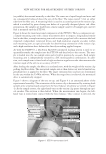
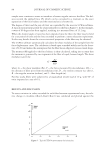
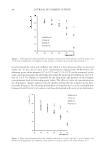
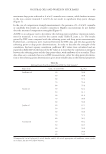
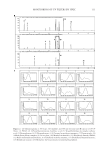
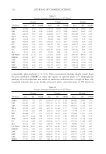
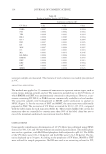
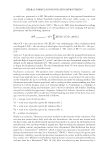
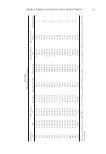
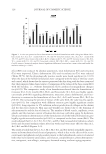
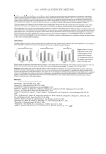
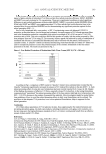
NATURAL OILS AND WAXES IN STICK BASES 95 Softening point. The softening point, the temperature at which the stick bases soften be- yond an arbitrary softness, was determined with the ASTM ring-and-ball method. Compression strength. The hardness or ability to resist the rupture of sticks (also known as com- pression strength) was determined by the apparatus used to test suppositories based on fatty excipients. This is described in the European Pharmacopoeia Ed. 3.0, chapter 2.9.24. (10). DSC measurements. DSC thermograms were collected using a thermal analyzer (Haake SIl Exstar6000, Seiko Instruments Inc., Neu-Isenburg, Germany). Samples were placed into aluminum pans after which thermal analysis was carried out under the following condi- tions: samples were heated from 10°C to 150°C at a 10°C/min ramp likewise, cooling was also performed at a 10°C/min rate. Upon comparison to registered thermograms, the melting point was determined. RESULTS AND DISCUSSION Waxes are able to form sticks upon melting without the addition of auxiliary materials. However, their high rigidity is not amenable to comfortable cosmetic or therapeutic ap- plications. For the yellow beeswax used in our study, the softening point and drop point were 64.0 ± 0.5°C and 63.0 ± 1.0°C, respectively. The compression strength for sticks prepared from yellow beeswax was 5267 ± 44 g. The addition of oil altered the above physical parameters. For a composition of 60 w/w% yellow beeswax and 40 w/w% sun- fl ower oil, the softening point and drop point were 63.5 ± 0.5°C and 62.0 ± 0.5°C, re- spectively, while the compression strength was 3734 ± 44 g. The alteration is signifi cant only in terms of compression strength, where the presence of sunfl ower oil makes the sticks less rigid. It is important to note that the softening point and the drop point are not signifi cantly altered. This is advantageous from the aspect of storage, as the sticks prepared will not be fl uid at lower temperatures. Lanolin has a similar impact on the thermal parameteres and rigidity of sticks prepared from yellow beeswax. The addition of 5 w/w% lanolin does not infl uence the softening and drop points determined for yellow beeswax however, the compression strength was reduced to 4034 ± 44 g. The presence of glycerol in higher than 20 w/w% concentrations can lead to phase separa- tion, and therefore the thermal properties measured in this study are characteristic only for the oily components. Thus, in our measurements 5 w/w% glycerol was used through- out the study (Table I.). The effects of various oils of various concentrations were tested and compared from the aspect of the softening point, drop point, and compression strength of sticks (Table I, Figures 1–3). The presence of oils has a softening effect on the composition of stick bases. However, the extent of the softening effect is dependent not only on the amount of oil, but also on the type of oil (Figure 1). The softening effects can be explained mainly by the different fatty acid compositions (varying chain length and number of double bonds) and, to a lesser extent, by the presence of oil-specifi c minor components (e.g., vitamin E and carotenoids). It is worth mentioning that the chemical structure of jojoba oil is distinct from that of other vegetable oils. Jojoba oil is a polyunsaturated liquid wax, similar to sperm whale oil, characterized by fatty acids as well as esters composed entirely of straight-chain alcohols. Varying the oil concentrations from 40 w/w% to 80 w/w% re- sults in a measurable reduction of the softening point. The decrease in softening point is
Purchased for the exclusive use of nofirst nolast (unknown)
From: SCC Media Library & Resource Center (library.scconline.org)