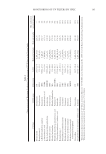
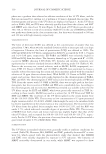
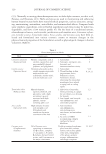
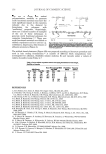
JOURNAL OF COSMETIC SCIENCE 120 (2,3). Naturally occurring photochemoprotectives include alpha carotene, ascorbic acid, fl avones, and fl avanone (4,5). Herbs and spices are used in maintaining and enhancing human beauty because herbs have many benefi cial properties, such as sunscreen, antiag- ing, moisturizing, antioxidant, anticellulite, and antimicrobial effects. Compared with some synthetic ingredients, selected herbal ingredients and extracts may be mild, bio- degradable, and have a low toxicity profi le (6). On the basis of a traditional system, ethanobotanical survey, and scientifi c justifi cation with modern uses, Cinnamon zeylani- cum, Centella asiatica, Tamarindus indica, Areca catechu, and Curcuma caesia have been se- lected and formulated into various cosmetic creams to measure changes in the physicochemical properties of the formulation as well as physiological changes in human volunteers (Table I). Table I Photochemoprotective Herbs Herb Constituents Uses References Cinnamon zeylanicum (Lauraceae) bark Phenolic compounds, such as catechin, epicatechin, and procyanidin B2, phenol polymers, and polyphenols 1. Antioxidant 2. Antiseptic, astringent, anti- bacterial, and immunostimulant activity 7 8 Centella asiatica (Apiaceae) leaves Triterpene glycosides such as centella saponin, asiaticoside, madecassoside, and sceffoleoside, and also asiatic acid and madecassic acid 1. Antioxidant 2. Wound healing, in skin improvement tonics, Parkinson’s disease, Alzheimer’s disease, improving the antioxidant neurological state related to aging, and as cooling agents 9,10 8, 10,11 Tamarindus indica (Fabaceae) fruit Mineral elements, saponins, alkaloids, and glycosides, with a high antioxidant capacity associated with high phenolic content including gallic acid 1. Alleviation of sunstroke, Datura poisoning, as a gargle for sore throats, as a dressing for wounds 2. Anti-fungal, anti-bacterial, anti-infl ammatory, and antioxidant properties 12 12,13 Areca catechu (Arecaceae) seeds High amounts of tannic acid and gallic acid (Polyphenols and tannins are the major constituent of the nut) 1. Anti-microbial, anti-infl ammatory, anti-melanogenesis, anti-elastase, and antioxidant activity 2. As active as GABA in stimulating collagen synthesis by buccal fi broblasts 8,9 14 Curcuma caesia (Zingiberaceae) rhizomes Oil of Curcuma caesia containing ar-turmerone, (Z)-β-ocimene, camphor, ar-curcumene, 1,8-cineole, β-elemene, borneol, bornyl acetate, and γ-curcumene as the major constituents Useful in treating leucoderma, piles, bronchitis, asthma, tumors, tuberculous glands of the neck, enlargement of the spleen, epileptic seizures, infl ammations, and allergic eruptions 15, 16,17

HERBAL FORMULATIONS FOR SKIN IMPROVEMENT 121 MATERIALS AND METHODS Plant materials Curcuma caesia (rhizome), Areca catechu (seeds), Centella asiatica (leaves), Cinnamon zeylanicum (dried bark), and Tamarindus indica (fruit pulp) were selected because of their reported physiological action, and were procured from a local authentic herbal distributor in Raipur, Chhattisgarh. All plant materials were identifi ed from the Her- barium, Department of Pharmacognosy, Pt. Ravishankar Shukla University, Raipur, In- dia, and were tested for per cent purity (99.7%) by microscopic methods. All the other chemicals and reagents used in the study were of analytical grade. PREPARATION OF HERBAL EXTRACTS Hydroethanolic extracts of herbs were used in this study. All of the dried materials from Curcuma, Areca, Centella, and Cinnamon were cleaned and ground, and their coarse powders were passed through a number 20 sieve. Exactly 50 g of each herb was ex- tracted with a hydroalcoholic mixture (200 ml, 50:50 v/v ethanol:water) at 60°–70°C for 24 h by a continual hot extraction method, until complete exhaustion of the drug, by using a soxhlet apparatus (8). Soxhlet extraction is a well-established, easier, and faster method for the extraction of the above-stated herbs, and the antioxidant activity of the constituents is not affected by the raised temperature, and so this method was adopted for their extraction (31). The fruit pulp of Tamarindus indica (50 g) was extracted with a hydro-alcoholic mixture (200 ml, 50:50 v/v ethanol:water) using a cold macera- tion process for three days at 4°C (12). The obtained extracts were evaporated under reduced pressure (AU 5 psi) at 50° ± 5°C for 5–15 min, and the concentrated extracts were dried to obtain actual yields. PREPARATION OF BASE CREAM Base cream was prepared by using a phase inversion emulsifi cation technique (18). Ini- tially olive oil (5% w/w), cetyl alcohol (3.5% w/w), stearic acid (4.75% w/w), polysorbi- tan monooleate (2% w/w), and glycerin (3.5% w/w) were mixed using a magnetic stirrer at 200 ± 25 r.p.m. at 65°–75°C. After complete melting and homogenous mixing, a 50- ml portion of deionized water (70° ± 2°C) was added at a rate of 30 ml per min at increased speed (275 ± 25 r.p.m.). When the temperature of the internal phase was reduced to 50°C, phase inversion took place and the solution became viscous the remaining aqueous phase (up to 100% w/w) containing propylene glycol (4% w/w) was then added. When the temperature was reduced to 40°C, lemon grass oil (two to three drops) was added to this mixture. PREPARATION OF HERBAL CREAM The hydroethanolic extract of each herb was soluble in the aqueous phase, and so part of the aqueous phase was replaced with extract (according to desired concentration of ex- tract, i.e., 1, 3 and 5% w/w), and the aqueous phase was added to the oil phase. For each herbal extract three formulations were prepared: Cinnamon (Cc1, Cc2, Cc3), Areca (Ac1,
Purchased for the exclusive use of nofirst nolast (unknown)
From: SCC Media Library & Resource Center (library.scconline.org)