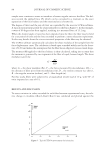
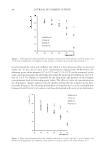
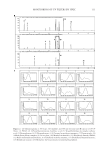
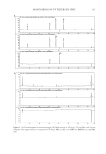
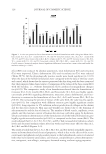
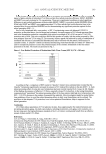
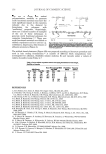
JOURNAL OF COSMETIC SCIENCE 130 Figure 4. Sebum determination of various formulations before and after one-week, two-week, and four-week periods of application on the volar forearm. Statistical analysis showed signifi cant differences between base- line values and from the formulation-treated areas (p 0.001). Areca and Curcuma extract-containing formulations the reason might be due to their chemical constituents and their affi nity with the cream formulation. Further in vivo sun protection factor (SPF) determination studies should also be conducted to confi rm the in vitro results. Therefore, it can be concluded that formulated protective creams Cc1, Cc2, Hc1, Hc2, Tc1, and Tc2 are more effective and photochemoprotective as compared to Ac1, Ac2, Kc1, and Kc2. The SPF values increased as the concentration of extract was increased up to a limit in the formulation, and so the different concentrations of extract in the formulations also played a benefi cial role. Our fi ndings support the fact that bo- tanical photochemoprotective formulations are a very signifi cant approach for combating the deleterious effects of sunlight, which changes skin properties and leads to photoag- ing. Hence, herbal formulations could be used cosmetically for the improvement of skin properties, and deeper penetration could treat various skin ailments. ACKNOWLEDGMENTS The authors are thankful to the University Grants Commission (UGC) (Major Research Project, F. No. 32-133/2006 (SR), New Delhi, for instrumental and fi nancial support for this work, and to the Head, Cosmetic Laboratory, University Institute of Pharmacy, Rai- pur, for providing laboratory facilities. REFERENCES (1) F. Afaq and H. Mukhtar, Photochemoprevention by botanical antioxidants, Skin Pharmacol. Appl. Skin Physiol., 15, 297–306 (2002). (2) S. F’guyer, F. Afaq, and H. Mukhtar, Photochemoprevention of skin cancer by botanical agents, Photo- dermatol. Photoimmunol. Photomed., 19, 56–72 (2003). (3) S. Saraf and C. D. Kaur, Phytoconstituents as photoprotective novel cosmetic formulations, Pharmacog. Rev., 4(7) 1–11 (2010).

HERBAL FORMULATIONS FOR SKIN IMPROVEMENT 131 (4) C. Deep and S. Saraf, Harbal photoprotective formulations and their evaluation, Open Nat. Prod. J., 2, 71–76 (2009). (5) M. S. Ashawat, S. Saraf, and S. Saraf, Biochemical and histopathological studies of herbal cream against UV radiation induced damage, Trends Med. Res., 2, 135–141 (2007). (6) C. Deep and S. Saraf, Novel approaches in herbal cosmetics, J. Cosmet. Dermatol., 7, 89–95 (2008). (7) S. Mathew and T. E. Abraham, Studies on the antioxidant activities of cinnamon (Cinnamomum verum) bark extracts through various in vitro models, Food Chem., 94, 520–528 (2006). (8) M. S. Ashawat, S. Saraf, and S. Saraf, Preparation and characterization of herbal creams for improvement of skin viscoelastic properties, Int. J. Cosmet. Sci., 30, 183–193 (2008). (9) M. S. Ashawat, S. Saraf, and S. Saraf, In vitro antioxidant activity of ethanolic extracts of Centella asiatica, Punica granatum, Glycyrrhiza glabra and Areca catechu, Res. J. Med. Plants, 1, 13–16 (2007). (10) F. Pittella, R. C. Dutra, D. D. Junior, et al., Antioxidant and cytotoxic activities of Centella asiatica (L) Urb., Int. J. Mol. Sci., 10, 3713–3721 (2009). (11) R. Morisset, N. G. Cote, J. C. Panisset, et al., Evaluation of the healing activity of hydrocotyle tincture in the treatment of wounds, Phytotherapy Res. 1, 117–121 (2006). (12) K. E. Siddig, H. P. M. Gunasena, B. A. Prasad, et al., Tamarind, Tamarindus indica L. (Southampton Centre for Underutilised Crops, 2006), pp 26–32. (13) F. Martinello, S. M. Soares, J. J. Franco, et al., Hypolipemic and antioxidant activities from Tamarin- dus indica L. pulp fruit extract in hypercholesterolemic hamsters, Food Chem. Toxicol., 44, 810–818 (2006). (14) B. J. Boucher and N. Mannan. Areca nut symposium: Metabolic effects of the consumption of Areca catechu, Addiction Biol., 7, 103–110 (2002). (15) A. K. Pandey and A. R. Chowdhury. Volatile constituents of the rhizome oil of Curcuma caesia Roxb from central India, Flavour Fragr. J., 18, 463–465 (2003). (16) D. K. Arulmozhi, N. Sridhar, A. Veeranjaneyulu, et al., Preliminary mechanistic studies on the smooth muscle relaxant effect of hydro alcoholic extract of Curcuma caesia, J. Herbal Pharmacother., 6, 117–124 (2007). (17) Agro-Techniques of Selected Medicinal Plants, Volume 1, (National Medicinal Plants Board, Department of AYUSH, Ministry of Health and Family Welfare Government of India, 2008), pp. 73–74. (18) T. Forster and H. Tesmann, Phase inversion emulsifi cation, Cosmet. Toiletr., 11, 106 (1991). (19) Indian Standard Bureau, Methods of Testing for Safety Evaluation of Cosmetic IS, 4011 (1997). (20) B. A. Louise, Cosmetic Claim Substantiation (Marcel Dekker, New York, 1998), Vol. 18, pp. 97–99). (21) Indian Standard Bureau IS: 11648, 5.2 (1999). (22) J. S. Mansur, M. N. R. Breder, M. C. A. Mansur, and R. D. Azulay. Determinação Do Fator De Proteção Solar Por Espectrofotometria, An. Bras. Dermatol., 61, 121–124 (1986). (23) R. M. Sayre, P. P. Agin, G. J. Levee, and E. Marlowe, Comparison of in vivo and in vitro testing of sun screening formulas, Photochem. Photobiol., 29, 559–566 (1979). (24) C. D. Kaur and S. Saraf, In vitro SPF determination of herbal oils used in cosmetics, Pharmacog. Res., 2(1) 22–25 (2010). (25) Indian Standard Bureau IS: 4011 4.3.1.3 (1997). (26) E. Yilmaz and H. Borcher, Effect of lipid-containing positively charged nanoemulsions on skin hydra- tion, elasticity and erythema: An in vivo study, Int. J. Pharm., 307, 232–238 (2006). (27) S. Y. Pande and R. Misri, Sebumeter, Ind. J. Dermatol. Venereol. Lprol., 71, 444–446 (2005). (28) C. Edwards, “The Mexameter MX 16 TM,” in Bioengineering of the Skin: Methods and Instrumentation, (CRC Press, Boca Raton, FL, 1995). (29) S. Kapoor and S. Saraf. Age dependent studies as various skin parameters using cutometer, Ind. J. Pharm. Educ. Res., 43, 338–345 (2009). (30) H. A. Liberman, M. M. Rieger, and G. S. Banker, Pharmaceutical Dosage Form: Disperse Systems (Marcel Dekker, New York, 1989), Vol. 3, p. 594. (31) R. M. Baird. “Microbiological Contamination of Manufactured Products: Offi cial and Unoffi cial Lim- its,” in Microbial Quality Assurance in Cosmetics, Toiletries and Non-Sterile Pharmaceuticals, 2nd Ed., R. M. Baird and S. F. Bloomfi eld, Eds. (Taylor and Francis, UK, 1996) pp. 235–251. (32) M. E. M. Braga, P. F. Leal, J. E. Carvalho, and M. A. A. Meireles. Comparison of yield, composition, and antioxidant activity of turmeric (Curcuma longa L.) extracts obtained using various techniques, J. Agric. Food Chem., 51, 22, 6604–6611 (2003). (33) M. Gallo, R. Ferracane, G. Graziani, A. Ritieni, and V. Fogliano. Microwave assisted extraction of phe- nolic compounds from four different spices, Molecules, 15, 6365–6374 (2010).
Purchased for the exclusive use of nofirst nolast (unknown)
From: SCC Media Library & Resource Center (library.scconline.org)