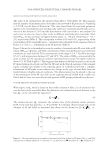
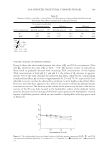
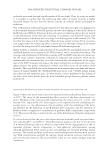
TGA-INDUCED STRUCTURAL CHANGES IN HAIR 179 MATERIALS AND METHODS PURIFICATION OF HAIR FIBERS An aqueous ammonium solution of 50% (w/v) TGA was used as supplied commercially. Other chemicals used were of reagent grade. Chemically unmodifi ed human hair samples (approximately 25 cm in length) collected from a Japanese female were subjected to pu- rifi cation after removing lengths of approximately 1 cm at the root and approximately 2 cm at the tip. A tress consisting of 20 hair fi bers (approximately 20 cm in length) was purifi ed by immersing it in a 5% (w/v) 50-ml solution of Laureth-9 containing 20 mM EDTA for 1 h at 33°C and then washing it thoroughly with distilled water before drying it in air. Purifi ed hair fi bers were used for reduction and oxidation treatments. The SS and SH contents in the hair fi bers were 636 and 34 μmol/g, respectively. REDUCED HAIR FIBERS Reduction was performed by winding the hair fi bers around a 12-mm-diameter rod and dipping in an aqueous solution (400 ml) containing 0.3, 0.5, 0.75, 1.0, and 1.5 M TGA for 20 min at room temperature at pH 8.7 and 9.3. This was followed by immersing them four times in deionized water (400 ml) for 5 min each at room temperature. Reduced hair fi bers thus obtained were subjected to either oxidation or N-ethylmaleimide (NEM) treatment by immersing the rod in the NEM solution. REDUCED AND OXIDIZED (REOXIDIZED) HAIR FIBERS Reduced hair fi bers prepared under the aforementioned conditions were subsequently im- mersed in a 0.5 M sodium bromate solution (400 ml) at room temperature for 20 min at pH 6.35, followed by immersing them four times in water (400 ml) repeatedly for 5 min each. Finally, the reoxidized hair fi bers were blotted and air dried. The reoxidized hair fi bers thus obtained represent the so-called permanent-waved hair that would be obtained cosmetically. REDUCED AND NEM-TREATED HAIR FIBERS The reduced fi bers were treated with a 0.05 M NEM solution for 24 h at pH 8.0 and room temperature to block the free SH groups. The reduced and NEM-treated fi bers thus obtained were washed thoroughly with water and air dried. Blocking the free SH groups is necessary at this stage to stabilize the network structure through inhibiting SH/SS in- terchange reactions during swelling and extension (17,18). PREPARATION OF SWOLLEN HAIR FIBERS AND MEASUREMENT OF THE CROSS-SECTIONAL AREA The untreated and permanent waved hair fi bers were immersed in an 11 M LiBr solution containing 10−2 M NEM at 90°C for 1 h and then immersed and equilibrated in a mixed solution of 8 M LiBr and diethylene glycol mono-n-butyl ether, i.e., butyl carbitol (BC), in a 55:45 volume ratio. Equilibrium was reached by immersion for 1 h at room tem- perature. The swollen fi ber samples thus obtained were selected for their uniformity and medulla freedom before the cross-sectional area and mechanical properties were measured.

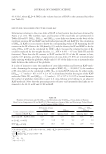
JOURNAL OF COSMETIC SCIENCE 180 Assuming a circular cross section of the fi ber sample, even for a fi ber sample with an el- liptical cross section, the diameter of swollen fi bers and any signifi cant decrease in ellip- ticity were measured under a microscope at approximately 20 places randomly selected over the 20-mm length of the fi ber. This procedure was performed at room temperature because the diameter of the swollen fi bers in the mixed solution was approximately con- stant irrespective of the temperature (17). The average cross-sectional area of swollen fi - bers was calculated from the average value of the swollen fi ber diameter, Ds. FORCE–EXTENSION CURVE FOR SWOLLEN HAIR FIBERS Mechanical tests for swollen fi bers were performed according to the method described in a previous paper (15). A swollen fi ber sample of ca. 20-mm length was set between sam- ple holders in a liquid cell. The force–extension properties were measured in a mixed solution of 8 M LiBr and BC in a 55:45 volume ratio at 50°C after the measurement of unstrained zero length at equilibrium, L0. Several load and unload extension cycles were performed to remove any contribution from fl ow segments, and then force–extension curves were measured until about 40% extension at an extension speed of 10%/min was attained. Finally, the extended fi ber was retracted until zero force. Next, the mixed solu- tion in the cell was replaced with water and held for about 5 min. The zero length in water at room temperature, Lw, was also measured in the unstrained state and the fi ber was released from the sample holders and dried in air in a P2O5 desiccator. Its diameter was then measured using a laser method (KL151A, Anritsu Co.) and the average diame- ter, Dd, was obtained. The volume fraction of keratin materials in the swollen fi ber sam- ple, v2, was calculated using v2 = (Dd/Ds)2(Lw/Lo). Here Lw was assumed to be equal to the dry length. Note that the stress–strain curves for swollen fi bers were constructed using the force values for the average cross-sectional area of swollen and unextended fi bers. FORCE–EXTENSION CURVE IN WATER The untreated and permanent-waved hair fi bers were immersed in water at 20°C over- night and then extended in water at 10%/min. The stress–strain curves were constructed on the basis of stresses as the forces per cross-sectional area measured in the unstrained state and under room conditions. The initial modulus in water, Ew, was defi ned as the slope of the initial straight region of the stress–strain curve. TWO-PHASE MODEL STRUCTURAL CONCEPT It has been demonstrated that α-helical chains can be randomized by immersing an NEM-treated keratin fi ber in a mixed aqueous solution of concentrated LiBr and BC (17). It has also been shown that the randomized chains can be subsequently recrystallized in water, and that these conformational changes are substantially reversible (19). This provides evidence that blocking the free SH groups inhibits SH/SS interchange reactions to stabilize
Purchased for the exclusive use of nofirst nolast (unknown)
From: SCC Media Library & Resource Center (library.scconline.org)