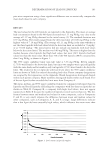
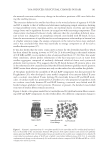
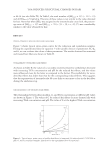
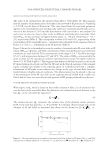
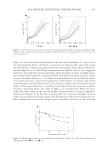
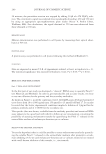
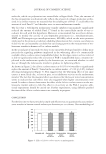
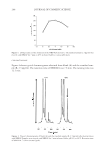
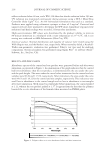
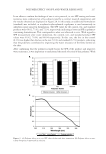
POLYMER EFFECT ON SPF AND WATER RESISTANCE 217 In an effort to confi rm the fi ndings of our in vitro protocol, in vivo SPF testing and water resistance were conducted on a fi ve-subject panel by a contract research organization and the results obtained are displayed in Figure 2A. In this study, an additional formulation (standard) was included, as acrylates/octylacrylamide copolymer is used extensively in anhydrous spray sunscreen formulations. The SPF values for the control, test, and standard products were 69.02, 73.92, and 72.94, respectively, indicating a boost in SPF in polymer- containing formulations. This corresponds to what was observed in vitro. With regard to SPF measurement after water immersion, the control, test, and standard product SPF values were 63.42, 70.00, and 68.04 respectively. In this case, the loss in the control (8.1%) was higher than the loss in the test (5.3%) and standard (6.7%) products, indicating that the polymers contributed to improving the water resistance of the fi lms formed on the skin. After confi rming that the polymer actually boosts the SPF of the product and improves water resistance, it was important to understand the mode of action of this polymer. With Figure 2. (A) Polymer effect on in vivo SPF values before and after immersion. (B) Polymer effect on sun- screen absorption as measured in solution.

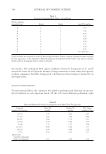
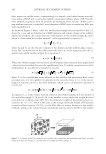
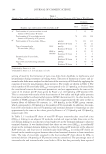
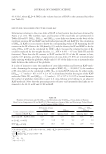
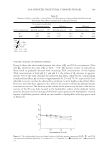
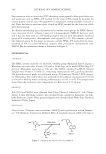
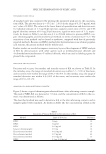
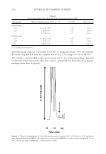
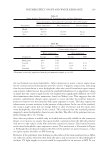
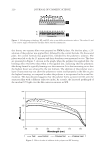
JOURNAL OF COSMETIC SCIENCE 218 regard to boosting SPF, it is fundamental to determine whether the polymer is chemically interacting with a particular sunscreen moiety (or several ones), leading to an increase in absorbance and thus an increase in SPF. Since such interactions will take place mainly in solution rather than in fi lms, the test and control formulations as well as a 2% solution of the polymer in alcohol were prepared and tested for their absorbance in a cuvette (1-cm path length). The data generated showed no increase in absorbance in the presence of the polymer, indicating that the effect of the polymer was mainly a surface effect rather than a chemical one. This data is displayed in Figure 2B. Since the effect of the polymer is mostly based on its surface properties, fi lms of the two formulations were prepared on PMMA plates and studied under a digital microscope. Digital images of these fi lms were captured and are presented in Figure 3. The hills and valleys are clearly depicted in the pictures, the hills being white and the valleys being black. The images were converted into grayscale, and image analysis was used to quantify the fi ndings. The results obtained are displayed in Table II. These results confi rm that the fi lm properties of the control changed (92.44%) much more than those of the test prod- uct (16.73%) after water immersion. In other words, the polymer offers some protection with regard to exposure to water. Contact angle measurements were performed on the control, test, and standard fi lm for- mulations prepared on PMMA plates, and the results are presented in Table III. Contact angles of a water droplet on a blank plate and control, test, and standard fi lms were 68.9, 67.1, 62.7, and 74.9 degrees, respectively. This indicates that the blank plate was as hy- drophobic as the plate covered with the control formula, whereas the plate covered with Figure 3. Digital micrographs of PMMA plates.
Purchased for the exclusive use of nofirst nolast (unknown)
From: SCC Media Library & Resource Center (library.scconline.org)