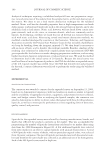
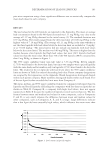
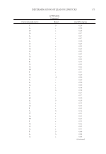
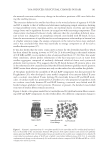
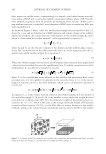
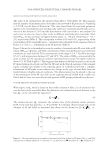
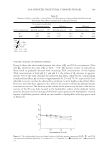
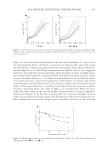
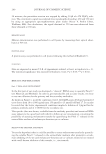
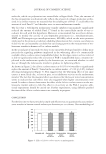
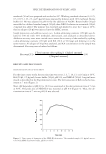
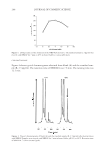
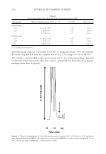
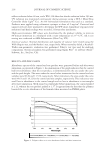
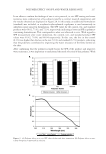
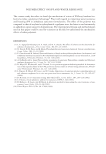
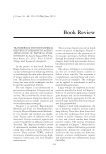
MELANOSOME TRANSFER EVALUATION 201 As shown in Figure 2, signifi cant quantities of Pmel 17 were released in the incubation media of our co-cultures. When cells were incubated in the presence of niacinamide (5 mM), the quantities of Pmel 17 found in the culture medium were signifi cantly re- duced by 28.1% ( p 0.01). The data published by Taubman et al. in 1974 (8) concerning the assessment of collagen synthesis by the quantifi cation of the procollagen type I carboxy-terminal peptide (PIP) was the inspiration for our idea to assess melanosome transfer by quantifi ying the Pmel 17 released in the extracellular medium consecutively to a proteolytic ectodomain shed- ding. Indeed, several types of collagens are synthesized as precursor molecules, called procollagens, which contain additional peptide sequences, usually called “propeptides.” When collagens are secreted, the propeptides are cleaved off from the collagen triple helix Figure 1. Typical standard curves of the Pmel 17 ELISA assay. Figure 2. Quantitative ELISA assay of extracellular Pmel 17: Effect of niacinamide and of an Alaria escu- lenta extract.

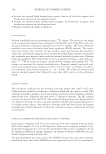
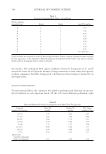
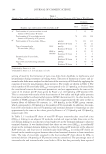
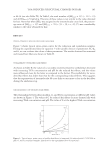
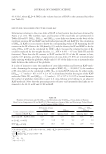
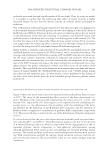
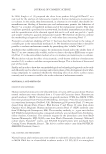
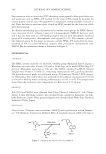
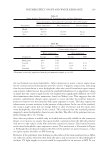
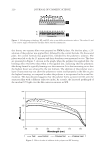
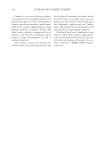
JOURNAL OF COSMETIC SCIENCE 202 molecule, which can polymerize into extracellular collagen fi brils. Thus, the amount of the free propeptides stoichiometrically refl ects the amount of collagen molecules synthe- sized. In a similar manner, we reasoned that the soluble part of Pmel 17 could refl ect the amount of total Pmel 17 and therefore serve to assess melanosome transfer. The fact that a well-known melanosome transfer inhibitor (niacinamide) signifi cantly reduced the amount of soluble Pmel 17 found in the extracellular media of our co- cultures fi ts well with this hypothesis. Moreover, as niacinamide has never been demon- strated to modify the activity of zinc-dependent proteinases (i.e., metalloproteinases, MMP, and Disintegrin-type metalloproteinases, ADAMs), which are the main proteases implicated in the protein ectodomain shedding phenomenon (for a review, see references 9 and 10), we can reasonably conclude that our strategy permits the measurement of me- lanosome transfer in human-cell co-culture models. In the second part of our study, we chose to use our newly developed model to defi ne more precisely the signaling pathways implicated in the whitening effect of a commercially available Alaria esculenta extract (unpublished data). As the algae extract we have selected is able to signifi cantly reduce the activation of PAR-2 (unpublished data), a receptor im- plicated in the melanosome uptake by the keratinocyte, we examined whether it could also act through the melanosome transfer to produce its lightening effects. As shown in Figure 2, the Alaria esculenta extract at 0.01% (v/v) was able to signifi cantly reduce the amount of Pmel 17 found in the co-culture media: −15.4% (p0.05), without affecting melanogenesis (Figure 3). This suggests that the whitening effect of our algae extract is more likely due, at least in part, to its inhibitory activity on the melanosome transfer. The fact that the maximal effect was observed for the lowest tested concentration seems to indicate that side effects were also triggered when higher concentrations were tested. In order to better characterize the effect of the Alaria esculenta extract on the me- lanosome transfer and/or to link this effect to its activity on the PAR-2 receptor, addi- tional experiments should be carried out. Further experiments, using different purifi ed fractions of the Alaria esculenta extract are currently in progress. CONCLUSION For the fi rst time we have provided a simple and effi cient way to quantitatively assay melano- some transfer in human normal melanocyte–keratinocyte co-cultures. Our methodological Figure 3. Effect of Alaria esculenta extract on melanogenesis.
Purchased for the exclusive use of nofirst nolast (unknown)
From: SCC Media Library & Resource Center (library.scconline.org)