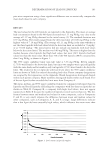
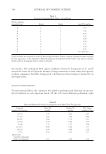
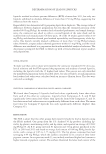
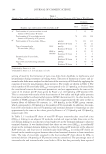
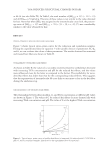
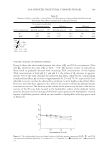
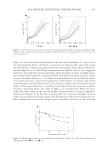
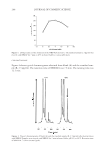
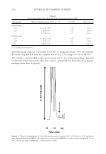
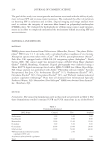
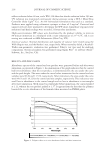
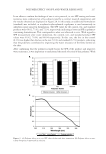
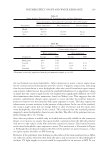
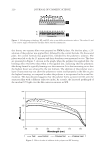
JOURNAL OF COSMETIC SCIENCE 210 Figure 5. Typical chromatogram of a skin-whitening cosmetic sample (0.15 ml/100 ml in 10% methanol) after derivatization with NBD-F. The sample was reacted with NBD-F for 7 min in borate buffer, pH 9.0, at 40°C. Retention time of NBD-KA: 7.8 min (arrowed peak). skin-whitening cosmetic was found to be 237 ± 14 μg/ml (range: 219–255 μg/ml). Recovery of spiked KA from the cosmetic was 90.2 ± 4.9% (range: 83.4% to 98.1%). The cosmetic contained KA at the concentration of 4.27 ± 0.25 mg per package. KA will be detected using our system when the cosmetic contains KA at more than 0.72 mg per package (more than 40 μg/ml). Table II Intra- and Interday Assay Reproducibility for Determination of KA KA (μg/ml) Measured (μg/ml, mean ± S.D., n = 5) C.V. (%) Recovery (%) Intraday assay 0.25 0.223 ± 0.017 7.6 89.2 1.25 1.18 ± 0.07 5.9 94.4 5 5.12 ± 0.19 3.7 102.4 Interday assay 0.25 0.219 ± 0.021 9.6 87.6 1.25 1.16 ± 0.10 8.6 92.8 5 5.06 ± 0.25 4.9 101.2 C.V.: Coeffi cient of variation.

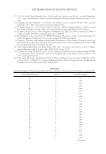
HPLC DETERMINATION OF KOJIC ACID 211 Table III Level of KA in a Skin-Whitening Cosmetic and Recovery of Spiked KA Assay Content (μg/ml) Recovery (%) Added (30.0 μg) Added (50.0 μg) Day 1 244 84.2 96.8 Day 2 239 88.6 98.1 Day 3 228 89.6 91.3 Day 4 255 91.7 92.2 Day 5 219 83.4 85.9 Avg. ± S.D. (C.V.) 237 ± 14 (5.9%, n = 5) 90.2 ± 4.9% (5.4%, n=10) CONCLUSION We have developed an HPLC–UV method for the determination of KA in a skin-whitening cosmetic by using NBD-F as a labeling reagent. A tested skin-whitening cosmetic was found to contain KA at a mean concentration of 237 μg/ml using the present system. This method is simple and convenient, and should be suitable for routine quality assess- ment of skin-whitening cosmetics. REFERENCES (1) K. Kimura, M. Hirokado, K. Yasuda, and M. Nishijima, Determination of kojic acid in various com- mercial foods by HPLC, J. Food Hyg. Soc. Jpn., 41, 70–73 (2000). (2) S. C. Huang, C. C. Lin, M. C. Huang, and K. C. Wen, Simultaneous determination of magnesium ascorbyl phosphate, ascorbyl glucoside, kojic acid, arbutin and hydroquinone in skin whitening cosmet- ics by HPLC, J. Food Drug Anal., 12, 13–18 (2004). (3) C. H. Lin, H. L. Wu, and Y. L. Huang, Combining high-performance liquid chromatography with on- line microdialysis sampling for the simultaneous determination of ascorbyl glucoside, kojic acid, and niacinamide in bleaching cosmetics, Anal. Chim. Acta, 581, 102–107 (2007). (4) Y. Shih, Simultaneous determination of magnesium L-ascorbyl-2-phosphate and kojic acid in cosmetic bleaching products by using a microbore column and ion-pair liquid chromatography, J. AOAC Int., 84, 1045–1049 (2001). (5) Y. Shih and J. M. Zen, Voltammetric determination of kojic acid in cosmetic bleaching products using a disposable screen-printed carbon electrode, Electroanalysis, 11, 229–233 (1999). (6) X. F. Yang and H. J. Zhang, Sensitive determination of kojic acid in foodstuffs using PVP (polyvinylpyrrolidone) modifi ed acetylene black paste electrode, Food Chem., 102, 1223–1227 (2007). (7) J. Liu, D. Zhou, X. Liu, K. Wu, and C. Wan, Determination of kojic acid based on the interface en- hancement effects of carbon nanotube/alizarin red S modifi ed electrode, Colloids Surf. B, 70, 20–24 (2009). (8) K. Imai, Analytical chemical studies on high-performance recognition and detection of bio-molecules in life, Yakugaku Zasshi, 123, 901–917 (2003). (9) Y. Higashi, S. Nakamura, H. Matsumura, and Y. Fujii, Simultaneous liquid chromatographic assay of amantadine and its four related compounds in phosphate-buffered saline using 4-fl uoro-7-nitro-2,1,3- benzoxadiazole as a fl uorescent derivatization reagent, Biomed. Chromatogr., 20, 423–428 (2006). (10) Y. Higashi, M. Sakata, and Y. Fujii, Simultaneous determination of the N-dealkylated metabolites of four butyrophenone-type agents in rat plasma by HPLC with fl uorescence detection after precolumn derivatization with 4-fl uoro-7-nitro-2,1,3-benzoxadiazole, J. Liq. Chromatogr. Rel. Technol, 30, 2747– 2754 (2007). (11) T. Fukushima, J. Kawai, K. Imai, and T. Toyo’oka, Simultaneous determination of D- and L-serine in rat brain microdialysis sample using a column-switching HPLC with fl uorimetric detection, Biomed. Chromatogr., 18, 813–819 (2004).
Purchased for the exclusive use of nofirst nolast (unknown)
From: SCC Media Library & Resource Center (library.scconline.org)