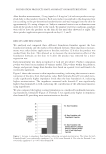
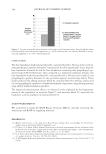
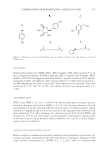
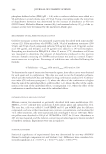
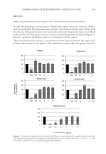
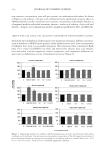
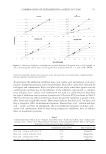
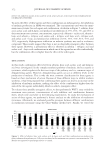
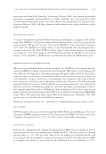
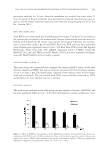
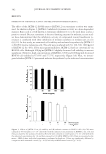
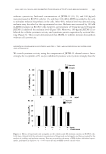
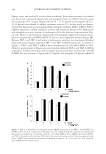
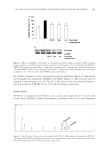
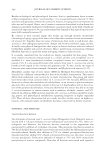
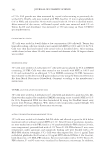
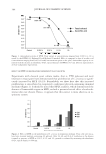
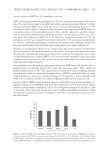
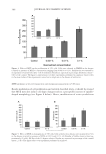
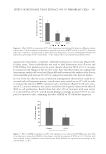
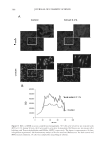
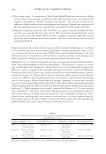
JOURNAL OF COSMETIC SCIENCE 370 non-cytotoxic concentration, were still not cytotoxic in combination with others. As shown in Figure 3, only arbutin + α-lipoic acid combination had a signifi cantly cytotoxic effect on HSM proliferation at their maximum non-cytotoxic concentration individually. Besides, as it happened with the individual treatment, arbutin + azelaic acid, arbutin + kojic acid, and arbutin + α-lipoic acid combinations showed a signifi cant proliferative effect on HSM cells. ARBUTIN, KOJIC ACID, AZELAIC ACID, AND α-LIPOIC ACID MUSHROOM TYROSINASE KINETIC ANALYSIS To fi nd the type of inhibition of these agents over mushroom tyrosinase, different concentra- tions of substrate (L-DOPA) in the presence of the inhibitors were used. Low concentrations of inhibitor were used to see possible synergistic effects between them. Lineweaver–Burk plots of 1/v versus 1/[L-DOPA] were made and showed that arbutin, kojic acid, α-lipoic acid, and azelaic acid are competitive, mixed, competitive, and competitive inhibitors, re- spectively, on diphenolase activity of mushroom tyrosinase (Figure 4). Figure 3. Human skin melanocytes viability with the maximum non-cytotoxic concentrations of the agents combined and its dilutions. Concentrations are expressed as concentration of the fi rst agent/concentration of the second agent. Results are expressed as percentage of cell viability relative to control. Values of p 0.05 (*), p 0.01 (**), and p 0.001 (***) are considered signifi cantly different.

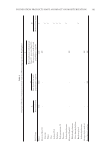
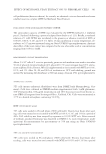
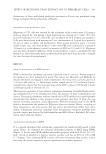
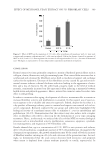
COMBINATION OF DEPIGMENTING AGENTS IN VITRO 371 EFFECT OF ARBUTIN, KOJIC ACID, AZELAIC ACID, AND α-LIPOIC ACID AND THEIR COMBINATIONS ON MUSHROOM TYROSINASE ACTIVITY To investigate the inhibition of arbutin, kojic acid, azelaic acid, and α-lipoic acid on ty- rosinase, mushroom tyrosinase assay was performed. Dose/effect curves were obtained for each agent and combination. Kojic acid plus each one of the other three agents were the combinations used here due to the difference in the inhibition type (mixed vs. competi- tive). α-Lipoic acid + azelaic acid combination was used as a control because they share the type of inhibition over tyrosinase (competitive). CIs at the IC50 are shown in Table I. The CI at this fraction affected (50%) was chosen because the variability is greater at low- effect levels and at high-effect levels. These results indicate that kojic acid + α-lipoic acid have a synergistic effect on mushroom tyrosinase, whereas kojic acid + arbutin and kojic acid + azelaic acid have an antagonistic effect on mushroom tyrosinase. α-Lipoic acid + azelaic acid combination, both of them being competitive inhibitors, have an additive effect on mushroom tyrosinase. Figure 4. Lineweaver–Burk plots of mushroom tyrosinase. Arbutin (500 μg/ml), kojic acid (10 μg/ml), az- elaic acid (100 μg/ml), and α- lipoic acid (50 μg/ml) were incubated with 0.5, 1, 2, and 3 mM L -DOPA. Table I Combination Index of Kojic Acid + α-Lipoic Acid, Kojic Acid + Azelaic Acid, Kojic Acid + Arbutin and α-Lipoic Acid + Azelaic Acid, Obtained from the Output of the CompuSyn software. Next to the Names Is the Ratio of Concentration for Each Combination Combination index (IC50) Type of interaction Kojic acid + α-lipoic acid (ratio 1:5) 0.70 Synergism Kojic acid + azelaic acid (ratio 1:10) 1.33 Antagonism Kojic acid + arbutin (ratio 1:50) 1.29 Antagonism α-Lipoic acid + azelaic acid (ratio 1:2) 1.12 Additive
Purchased for the exclusive use of nofirst nolast (unknown)
From: SCC Media Library & Resource Center (library.scconline.org)