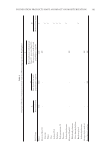
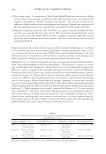
JOURNAL OF COSMETIC SCIENCE 362 Enrolled panelists were instructed to wash their inner forearms with PURPOSE® Gentle Cleansing Wash (Valeant Consumer Products, Montreal, Canada) once daily for 3 days prior to the study date. Panelists were told to shower 12 h prior to the fi rst and last visit. Additionally, they refrained from using any non-assigned products on their inner fore- arms for the duration of the study. They were required to go to the test facility for 5 consecutive days. MEASUREMENT OF SKIN IMPEDANCE Moisture content in the skin was assessed using a NOVA® DPM 9003 skin impedance meter (NOVA Technology Corporation, Portsmouth, NH). This instrument provides a non-invasive, objective, reproducible method of measurement to quantify biophysical characteristics and relative hydration of the skin. It reports skin impedance in arbitrary units (2). Prior to all measurements, panelists acclimated to controlled environmental conditions with a constant temperature of 19°–22°C and 40–50% relative humidity, for at least 15 min. Five 3 × 3 cm test sites were marked on the forearms using a surgical pen. Within each site, baseline skin impedance measurements were taken on day 1 prior to the fi rst application and again on day 5, 12 h after the last application was washed off. Mois- turization measurements were taken in triplicate at each site. We did not monitor regres- sion of the skin following product application beyond 12 h, as the skin impedance measurement at that time showed suffi cient differentiation among the test products. Also, consumers would generally reapply the product at 12 h after washoff. Table II Other Ingredients in Formulations A, B, and C That Are Not Listed in Table I, Listed Alphabetically by INCI Name Caprylic/Capric triglyceride, Caprylyl glycol, Caprylyl glycol (and) Phenoxyethanol (and) Hexylene glycol, Dimethicone (and) Polysilicone-11 (and) Nylon-12 (and) Silica (and) PEG-10 Dimethicone (and) Polysorbate 40 (and) Isohexadecane (and) Ammonium polyacryloyldimethyl taurate, DMDM Hydantion (and) Iodoproynyl butylcarbamate, Hexyl laurate, Iron oxide (Black), Iron oxide (Red), Iron oxide (Yellow), Isostearic acid, Magnesium aluminum silicate, Mica (and) Titanium dioxide (Orange), Mica (and) Titanium dioxide (Violet), Oleyl erucate, Pentaerythrityl tetra-di-t-butyl hydroxyhydrocinnamate, Silica (and) Hyaluronic acid, Sodium polyacrylate, Synthetic fl uorphlogopite (and) Lauroyl lysine, Titanium dioxide, Vegetable oil (and) Glycerin (and) Lauryl glucoside (and) Polyglycerl-2-dipolyhydroxystearate Table III Other Ingredients in Formulation D That Are Not Listed in Table I, Listed Alphabetically by INCI Name 1,2-Hexanediol, Aloe barbadensis leaf extract, Argania spinosa kernel oil, Boron nitride, C12-15 Alkyl benzoate, Caprylic/Capric triglyceride, Caprylyl glycol, Cellulose gum, Ceteth-25, Cetyl alcohol, Cetyl ethylhexanoate, Disodium EDTA, Ethylhexyl methoxycinnamate, Glyceryl stearate, Helianthus annuus (Sunfl ower) seed oil, Hexapeptide-3, Iron oxide (Black), Iron oxide (Red), Iron oxide (Yellow), Isopropyl lanolate, Linoleic acid, Linolenic acid, Magnesium aluminum silicate, Oleth-25, PEG-26-PPG-30 Phosphate, Persea gratissima (Avocodo) oil, Polyhydroxystearic acid, Proplyene glycol isostearate, Propylene glycol, Propylene glycol stearate, Sodium dehydroacetate, Squalane, Titanium dioxide, Tocopherol, Triethanolamine, Tripeptide-3

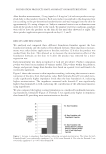
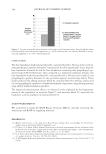
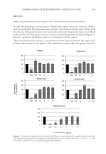
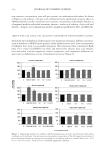
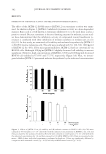
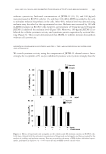
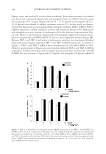
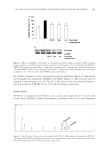
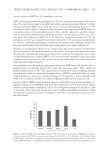
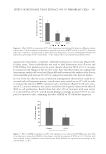
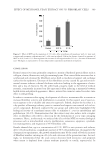
FOUNDATION PRODUCTS HAVE AN IMPACT ON MOISTURIZATION 363 After baseline measurements, 25 mg (equal to 2.8 mg/cm2) of each test product was ap- plied daily to the panelists’ forearms. Each test product was applied to the designated test site according to the pre-determined randomization and was massaged into the skin for approximately 10 s using a fi nger cot. Subjects remained onsite in an acclimation room until all the products were dry to the touch. To simulate real wear conditions, panelists were told to leave the products on the skin all day until they showered at night. The above product application process repeated on days 2, 3, and 4. RESULTS AND DISCUSSION We analyzed and compared three different foundation formulas against the base foundation formula and the marketed benchmark formula. Skin impedance measure- ments were taken before application at baseline and then 12 h after the product was washed from the skin. This allowed us to measure the moisturization effect of the foundation formulas on the skin 12 h after the product was removed for a mini- regression test. Each measurement was taken in triplicate at each site per subject. Product comparison p-value was based on an analysis of variance model. The p values within the products, change, and percent change from baseline were based on a paired t-test and found to be statistically signifi cant. Figure 1 shows the increase in skin impedance reading, indicating the increase in mois- turization of the skin, from the baseline value. Both formulas B and C provided statis- tically signifi cantly higher impedance levels than the base foundation A, indicating higher moisturization. The impedance measured with formula C was signifi cantly higher than formula B as well, indicating the contribution of the additional moistur- izing ingredients. We also compared the highest scoring formulation to a marketed benchmark moisturiz- ing foundation, formula D (Figure 2). Formula C was signifi cantly higher in impedance than formula D, providing more moisturization to the skin. Figure 1. Increase in impedance from baseline, indicating increased moisturization. The values for both Formula B and C were statistically signifi cant (* p 0.05) versus Formula A. The value for Formula C was statistically signifi cant (° p 0.05) versus Formula B.
Purchased for the exclusive use of nofirst nolast (unknown)
From: SCC Media Library & Resource Center (library.scconline.org)