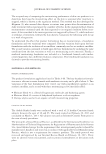
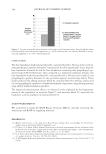
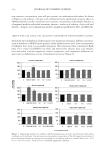
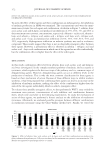
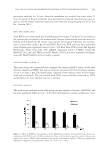
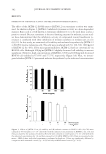
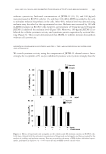
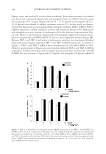
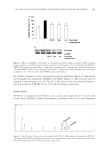
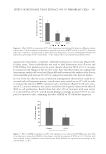
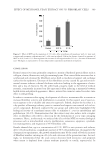
JOURNAL OF COSMETIC SCIENCE 364 CONCLUSION The base foundation with moisture blend #1, moisture blend #2, Moringa oleifera seed oil, and propylheptyl caprylate (formula C) moisturized the skin signifi cantly better than the base foundation (formula A) and the base foundation containing only propylheptyl cap- rylate (formula B). Furthermore, when compared to a marketed competitor product, the base foundation with moisture blend #1, moisture blend #2, Moringa oleifera seed oil, and propylheptyl caprylate (formula C) also provided superior moisturizing ability. These results indicate that adding moisture blend #1, moisture blend #2, Moringa oleifera seed oil, and propylheptyl caprylate to foundation formulas can promote long-lasting moistur- izing ability within foundation products. The improved moisturization effi cacy we observed can be explained by the hygroscopic nature of the ingredients in moisture blend #1 and moisture blend #2, especially the hyaluronic acid microspheres in moisture blend #2. ACKNOWLEDGMENTS We would like to thank the BASF Beauty Creations IRB for critically reviewing this manuscript and BASF for supplying materials. REFERENCES (1) Mintel, Color Cosmetics – US – July 2012. Mintel Oxygen, 30 July 2012, accessed May 16, 2013, http:// oxygen.mintel.com/display/590605/?highlight=true (2) P. Clarys, A. O. Barel, and B. Gabard, Non-invasive electrical measurements for the evaluation of the hydration state of the skin: Comparison between three conventional instruments - the Corneometer®, the Skicon® and the Nova DPM®, Skin Res. Technol., 5, 14–20 (1999). (3) G. L. Grove, Skin surface hydration changes during a mini regression test as measured in vivo by electri- cal conductivity, Curr. Ther. Res., 52, 556–561 (1992). (4) A. M. Kligman, Regression method for assessing the effi cacy of moisturizers, Cosmet. Toiletries 93, 27–35 (1978). Figure 2. Increase in impedance from baseline, indicating increased moisturization. Even though the values for both products were statistically signifi cant (* p 0.05) versus baseline, the value for Formula C was sta- tistically signifi cant (° p 0.05) versus Formula D.

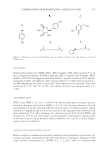
J. Cosmet. Sci., 65, 365–375 (November/December 2014) 365 Effect of the combination of different depigmenting agents in vitro ALFREDO MARTÍNEZ-GUTIÉRREZ, JUAN ANTONIO ASENSIO, and BEGOÑA ARAN, Mesoestetic Pharma Group, C/Tecnologia, 25, 08840 Viladecans, Barcelona, Spain. Accepted for publication August 28, 2014. Synopsis Melanin plays a key role in our skin, protecting us against ultraviolet radiation, but there are situations in which its anomalous accumulation can lead to either aesthetic problems or diseases like melasma. For this reason, it is important to fi nd agents that are able to decrease the skin pigmentation. It has been demon- strated that the melanin synthesis pathway can be inhibited at different levels by different mechanisms of action. The aim of this project is to combine some of these agents with different mechanisms of action on this pathway in order to fi nd synergistic effects in the inhibition of tyrosinase and melanin synthesis. Kojic acid + α-lipoic acid combination are the only ones that have shown a synergistic effect over mushroom tyrosinase. However, this effect is not seen in melanin synthesis inhibition, although this combination is the most effec- tive one. A potentiation effect is seen in arbutin + α-lipoic acid and kojic acid + azelaic acid combination. Kojic acid and α-lipoic acid combination might prove a good approach as treatment for hyperpigmentation disorders. INTRODUCTION Melanin is a pigment present in most living organisms. In animals, it derives from the amino acid tyrosine, and it is synthesized in melanocytes, which are located in the epider- mis. More specifi cally, inside these cells, melanin is synthesized in specialized organelles called melanosomes. Melanin has different functions, among which the most important is its function as a protecting pigment against ultraviolet radiation of the sun (1–3). Despite its benefi cial role in sunlight protection, there are diseases in which an anomalous ac- cumulation of melanin happens (hyperpigmentation), such as melasma or post-infl ammatory hyperpigmentation (4). However, sometimes it is simply an aesthetic matter, where the patient wants to eliminate non-malignant dark spots. Hydroquinone is the depigmenting agent of reference and one of the most effective up to now, but it is cytotoxic (causing long- term adverse effects). Thus, hydroquinone has been banned in the European Union (24th Dir 2000/6/EC) as a skin-lightening agent because of its toxicity, although it can still be Address all correspondence to Begoña Aran at baran@mesoestetic.com.
Purchased for the exclusive use of nofirst nolast (unknown)
From: SCC Media Library & Resource Center (library.scconline.org)