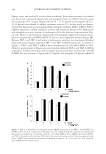
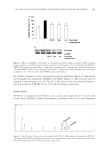
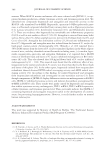
JOURNAL OF COSMETIC SCIENCE 400 addition, demonstration of F- and G-actin by fl uorescence microscopy revealed a signifi - cant modifi cation of cytoskeleton rearrangement that is characterized by an increase of actin fi bers. In agreement with this observation, we demonstrated that MYE induces a signifi cant increase of 3T3 fi broblast cells migration. Altogether, these results highlight the positive effect of MYE on fi broblast cells. In this view, one may assume that methanol extraction allows the recovery and the purifi cation of interesting bioactive compound(s) present in yeast cells. Of note, MYE is liquid at room temperature and, then, appears more suitable for use in cosmetics than yeast whole cells or classical yeast extracts. On the other hand, it should be stressed that nature of the bioactive compound(s) contained in MYE remains unknown, even if experimental data suggest a peptidic profi le (16–18). Up to now, LC-MS, IR, and NMR analyses failed to unambiguously identify this (or these) compound(s) ongoing preparative HPLC experi- ments are carried out in order to solve this question. AKNOWLEDGMENTS This study was supported by a grant from the Région wallonne (Theralev Project Conven- tion no. 816853). We thank Nadia Errami and Sabrine Zahout from the Institut Roger Lambion for their active contribution in this work and Guy Laurent from the Université de Mons-Hainaut for providing fl uorescent probes for actin detection. We are also indebted to Grégory Ploegaerts and Michel Van Krieken from the Institut Meurice for ICP analysis and Marie-Hélène Dupuche and Dominique Vinette from Sopura SA for fl uorescence mi- croscopy analyses. REFERENCES (1) J. Khavkin and D. A. Ellis, Aging skin: Histology, physiology, and pathology, Facial. Plast. Surg. Clin. North. Am., 19, 229–234 (2011). (2) J. Kanitakis, Anatomy, histology and immunohistochemistry of normal human skin, Eur. J. Dermatol., 12, 390–399 (2002). (3) L. Robert, J. Labat-Robert, and A. M. Robert, Physiology of skin aging, Pathol. Biol. Paris, 57, 336– 341 (2009). (4) L. C. Yourman, S. J. Lee, M. A. Schonberg, E. W. Widera, and A. K. Smith, Prognostic indices for older adults: A systematic review, JAMA, 307, 182–192 (2012). (5) P. U. Giacomoni, Ageing, science and the cosmetics industry. The micro-infl ammatory model serves as a basis for developing effective anti-ageing products for the skin, EMBO Rep., 6, Spec No:S45–48 (2005). (6) G. J. Fisher, S. Kang, J. Varani, Z. Bata-Csorgo, Y. Wan, S. Datta, and J .J. Voorhees. Mechanisms of photoaging and chronological skin aging, Arch. Dermatol., 138, 1462–1470 (2002). (7) Y. Ochiai, S. Kaburagi, K. Obayashi, N. Ujiie, S. Hashimoto, Y. Okano, H. Masaki, M. Ichihashi, and H. Sakurai, A new lipophilic pro-vitamin C, tetra-isopalmitoyl ascorbic acid (VC-IP), prevents UV- induced skin pigmentation through its anti-oxidative properties, J. Dermatol. Sci., 44, 37–44 (2006). (8) L. R. Gaspar, F. B. Camargo, Jr., M. D. Gianeti, and P. M. Maia Campos, Evaluation of dermatological effects of cosmetic formulations containing Saccharomyces cerevisiae extract and vitamins, Food Chem. Toxicol., 46, 3493–3500 (2008). (9) M. Simonoff, D. Shapcott, S. Alameddine, M. T. Sutter-Dub, and G. Simonoff, The isolation of glucose toler- ance factors from brewer’s yeast and their relation to chromium, Biol. Trace. Elem. Res., 32, 25–38 (1992). (10) J. Racek, L. Trefi l, D. Rajdl, V. Mudrová, D. Hunter, and V. Senft, Infl uence of chromium-enriched yeast on blood glucose and insulin variables, blood lipids, and markers of oxidative stress in subjects with type 2 diabetes mellitus, Biol. Trace. Elem. Res., 109, 215–230 (2006).

EFFECT OF METHANOL YEAST EXTRACT ON 3T3 FIBROBLAST CELLS 401 (11) E. Król, Z. Krejpcio, H. Byks, P. Bogdański, and D. Pupek-Musialik, Effects of chromium brewer’s yeast supplementation on body mass, blood carbohydrates, and lipids and minerals in type 2 diabetic patients, Biol. Trace. Elem. Res., 143, 726–737 (2011). (12) S. Rahar, G. Swami, N. Nagpal, M. A. Nagpal, and G. S. Sing, Preparation, characterization, and bio- logical properties of β-glucans. J. Adv. Pharm. Technol. Res., 2, 94–103 (2011). (13) I. M. Thompson, C. R. Spence, D. L. Lamm, and N. R. DiLuzio, Immunochemotherapy of bladder carcinoma with glucan and cyclophosphamide, Am. J. Med. Sci., 294, 294–300 (1987). (14) D. K. Meena, P. Das, S. Kumar, S. C. Mandal, A. K. Prusty, S. K. Singh, M. S. Akhtar, B. K. Behera, K. Kumar, A. K. Pal, and S. C, Mukherjee. Beta-glucan: An ideal immunostimulant in aquaculture (a review), Fish. Physiol. Biochem., 39, 431–457 (2013). (15) F. Zulli, F. Suter, H. Biltz, and H. P. Nissen, Improving skin function with CM-glucan, a biological response modifi er from yeast, Int. J. Cosmet. Sci., 20, 79–86 (1998). (16) M. Dillemans, L. Van Nedervelde, and A. Debourg, Characterization of a novel yeast factor increasing yeast brewing performances, Proc. Congr. Eur. Brew. Conv., 27, 711–718 (1999). (17) M. Dillemans, L. Van Nedervelde, and A. Debourg, An approach to the mode of action of a novel yeast factor increasing yeast brewing performance, J. Am. Soc. Brew. Chem., 59, 101–106 (2001). (18) D. P. A. Cortes, A. F. E. Domingo, A. C. Daquinag, and C. T. Hedreyda, A possible role of peptides in the growth enhancement of an industrial strain of Saccharomyces sp, Science Diliman, 17, 1 (2005). (19) M. Dillemans, L. Van Nedervelde, and A. Debourg, Novel specifi c method for the obtention of a fer- mentation activator isolated from yeast, Proceedings of the 30th EBC Congress (2005). (20) E. Parrella, and V. D. Longo, The chronological life span of Saccharomyces cerevisiae to study mitochon- drial dysfunction and disease, Methods, 46, 256–262 (2008). (21) M. R. Szabo, C. Iditoiu, D. Chambre, and A. X. Lupea, Improved DPPH determination for antioxidant activity spectrometric assay, Chemical Papers, 61, 214–216 (2007). (22) M. Dillemans, T. Appelboom, and L. Van Nedervelde, Yeast as a model system for identifi cation of metabolic targets of a ‘glucosamine complex’ used as a therapeutic agent of osteoarthritis, Biomed. Phar- macother., 62, 645-50 (2008). (23) D. Gallo, F. Jacquemotte, A. Cleeren, I. Laïos, S. Hadiy, M. G. Rowlands, O. Caille, D. Nonclercq, G. Laurent, Y. Jacquot, and G. Leclercq, Calmodulin-independent, agonistic properties of a peptide containing the calmodulin binding site of estrogen receptor alpha, Mol. Cell. Endocrinol., 268, 37–49 (2007). (24) M. Kampa, V. Pelekanou, D. Gallo, G. Notas, M. Troullinaki, I. Pediaditakis, I. Charalampopoulos, Y. Jacquot, G. Leclercq, and E. Castanas, ERα17p, an ERα P295 -T311 fragment, modifi es the migration of breast cancer cells, through actin cytoskeleton rearrangements, J. Cell Biochem., 112, 3786–3796 (2011).
Purchased for the exclusive use of nofirst nolast (unknown)
From: SCC Media Library & Resource Center (library.scconline.org)