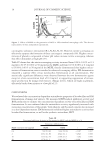
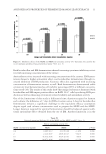
JOURNAL OF COSMETIC SCIENCE 36 Step 3: Rinse. After the waving lotion was discharged, the column was repeatedly fi lled with water and discharged fi ve times, following which the fi ber was immersed in water for 10 min (recording speed: 2 mm/min). Step 4: Reoxidation. The neutralizer was poured into the column, and the fi ber was im- mersed for 15 min (recording speed: 2 mm/min). Step 5: Rinse. The neutralizer was discharged and the reoxidized fi ber was rinsed and im- mersed in water for 5 min (recording speed: 2 mm/min). Step 6: Measurement of the set length. The strain reduced to zero (i.e., the original posi- tion), and the treated fi ber was loosened in water. After marking the starting point (A) on the recording paper, recording speed was set to that used in Step 1 (200 mm/min) and the fi ber was extended again by 1.5% under the same conditions as those described in Step 1. The set length (loosened length) was extended in the absence of stress until point B was reached (i.e., in the range from A to B over an extension length ℓ). The stress appeared at point B and increased until point C was reached, which corresponded to a 1.5% exten- sion relative to the original length [i.e., in the range from A to C, over an extension of length (ℓ)]. The values for ℓ and ℓ measured in this way provided the observed set values Sℓ(ext) (%) for the extensional setting experiment as follows: Sℓ (ext) = ℓ ∕ ℓ × 100 (%), (1) where ℓ is the observed set length and l is the observed extended length. Step 7: Extension. The water was discharged, the lower jaw opened, and the cross head returned to the original position. The treated fi ber was then fi xed at the standard length in water under the same conditions as those used in Step 1 (recording speed: 200 mm/ min), and “f” was measured as an index of the Young’s modulus after treatment. Graph of the reduction progress versus time (Pa/t curve). The data required for establishing the Pa/t curves were obtained independently of the above results using only Steps 1 and 2 and omit- ting all subsequent procedures (Steps 3–7). These measurements were repeated six times us- ing six different single fi bers. The relaxation curve obtained in Step 2 was converted to the apparent progress of reduction, Pa (%), of the hair fi ber with respect to time as follows: Pa = {1 - (Ft ∕ Fo)} × 100 (%), (2) where Ft is the residual stress at t min during reduction (see Step 2) and Fo is the index of Young’s modulus before reduction. Note that the measured stress includes swelling due to the waving lotion, and thus the value for Pa calculated using equation (2) is re- ferred to as the apparent progress of reduction. Ft was measured from the height of the relaxation curve once every minute using a slide caliper. The values for Fo and Ft at each time obtained for the six different hair fi bers were, respectively, averaged, and the mean values were then substituted into equation 2. The calculated average Pa values were then plotted versus time to generate “Pa/t curves,” which were used to characterize the different waving lotions. BENDING SET EXPERIMENT Wortmann determined the bending set by winding hairs as loops on a cylindrical roller and cutting the loops and measuring the fi ber set by observing how much loop initial

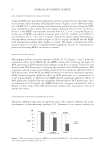
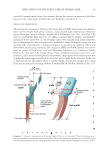
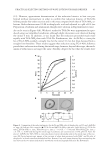
PRACTICAL SELECTING METHOD OF WAVE LOTION FOR HAIR DRESSER 37 form is remained. In our method, a single hair was used and the bending set was mea- sured using the devised apparatus as follows. In the bending set experiment, a single hair fi ber was placed on the bending apparatus in the manner illustrated in Figure 3. The fi ber was equipped with small weights at both ends and was wound at the root of a 10-mm-diameter cylinder on the device shown in the fi gure and vertically held in water at 30°C for 5 min. While holding the fi ber in water, the four nuts were evenly tightened to fi x the fi ber onto the device. The weights were then removed and the water on the surface of the device was wiped off. The device fi xing the wet fi ber was then placed into a 100-ml beaker containing 50 ml of a given waving lotion for t min, and subsequently the device was treated in the pre- pared beaker under the same conditions as those described in Steps 3, 4, and 5 as shown in Figure 2. When the treatment was fi nished, the fi ber was cut at the point of intersection, separated from the device, and immediately transferred into a Petri dish fi lled with water at 30°C. The Petri dish was then placed on a photocopy machine. By covering the fi ber within the Petri dish with a white PVC disk, a good quality photocopy could be obtained. The pho- tocopy of each bending treated fi ber was in the shape of an arc, and the radius of the arc Figure 3. Device used for the permanent treatment of the bending set. A single wet hair wound at the root of the cylinder and fi xed using silicon plates that are tightened to the screws by four bolts.
Purchased for the exclusive use of nofirst nolast (unknown)
From: SCC Media Library & Resource Center (library.scconline.org)