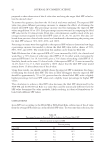
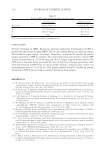
JOURNAL OF COSMETIC SCIENCE 98 ZETA POTENTIAL MEASUREMENTS All measurements of ζ-potential were conducted by using a Zetasizer Nano series from Malvern Instruments (Worcs, U.K.) equipped with an MPT-2 Autotitrator. In this in- strument, ζ-potential is determined by measuring the electrophoretic mobility of parti- cles and then calculating via the Henry Equation 3 2ε[ E f ka U I = where E U is the electrophoretic mobility, ζ is the zeta potential, ε is the dielectric con- stant, and it is set as 78.5 by the instrument, f(ka) is Henry’s function, it is set to be 1.5 automatically by Smoluchowski approximation, and I is the viscosity of the solvent (wa- ter) (33). ζ-Potential of all solutions was measured directly after pure solutions and AP–BSA mixture solutions were prepared. Each solution (1 ml) was transferred into a cell for measurement. Universal Dip Cell (ZEN1002, Malvern Instruments) and disposable siz- ing cell (DTS0012, Malvern Instruments) were used for measurements of pure BSA solution, pure AP salt solutions, and AP–BSA mixture solutions without pH control. Disposable Zeta Cell (DTS1061, Malvern Instruments) was used for zeta potential measurement in pH-controlled experiments. pH of mixture solutions was adjusted via MPT-2 Autotitrator (Malvern Instruments) with 1.0 M HCl and 1.0 M NaOH solutions by Malvern Zetasizer software. ELEMENTAL ANALYSIS According to the molar ratio at IEP reported in this study, 18.0 ml of ACH–BSA, ZAG– BSA, Al13–BSA, and ZG–BSA solutions were prepared. The mixtures were centrifuged at 5000 rpm for 15 min. The supernatant was decanted and 18.0 ml of DI water was used to wash the precipitate, followed by centrifuging at the same settings. This wash proce- dure was repeated three times to remove any free metal salts or BSA particles. The white AP–BSA product was freeze-dried to remove all water. C, H, and N were analyzed via Perkin-Elmer 2400 Elemental Analyzer (Waltham, MA). Metal components were ana- lyzed by using Perkin-Elmer ICP-OES (inductively coupled plasma optical emission spectrometry) Optima 4300 DV. TURBIDITY MEASUREMENTS The turbidity of every mixture solutions as measured right after they were prepared by using 2100P Tubidimeter from HACH (Loveland, CO). Turbidity of AP–BSA mixture solutions was outside the range of the instrument and were thus measured by diluting 1 ml of these mixture solutions into 15 ml DI water. Turbidity of pure BSA and individual AP solutions used in the fi rst section of experiment (zeta poten- tial properties of individual BSA and AP solutions with pH control) were measured without dilution.

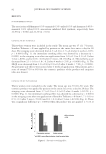
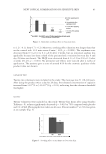
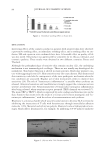
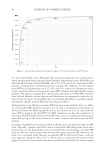
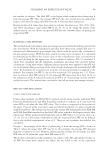
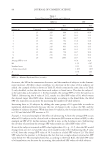
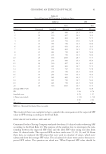
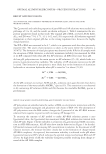
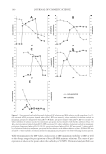
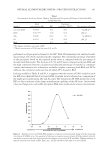
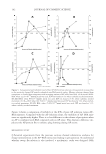
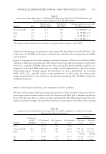
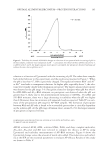
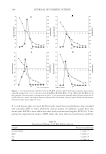
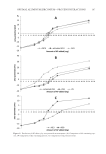
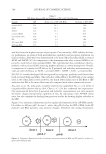
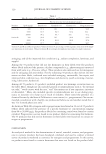
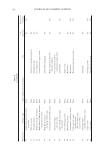
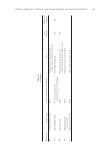
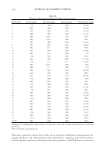
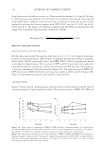
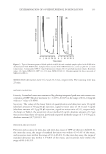
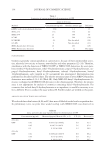
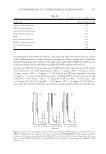
OPTIMAL ALUMINUM/ZIRCONIUM—PROTEIN INTERACTIONS 99 RESULT AND DISCUSSIONS ZETA POTENTIAL AND TURBIDITY PROPERTIES OF INDIVIDUAL BSA AND AP SOLUTIONS WITH PH CONTROL The ζ-potential and turbidity properties of pure BSA and AP solutions were studied in a pH range of 3 to 12, and the results are shown in Figure 1. Table I summarizes the im- portant parameters found in this study. The original pH of BSA, activated ACH, ZAG, Al13, and ZG were 7.04, 4.73, 4.14, 4.62, and 2.99, respectively. All solutions appeared transparent at their original pH due to the strong repulsion force between the highly charged particles. The IEP of BSA was measured to be 4.7, which is in agreement with the value previously reported (34). The onset of precipitation is taken as the point where the turbidity is 50 NTU. The formation of visual precipitate was observed at the IEPs for all samples with the exception of BSA. However, a relatively maximum turbidity was measured for BSA at its IEP compared with other pH. For AP solutions, all IEPs fell at more basic pH. At low pH, polycations are the main species in AP solutions (35–39), which leads to a positive ζ-potential and low turbidity. The turbidity of AP solutions increases as the pH is raised. The formation of precipitate is most likely due to the formation of aluminum hydroxide or zirconium hydroxide when pH is raised to 5 or above (35,36): l 3+ 3 Al 3OH Al(OH) + , l 4+ 4 Zr 4OH Zr(OH) + , As the pH continues to increase, ACH and 13 Al solutions once again become clear due to the formation of the water soluble 4 Al(OH) species (35). This transition is not observed in Zr-containing AP solutions (ZAG and ZG) because the insoluble 4 Zr(OH) species is predominant. EFFECT OF AP ADDED ON ZETA POTENTIAL AND TURBIDITY OF SOLUTIONS AP polycations are adsorbed onto the surface of BSA via electrostatic interaction with the negatively charged asparagine and glutamine side chains of BSA (34). The adsorption of AP polycations onto the BSA surface changes the ζ-potential of the AP–BSA mixture solution from negative to positive with increasing AP dosage (16). To ascertain the amount of AP needed to make AP–BSA solutions possess a zero ζ-potential value, the ζ-potential was monitored while BSA solution was titrated with solid AP salts. Figure 2 shows turbidity as a function of ζ-potential and ACH concentra- tion in ACH–BSA mixture. All AP salts show similar behavior (see Figure 3 for details). ζ-Potential increases with increasing AP concentration in solution. As the amount of AP solution increases, the mixture becomes cloudy due to the formation of charge-neutral AP–BSA complexes. As expected, the maximum turbidity is achieved at the pH where ζ-potential was zero (IEP), which indicates the optimal interaction between BSA and AP actives. At high levels of AP, the turbidity dissipates possibly resulting from charge re- versal of the AP–BSA complex.
Purchased for the exclusive use of nofirst nolast (unknown)
From: SCC Media Library & Resource Center (library.scconline.org)