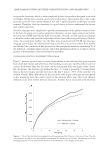
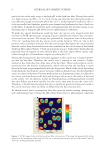
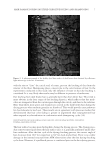
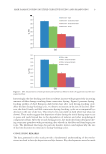
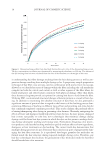
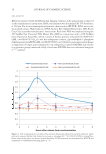
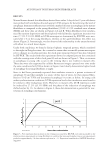
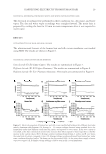
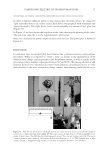
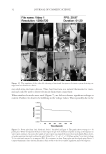
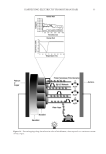
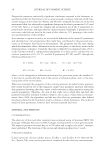
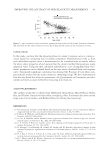
JOURNAL OF COSMETIC SCIENCE 10 in understanding hair fi ber damage resulting from the hair dyeing process as well as pro- gressive damage resulting from multiple dyeing cycles. A proprietary sample preparation technique of hair fi ber cross sections, used in combination with atomic force microscopy, allowed us to identify key areas of damage within the fi ber including the cell membrane complex (in both the cuticle and cortex) as well as other regions of the fi ber where we found small pores and other features consistent with physical damage. More than likely, these destructed regions provide exit points for existing hair dyes to leach from the fi ber. Utilizing DSC, we monitored structural changes of keratin protein as a result of hair dye- ing. In addition to examining the ultrafi ne structure of dyed hair, we also generated a signifi cant amount of practical data in regard to the kinetics of the leaching process dem- onstrating differences of leaching in different types of hair and providing real-time data for this commonly employed consumer procedure. This study confi rms the profound effects of rinsing/shampooing after dyeing in governing color fastness. Obviously, mitigating the effects of water and shampoo would help alleviate hair dye loss. As more porous, damaged hair is more susceptible to color loss, new technologies that minimize damage during dyeing could facilitate hair dye systems in which the dyes are less prone to undergo leach- ing during subsequent washing and rinsing steps. Formulators designing color protec- tion products could use the leaching method to quickly evaluate effects of new ingredients, shampoos, or hair treatments on dye leaching. The current work also demonstrates that multiple dyeing processes do not deteriorate hair color loss in spite of progressively dam- aging the hair fi ber structure. It is speculated that larger granular dye molecules are formed inside the hair structure during repeated multiple dyeing cycles. Therefore, any hair dye technologies that facilitate the granulation of dye molecules inside the hair fi ber should benefi t hair color retention. Figure 6. Dyeing–leaching profi les from dyed dark brown after each cycle of the dyeing–leaching process. The dye concentration in solution was determined by measuring the absorbance at 490 nm. The amount of the dye leaching from hair was calculated from the ratio of the absorbance to the weight of hair tress.

HAIR DAMAGE DURING MULTIPLE OXIDATIVE DYEING AND SHAMPOOING 11 ACKNOWLEDGMENTS We would like to express our gratitude to Bert Kroon and Linda Foltis of Ashland Spe- cialty Ingredients for constructive discussions about hair color science. REFERENCES (1) J. F. Corbett, Chemistry of hair colorant processes—science as an aide to formulation and development, J. Soc. Cosmet. Chem., 35, 297–310 (1984). (2) K. C. Brown, S. Pohl, A. E. Kezer, and D. Cohen, Oxidative dyeing of keratin fi bers, J. Soc. Cosmet. Chem., 36, 31–37 (1985). (3) C. R. Robbins, Chemical and Physical Behavior of Human Hair, 5th Ed. (Springer, Heidelberg 2012). (4) A. Nagai, H. Komoriya, Y. Bunai, S. Yamada, X. Jian, and I. Ohya, Effect of hair dyes and bleaching on the hair protein patterns as revealed by isoelectric focusing, Electrophoresis, 12, 451–453 (1991). (5) E. S. Zur Wiesche, A. Körner, K. Schäfer, and F.-Z. Wortmann, Prevention of hair surface aging, J. Cosmet. Sci., 62, 237–249 (2011). (6) M. L. Tate, Y. K. Kamath, S. B. Ruetsch, and H.-D. Weigmann, Quantifi cation and prevention of hair damage, J. Soc. Cosmet. Chem., 44, 347–371 (1993). (7) Y. Z. Hessefort, B. T. Holland, and R. W. Cloud, True porosity measurement of hair: A new way to study hair damage mechanisms, J. Cosmet. Sci., 59, 303–315 (2008). (8) T. Imai, The infl uence of hair bleach on the ultrastructure of human hair with special reference to hair damage, Okajimas Folia Anat. Jpn, 88, 1–9 (2011). (9) O. J. X. Morel and R. M. Christie, Current trends in the chemistry of permanent hair dyeing, Chem. Rev., 111, 2537–2561 (2011). (10) M. Y. M. Wong, The kinetics of dye rinse from bleached hair, J. Soc. Cosmet. Chem., 23, 165–170 (1972). (11) C. L. Gummer, Elucidating penetration pathways into the hair fi ber using novel microscopic tech- niques, J. Cosmet. Sci., 52, 265–280 (2001). (12) T. Imai, M. Niwa, T. Hasegawa, H. Kawamura, T. Umemura, M. Kimura, T. Nakano, and H. Haraguchi, The reaction of oxidative hair dyes in cuticle layers, J. Soc. Cosmet. Chem. Jap., 42, 305–312 (2008). (13) M. N. Chandrashekara and C. Ranganathaiah, Diffusion of permanent liquid dye molecules in human hair investigated by positron lifetime spectroscopy, Colloids Surf B Biointerfaces, 69, 129–134 (2009). (14) B. Locke and J. Jachowicz, Fading of artifi cial hair color and its prevention by photofi lters, J. Cosmet. Sci., 56, 407–425 (2005).
Purchased for the exclusive use of nofirst nolast (unknown)
From: SCC Media Library & Resource Center (library.scconline.org)