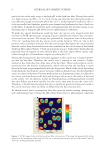
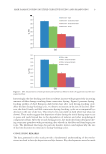
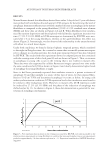
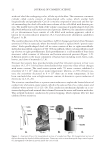
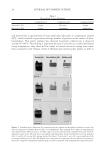
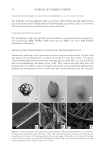
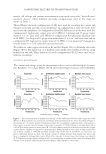
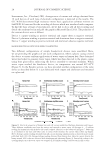
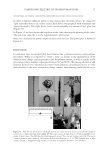
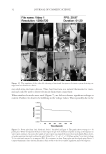
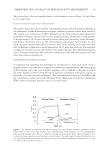
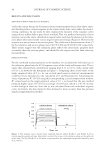
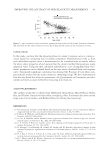
JOURNAL OF COSMETIC SCIENCE 28 Instruments, Inc., Cleveland, OH). Average trace of current and voltage obtained from 10 such devices of each type of electrode confi guration is depicted in the results. The 6517A/B Electrometer/high resistance meter basic application software written on LabVIEW 8.6 was used for the recording of devices which was interfaced with computer. To fi nd the basic average of six replicates, all we had to do is add all the recording and divide the resultant by six and plot the graph in Microsoft Excel 2014. The polarities of the various devices were as follows: Device 1: copper winding as positive terminal and copper sheet as negative terminal. Device 2: platinum winding as positive terminal and aluminum sheet as negative terminal. Device 3: copper winding as positive terminal and aluminum sheet as negative terminal. HAIR BIOELECTRICAL DEVICE FOR ENERGY HARVESTING Two different confi gurations of simple bioelectrical devices were assembled. Here, we are providing the graphics of one such confi guration, where a plastic casing covered the device to ensure uniform application of water vapor on human hair. Pure deionized water was boiled to generate water vapor, which was then directed to the plastic casing using bent glass tubes subjecting the device assembly to external stimulus. When water vapor reached the bioelectric device, its temperature was around 80°–85°C (Figure 5). In the Results section, we have provided another confi guration of the same device as described below. It is just fabricated with copper and aluminum and mounted on a glass rod. Figure 8. Electrical properties of human hair and silk cocoon sandwiched between aluminum and Copper. Three different conditions were kept dry, moist, and exposed to water vapor. (A) Average (n = 6) current reading for human hair which shows the trend is almost identical to that observed in Figure 7. Behaving as an insulator in dry state and when came in contact with moisture the current values shoot up sharply. (B, C) Average current reading obtained from silk cocoon showing similar pattern as observed in previously published work (26). (D) Average voltage reading obtained from human hair. Here we cannot observe the hump around 1600 s that we observed with aluminum and platinum (Figure 9). Instead the voltage is de- creasing sharply once the water vapor was stopped. (E, F) Similar reading could be seen in silk cocoons.

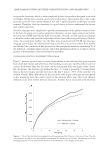
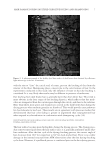
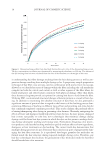
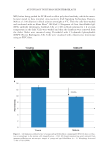
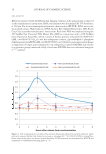
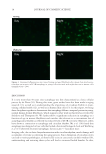
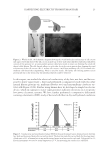
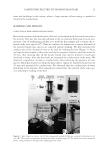
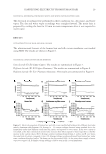
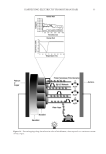
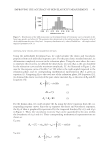
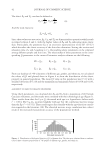
HARVESTING ELECTRICITY FROM HUMAN HAIR 29 ELECTRICAL RECORDINGS FROM DRY, MOIST, AND WATER VAPOR-EXPOSED HAIR The electrical recordings were performed in three conditions viz., dry, moist, and water vapor. The dry and water vapor recordings were straight forward. The moist hair is prepared by cooling the hair for 30 min in room temperature after it was exposed to water vapor. RESULTS ULTRASTRUCTURE OF HAIR AND SILK COCOON The ultrastructural features of the human hair and silk cocoon membrane was studied using SEM. The results are shown in Figure 6. ELECTRICAL CONDUCTIVITY MEASUREMENTS Same electrode (E1:E2/Copper:Copper). The results are summarized in Figure 7. Different electrode (E1:E2/Copper:Aluminum). The results are summarized in Figure 8. Different electrode (E1:E2): Platinum:Aluminum.: The results are summarized in Figure 9. Figure 9. Electrical properties of human hair and silk cocoon sandwiched between two different electrodes namely aluminum and platinum. (A) Average (n = 6) current readings obtained using standard device for human hair under three different conditions (dry, moist, and exposed to water vapor). In dry state current is very small, as the hair is moistened current value increases then when exposed to water vapor there is further increase in the current values. (B, C) Average current recording obtained from A. mylitta and B. mori shows the same kind of pattern compared to hair. (D) Average voltage recording obtained from human hair under same conditions described earlier. The hump on the plot around 1600 s is the point where supply of water vapor was stopped. (E, F) Similar voltage readings could be seen in silk cocoon membranes.
Purchased for the exclusive use of nofirst nolast (unknown)
From: SCC Media Library & Resource Center (library.scconline.org)