JOURNAL OF COSMETIC SCIENCE 94 without affecting the outer surface of the nail (5). The methodologies developed in this article focus on surface ridging as it is the consumer’s primary cause of concern. To the consumer, longitudinal striations deviate from the healthy nail ideal because of the dull, rough effect imparted on the nail surface appearance and feel. In fact, the healthy nail plate is typically associated with a well-groomed appearance and a smooth, lustrous surface (2,3,5–7), whereas striations signal unhealthy and aged nails (6). To address these concerns, the consumer treats longitudinal striations through diet, cosmetic techniques such as buffi ng, and the use of cosmetic products such as ridge fi llers and enamels. The study of longitudinal striations is thus interesting from multiple perspectives: in terms of its signifi cance for consumers’ motivations for product usage and from a knowl- edge standpoint, because of the known association between striations and aging (2). Still, the subject of striations suffers from a dearth in objective methodologies, as an over- whelming majority of the related work presented in literature has been conducted clini- cally. Usually in such cases, nails are broadly described, and a scale will not be explicitly defi ned. These clinical descriptions of longitudinal striations are also frequently accom- panied by digital photography to be used as reference and to track a nail’s changes over time, though most do not use consistent image capture conditions. There is thus a need to develop an objective method for the consistent evaluation of lon- gitudinal striations. A methodology for measuring longitudinal striations is presented in this work. This proposed methodology relies on fringe projection as the method of optical profi lometry used to map the three-dimensional (3D) surface structure of the nail and on an industrial roughness parameter to quantify the superfi cial ridges at select cross- sections of the nail. To complement and validate this method, an additional methodology for classifying the overall severity of longitudinal striations was developed. This methodology—similar to clinical grading approaches—relies on a visual assessment conducted by cosmetologists on a 0–5 scale. The cosmetologist assessment includes the evaluation of the severity, num- ber, and depth of the longitudinal striations on the surface of the nail. The cosmetologist mindset offers an objective viewer with a familiarity for various nail conditions, but with a more naive, consumer-relevant perception of the nail than a trained dermatologist. Ultimately, an investigation into the repeatability of the instrumental method as well as a correlation between the two methods is presented. MATERIALS AND METHODS Thirty-three nails were selected to adequately represent fi ngernails from all 10 fi ngers, various ethnicities, a wide age range, and a representation of the range of longitudinal striations. The nails were measured in vivo using a fringe projection method and images were evaluated using the cosmetologist scale outlined below. The in vivo nail sample set was provided by 28 female volunteers who were between 18 and 70 years of age (average 45.6, with a self-declared ethnicity of African-American/ black (n = 8), east/southeast Asian (n = 7), Caucasian/white (n = 9), or Hispanic/Latina (n = 4). All subjects were recruited from an internal database and gave informed consent for this research to be performed. Data collection was done from March to June 2013. All subjects had self-perceived healthy nails, although brittle, peeling, and fl aking nails were

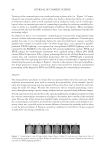
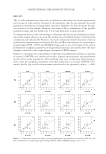
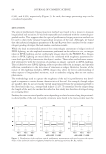
LONGITUDINAL STRIATIONS OF THE NAIL 95 acceptable. Nails were required to be bare and absent of any products that could interfere with the fringe projection measurement. Because of the nail’s capacity to become en- gorged when hydrated, it was important to allow the nails to acclimate for a recom- mended 30 min at 21°C ± 1°C and 45% ± 5% relative humidity after washing to ensure that hydration effects did not distort the surface nail shape (8). OPTICAL PROFILOMETRY FRINGE PROJECTION METHOD Optical profi lometry fringe projection has been used previously in surface structure mea- surements for wrinkles in the skin (9) and for nail surface irregularities (10). Fringe pro- jection works by projecting various patterned bands of light onto the object surface, recording the image, and reconstructing the surface shape based on the distortions of the pattern. This noninvasive method provides a 3D model of the measured surface, which can then be used to determine a number of dimensions of the sample. Provided the sample is suffi ciently stationary for the duration of the measurement, fringe projection can be used on in vivo samples. The GFM PRIMOS Pico #108-000136 (GFM, Tetlow, Germany) was used to capture the individual nail 3D models. Volunteers were instructed to place the fi nger in the stereo- tactic fi nger-positioning device that avoided motion impact on the capture. This ensured that all samples were measured at the same distance from the camera (14.5 cm) and that the fi eld of view was 45 × 40 mm. All measurements were thus comparable. The GFM PRIMOS Pico projected a series of lateral bands onto the nail in quick succession and constructed the 3D model with its associated software. Analysis of the 3D models utilized the instrument’s associated software to process each nail model to obtain three industrial roughness parameters: (i) Ra, or the average maxi- mum height of the profi le, (ii) Rq, or the root mean square average of the roughness profi le, and (iii) Rz, or the mean roughness depth. A few post processing steps were taken to ensure that the parameter only measured the desired striations and was not affected by the lateral and proximal folds intersecting the nail, the curved nature of the nail, or the proximal-to-distal variability of the nail. Specifi cally, the model was cropped to only in- clude the fi ngernail region. A polynomial fi lter (of order n = 3) was applied to remove the transversal and longitudinal curvature of the nail. Finally, a low-pass averaging fi lter (15 pixels distal to proximal, 3 pixels transversal) was applied to reduce the impact of proximal- to-distal variability of the striations on the nail. The Ra, Rq, and Rz measurements were acquired by averaging the respective values measured across fi ve equidistant and parallel transverse cross-sections. COSMETOLOGIST ASSESSMENT METHOD A group of three trained cosmetologists proceeded to grade together the severity of lon- gitudinal ridges seen for a given nail on an 11-point scale at a 0.5-level interval. A value of 0 indicated no ridges and a value of 5 indicated the most severe ridges. The term “ridges” was used in place of striations as it is more common in the cosmetologist ver- nacular and more easily understood. The cosmetologist assessment included the assess- ment of both surface and underface aspects of longitudinal striations, though an emphasis was placed on the severity, number, and depth of the furrows on the surface of the nail.
Purchased for the exclusive use of nofirst nolast (unknown)
From: SCC Media Library & Resource Center (library.scconline.org)