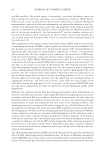
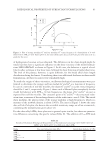
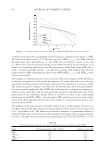
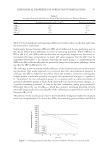
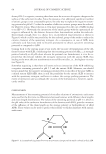
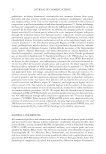
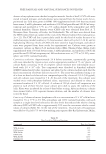
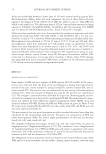
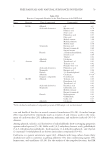
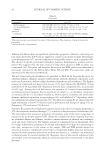
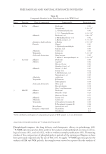
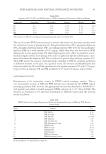
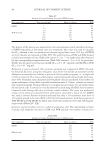
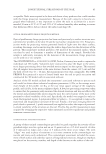
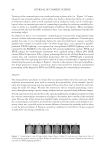
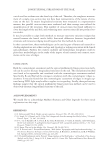
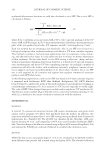
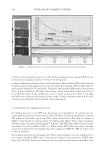
JOURNAL OF COSMETIC SCIENCE 96 Training of the cosmetologists was conducted using a photo atlas (i.e., Figure 1). Cosme- tologists were trained together, and an effort was made to harmonize them on a number of volunteer subjects. Just as with standard clinical evaluation tools, use of a valid typo- logical atlas can increase precision of cosmetologist grading by reducing variability be- cause it serves as a tangible and visual frame of reference for experts. These assessment scores provide the best available standard as there is no existing standardized method for measuring ridges. In addition to the in vivo assessment, cosmetologists evaluated the longitudinal ridge severity of these nails from images captured in several lighting modalities. Cosmetologists graded the nails in vivo immediately before the optical profi lometry capture, and then graded nails—shown in random order—of three image types: a set captured in parallel- polarized (PPOL) lighting, a set captured in cross-polarized (XPOL) lighting, and a set captured by the PRIMOS at the time of the 3D optical profi lometry capture. PPOL and XPOL images for cosmetologist assessment were captured using a Nikon D90 DSLR camera (Nikon Corporation, Tokyo, Japan), polarizing fi lters on the off-body fl ash devices and camera lens, and consistent instrument positioning. The use of PPOL light is generally considered best for capturing the surface relief of an object and therefore is appropriate for illustrating the severity of ridges in Figure 1. Similar to the capture of the optical profi lom- etry fringe projection image, a stereotactic device was utilized to maintain standardized positioning of the fi ngers for PPOL and XPOL imaging for cosmetologist assessment. ANALYSIS The measurement procedure to obtain Ra was repeated three times for each nail. These triplicate measurements were used to examine the repeatability of the method. Specifi - cally, the image processing step was repeated three times from start to fi nish for each nail, using the same 3D image. Because the stereotactic device ensured positioning consis- tency throughout image capture, image analysis was not repeated using different images. Several regressions were run between the optical profi lometry roughness parameters with the various cosmetologist assessments of ridges to determine how correlated the methods were. Because the fringe projection method solely measured the surface striations while the cosmetologist assessments involved the evaluation of both surface and underface stri- ations, there was a possibility for an innate difference between the methods and for them to not be well correlated. A Pearson correlation coeffi cient (r) of 0.60–0.79 was accepted as indicative of a strong correlation (11). Figure 1. Cosmetologist scale of longitudinal ridges, where a value of 0 indicates no ridges and a value of 5 indicates the greatest severity of ridges. Ridges are graded at a 0.5-level interval. Images for the scale are captured in a PPOL lighting modality.

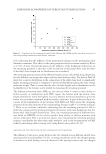
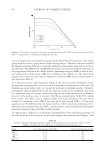
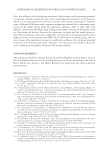
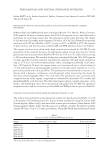
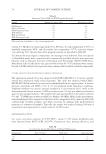
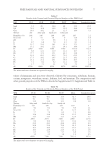
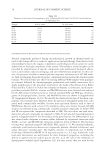
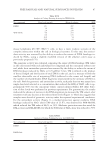
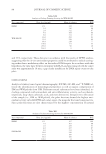
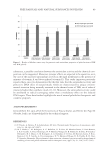
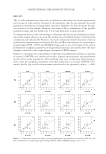
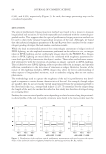
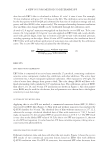
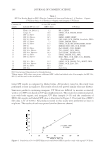
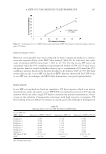
LONGITUDINAL STRIATIONS OF THE NAIL 97 RESULTS The 33 nails evaluated were selectively included into the analysis to evenly represent the entire range of ridge severity. Because of this sampling, they do not represent the usual population distribution of longitudinal striations therefore, we did not report descrip- tive statistics on this sample. However, the range of Ra is informative of the possible population range and was found to be 2.0–10 μm from least to most extreme. A comparison between the cosmetologist evaluations and the optical profi lometry meth- ods on this sample allows us to verify the validity of each method. Figure 2 illustrates the correlations and indicates the Pearson’s r for each comparison between measures of optical profi lometry measurements of striations (Ra, Rq, and Rz) and measures of cosmetologist- graded ridges (PPOL, XPOL, and PRIMOS images and in vivo). Ultimately, of the optical profi lometry roughness parameters of longitudinal striations, Ra and Rq were the most strongly correlated to the cosmetologist assessment of PPOL images. Further, to determine the repeatability of this optical profi lometry method, an analysis of variance (ANOVA) was conducted on three separate measurement trials performed on the entire study population. The resulting data sets, comprising three measure- ment trials per roughness parameter, were then subjected to a one-way ANOVA. Ulti- mately, the Ra, Rq, and Rz measurements were found to be repeatable, with p = 0.960, Figure 2. Comparison between measures of optical profi lometry measurements of striations (Ra, Rq, and Rz) and measures of cosmetologist-graded ridges (PPOL, XPOL, PRIMOS images, and in vivo).
Purchased for the exclusive use of nofirst nolast (unknown)
From: SCC Media Library & Resource Center (library.scconline.org)