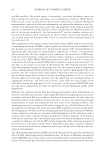
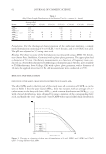
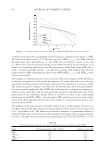
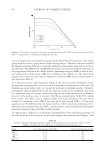
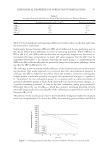
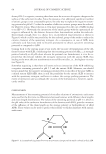
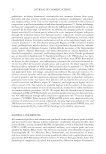
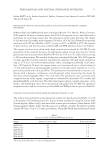
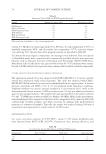
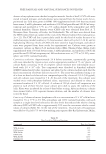
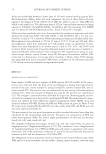
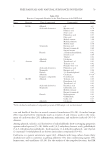
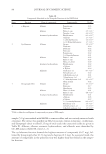
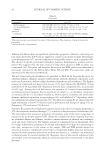
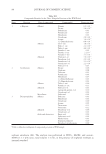
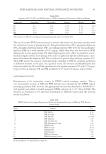
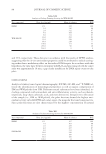
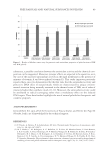
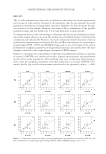
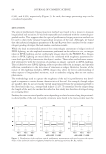
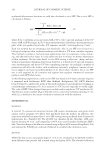
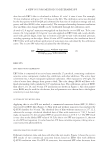
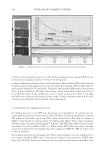
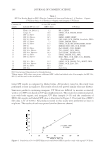
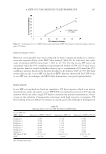
JOURNAL OF COSMETIC SCIENCE 106 Table I SPF Test Results Based on EBT3 Film for Commercial Sunscreen Products (1–8 Products—Organic UV Filters Only 9–15 Products—Organic and Inorganic UV Filters) Commercial sample Labeled SPF (in vivo)a In vitro SPF results (EBT3 fi lm) UV fi lters 1 FDA:14.0, ISO:16.2 3.2 BP-3, EHDP 2 Colipa:16 16.6 EHMC, OCR, BMDM, BEMT 3 SPF 15, PA++ 14.6 EHMC 4 SPF 30, PA+++ 34.5 EHMC, MBBT, BEMT 5 SPF 20, PA++ 19.2 EHS, HMS, OCR, BMDM, Ensulizole, PBSA 6 SPF 15, PA++ 7.3 EHMC, BMDM, PBSA 7 SPF 25, PA++ 22.5 EHMC, OCR,EHT,DHHB,MBBT, BEMT 8 SPF 50 51.7 BMDM, HMS, EHS, OCR, EHMC 9 SPF 30, PA++ 29.8 ZnO, EHMC, OCR, DHHB 10 SPF 30+, PA+++ 18.1 TiO2, EHMC, OCR, PBSA 11 SPF 50+, PA++++ 49.9 ZnO, EHMC, DHHB, OCR 12 SPF 15, PA++ 3.0 EHMC, BMDM, TiO2, MBC 13 SPF 30, PA+++ 31.5 HMS, PBSA, OCR, MBC, TiO2, BMDM, Neo Heliopan AP 14 SPF 30+, PA++ 34.2 EHMC, OCR, DHHB, TiO2, MBBT, PBSA 15 SPF 50+, PA+++ 61.8 EHMC, OCR, ZnO, TiO2 16 SPF 30, PA++ 30.5 ZnO 17 SPF 30+ 19.7 ZnO, TiO2 ISO: International Organization for Standardization. a Where inexact SPF values were given, additional SPF 5 added on labeled value. For example, for SPF 30+, SPF 35 will be used in the calculations. lower SPF results as compared to labeled value. All products tested in this study were performed at least in triplicate. The results of each test proved similar (data not shown). Sunscreen products containing inorganic UV fi lters are diffi cult to measure accurately with in vitro SPF tests based on UV spectrophotometers. The results for commercial prod- ucts with both organic and inorganic UV fi lter (sample 9–15) and the correlation of EBT3 fi lm results and labeled SPF value is illustrated in Figure 5. The trend line of EBT3 fi lm data is R2 of 0.8552. All products tested in this study were performed at least in triplicate. The results of each test proved similar (data not shown). Figure 4. Correlation of in vitro EBT3 fi lm results and labeled SPF for products only with organic UV fi lters.

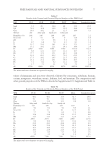
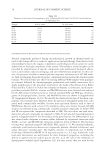
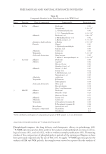
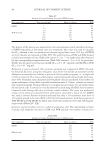
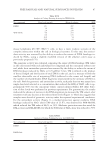
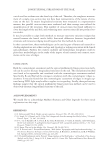
A NEW IN VITRO METHOD TO DETERMINE SPF 107 REPRODUCIBILITY STUDY Moreover, seven parallel tests were conducted on three commercial products to demon- strate the reproducibility of the EBT3 fi lm method (Table II). As indicated, the coeffi - cient of variation (COV) varies from 7.14% to 10.75%. For the in vivo SPF test to be considered valid, the 95% confi dence interval must fi t within a COV of 17% and, if not, the product must be tested on further subjects (up to a maximum of 20) until the 95% confi dence interval, based on the data for all subjects, fi t within a COV of 17%. The fi nal results indicate the in vitro SPF test based on EBT3 fi lm has almost half the COV of the in vivo SPF test. Accordingly, the EBT3 fi lms demonstrate very good reproducibility. DISCUSSION In vivo SPF test methods are based on cumulative UV dose response, which is an instant measurement while all current in vitro SPF/UVA test methods are based on UV spectral transmit which use only a single UV beam to measure the spectral transmittance of sun- screen on the substrate. Consequently, sunscreens with high viscosity or inorganic UV fi lter loading levels are diffi cult to measure accurately, given the challenge of homogeneous Figure 5. Correlation of in vitro EBT3 fi lm results and labeled SPF for products with both organic and inor- ganic UV fi lters. Table II Reproducibility of In Vitro SPF Test Based on EBT3 Film In vitro SPF test (EBT3 fi lm) Sunscreen 1 (SPF 30, PA++) Sunscreen 2 (SPF 15) Sunscreen 3 (SPF 30, PA++) Duplicate 1 32.95 17.26 33.90 Duplicate 2 35.06 13.91 28.26 Duplicate 3 29.59 14.36 28.51 Duplicate 4 28.00 13.19 28.92 Duplicate 5 26.81 13.83 32.11 Duplicate 6 29.59 14.72 32.12 Duplicate 7 26.41 15.14 29.85 SPF (Mean ± SD) 29.77 ± 3.20 14.63 ± 1.32 30.52 ± 2.18 COV 10.75% 9.02% 7.14% SD: Standard deviation.
Purchased for the exclusive use of nofirst nolast (unknown)
From: SCC Media Library & Resource Center (library.scconline.org)