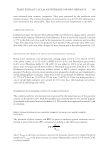
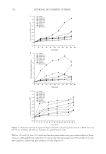
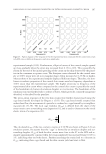
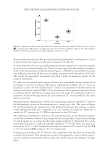
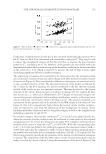
RHEOLOGICAL AND SENSORY PROPERTIES OF PETROLEUM-BASED COSMETIC CREAM 163 cream during pickup and rubout, by score out on a 5-point hedonic scale, where 1 is not like at all and 5 is like very much. The overall liking and likelihood of purchase of each lotion were also evaluated on a 9-point hedonic score (1 is not like at all and 9 is like very much). The panelists were also invited to comment on the texture and skin feel of each sample. An overall preference of the control or the experimental sample was asked at the end of test. Results were automatically analyzed and generalized with COMPUSENSE® fi ve 5.0 (Compusense Inc, Guelph, ON, Canada). MEASUREMENT OF SKIN HYDRATION The experimental and control samples were applied to the inside of the left and right forearms of 10 panelists. The panelists were randomly selected from the 60 people who participated in the consumer-liking test and agreed to join further studies on skin condi- tions. Panelists were asked to stay in air-conditioned offi ce area (20–22° C) for at least 30 min before applying skin lotions. Skin hydration and oiliness were measured before applying the lotion, right after applying the lotion, and 1 and 2 h after applying the lotion with a handheld skin sensor (Triplesense, SCHOTT MORITEX Corporation, Saitama, Japan). Changes in skin hydration and oiliness comparing to untreated skin throughout the 2 h after applying the skin creams were calculated for each participant. The average percent- age increased after application of the skin creams obtained from the skin sensor from all the panelists were calculated and presented. Panelists whose untreated skin had zero oiliness were assigned with oiliness of 1 for calculating percentage increase in oiliness. Two-way analysis of variance (ANOVA) at 95% confi dence level using Sidak’s multiple comparison tests were performed to determine whether signifi cant differences exist between the two skin cream samples in terms of skin hydration and oiliness after application. RESULTS AND DISCUSSION FORMULATION AND MICROSTRUCTURE OF THE LOTIONS The measured water content of the control sample was 87.13% ± 0.13% (w/w), with the remaining ~12 % (w/w) being other ingredients, mainly oil and emulsifi er. Comparing the two samples, the control skin cream contained less oil than the experimental sample, which had 25% (w/w) oil. Both samples showed monodisperse structures under bright- fi eld light microscopy (Figure 1). The control sample had smaller droplet size (below 2 μm diameter) than the experimental sample, with exploded starch granules with diam- eters of 20–40 μm as observed in the image (Figure 1A). The experimental sample had droplets that are slightly bigger than the control sample, and the average droplets size was ~4 μm diameter. RHEOLOGICAL CHARACTERIZATION OF THE TWO SKIN CREAMS The G′ and G″ measured in the strain sweep from 0.01% to 5000% at 0.05 Hz of the two skin cream samples are presented in Figure 2. The two lotions were both in a gel-like

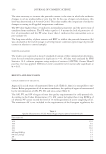
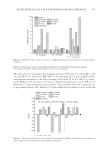
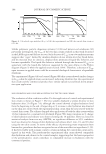
JOURNAL OF COSMETIC SCIENCE 164 structure, as indicated by a higher G′ than the G″ in the LVR. After the strain amplitude was increased beyond the linear limit, the G′ decreased and the G″ showed a weak strain overshoot and increased to a local maximum value before further decreasing and crossing over G′ (32,33). Both the G′ and the G″ decreased in the two skin creams when the shear strain was further increased, leading to the breakdown of their gel-like structures. The G′, G″, yield point, and G″ overshoot of the two samples measured at different fre- quencies are presented in Figure 3. The G′ and G″ of both the samples showed frequency dependency (Figure 3A). The G′ of the petroleum-based sample increased from ~550 to ~880 Pa and that of the control sample increased form ~600 to ~990 Pa when increasing the frequency from 0.05 to 1.0 Hz. The G″ of the control skin cream increased from ~120 to ~220 Pa, whereas that of the experimental sample decreased from ~150 to ~100 Pa. The yield point of the two samples did not show strong changes with frequency when considering the error, as shown in Figure 3B however, the experimental sample had a lower yield point (14.7 ± 5.9 Pa) than the control (29.6 ± 6.1 Pa). The G″ overshoot of the experimental sample increased from ~20 to ~177 Pa when increasing the frequency from 0.05 to 1.0 Hz however, the overshoot was not observed to change with frequency in the control skin cream (Figure 3C). Differences in the rheological parameters of the two skin creams could be a result of their formulation and structure. The experimental petroleum-free skin cream has xanthan gum added as a stabilizer and texture modifi er, which possibly affected the fl ow behavior Figure 1. Bright fi eld light microscopy images of (A) the commercially available petroleum-based skin cream and (B) the experimental petroleum-free skin cream (scale bar 50 μm). Figure 2. Storage modulus (G′) and loss modulus (G″) as a function of strain amplitude measured at a 0.05 Hz. Modulus at (A) 0.01–1000 % strain and (B) 1–5000% strain. Solid symbols, experimental petroleum-free skin cream empty symbols, commercially available petroleum-based skin cream.
Purchased for the exclusive use of nofirst nolast (unknown)
From: SCC Media Library & Resource Center (library.scconline.org)